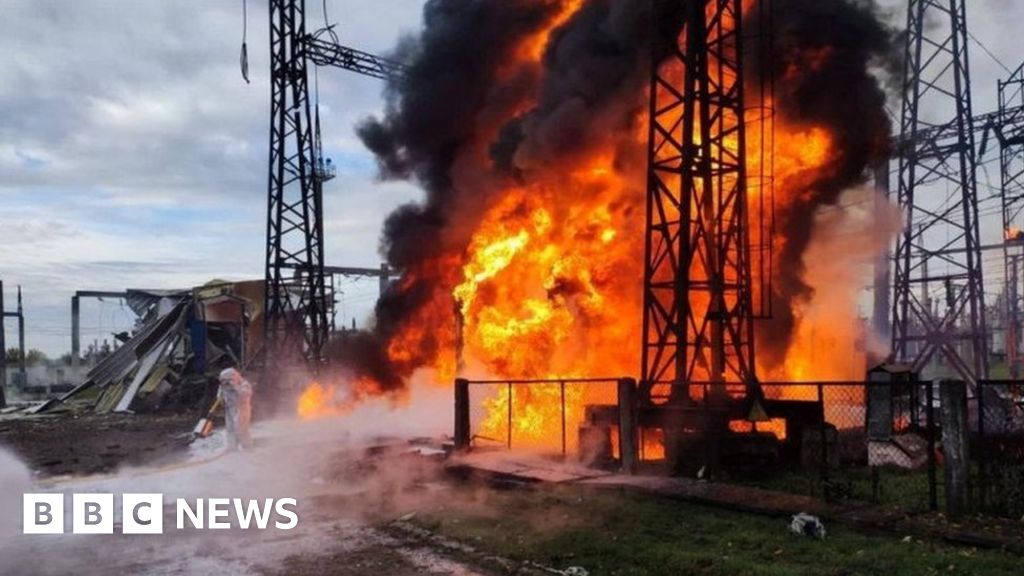
Drones Hit Ust-Luga Port Again as EU Envoys Watch

The latest Ust-Luga drone strike landed while European officials were in Kyiv, underscoring how the war’s front line is stretching far beyond trenches into energy corridors, logistics hubs, and diplomatic calendars. Russia’s Baltic port, critical for oil and gas exports, keeps getting tested by low-cost UAVs that probe the perimeter of Moscow’s revenue engine. For Ukraine and its allies, the timing is a message: sanctions pressure is no longer confined to paperwork, and energy infrastructure is now part of the battlefield. For investors, shippers, and policymakers, the real question is how many more shocks the European supply chain can absorb before rerouting becomes default rather than contingency.
- Repeated strikes on Ust-Luga expose gaps in Russian air defense around a key export hub.
- EU officials visiting Kyiv face a live demo of Ukraine’s asymmetric playbook.
- Energy traders must price in longer-term risk to Baltic shipping lanes.
- Hybrid warfare now targets infrastructure as much as troops and armor.
Inside the Ust-Luga Drone Strike Pattern
Ust-Luga is more than a dot on the Baltic map; it is a funnel for crude, refined products, and petrochemical cargo that underpin Moscow’s budget. Each drone that makes it to the port interrogates the reliability of Russia’s layered defenses and the speed at which it can adapt. The recurrence suggests operators are testing multiple vectors, from low-altitude sea-skimming flights to complex swarms designed to saturate radar. Russian state media often emphasize interceptions, yet impact reports and smoke plumes keep surfacing, hinting at a defense-in-depth that is still porous.
Why the Ust-Luga drone strike keeps succeeding
Defending sprawling industrial ports is a different problem than shielding a single refinery. The coastline, cranes, storage farms, and railheads create abundant approach angles and radar clutter. Short-range systems like Pantsir-S1 are effective against isolated threats but can be overwhelmed by staggered launches or decoys. Moreover, the economics favor the attacker: a commercially modified UAV costs a fraction of the interceptor missile sent to meet it, flipping the traditional cost curve of air defense.
Industrial vulnerability and systemic risk
Even glancing blows matter. A temporary fire at a loading berth delays tankers, increases insurance premiums, and forces rerouting through higher-traffic channels like the Danish Straits. That ripple hits refiners in Europe who rely on predictable Russian exports, even as they profess diversification. Insurance desks now recalculate war-risk surcharges weekly instead of quarterly, and fleet operators are rediscovering the value of redundant routings and excess fuel buffers.
EU Diplomacy Meets Kinetic Messaging
The strike coincided with EU officials touring Kyiv, underscoring an unspoken dialogue: each visit of a European delegation is shadowed by a Ukrainian demonstration of reach. It is not just theater; it is bargaining leverage. Brussels needs to show commitment without being drawn into direct conflict, while Kyiv needs to prove that continued support yields tangible battlefield asymmetries.
Signal to Brussels
Demonstrating standoff capability while EU leaders watch is a calibrated pitch: continued funding turns into operational effects that stretch Russian defenses thin. For parliamentarians wary of “blank checks,” the visible disruption of Russia’s export lifelines provides political cover.
Signal to Moscow
The geographic spread of strikes, from Belgorod to Saint Petersburg’s maritime approaches, tells the Kremlin that no rear area is permanently safe. Each successful penetration forces Russia to redeploy air defenses away from frontline units, diluting protection for troops and depots that remain under constant pressure.
Operational Mechanics: How Ukraine Iterates
Ukraine’s UAV strategy is a live case study in rapid iteration. Open-source imagery shows airframes evolving every few weeks, with new materials, prop configurations, and payload mounts. Software updates tweak navigation routes and GNSS spoofing resistance, while mission planners mix one-way attack drones with reconnaissance platforms that feed back targeting data in near real time.
Supply chain of innovation
Because many components are commercial off-the-shelf, procurement pipelines resemble startup supply chains more than military arsenals. That agility allows Ukraine to scale production in dispersed workshops, complicating Russian attempts to interdict manufacturing. The flipside is dependency on imported electronics, which Kyiv mitigates by stockpiling critical chips and hardening communications with encryption layers tied to frequency-hopping protocols.
Cost-per-effect calculus
For Kyiv, each drone represents a low-cost bet that can generate high-value disruption. Shaving even 2 percent off Russia’s weekly export volume yields revenue shocks that stack over time. For Moscow, defending every kilometer of coastline at 24/7 readiness is economically unsustainable. The mismatch incentivizes more strikes until Russia either hardens the port to military-grade standards or absorbs sustained economic attrition.
MainKeyword in Strategy: Ust-Luga Drone Strike as Maritime Pressure Valve
The Ust-Luga drone strike cadence is a pressure valve Ukraine can open or close to influence negotiations. Ahead of aid votes in Western legislatures, a visible strike rekindles urgency. When ceasefire rumors circulate, a pause in attacks signals openness without conceding leverage. That flexibility makes UAV campaigns a form of strategic communication as much as kinetic action.
Energy security implications
European refiners have diversified, but Russian product still fills gaps in diesel and vacuum gasoil supplies. A disruption at Ust-Luga forces traders to pull from storage in ARA hubs, tightening margins and lifting wholesale prices. In winter, that price rise trickles into heating costs and logistics, putting political heat on leaders already managing inflationary fatigue.
NATO posture and red lines
While NATO avoids direct involvement, every successful strike within reach of alliance airspace invites scrutiny. Baltic states worry about miscalculation if debris crosses borders. Yet the alliance also recognizes that eroding Russian export revenue shortens the war. The result is quiet support for Ukrainian innovation paired with public caution about escalation.
Forecast: What Comes Next for Ports and Defenses
Moscow will likely harden Ust-Luga with additional EW suites, layered radar, and physical barriers such as netting or smoke generators to obscure targets. Expect more mobile launchers of Tor-M2 class systems and expanded patrols by Su-27 or MiG-31 aircraft during high-traffic windows. Yet every ruble spent on port defense is a ruble not spent on artillery or armored repairs, stressing a budget already under sanction-induced strain.
Expert view: Ports are soft targets until they receive front-line defenses, but by then the attacker has already achieved economic disruption. Hardening is necessary but rarely sufficient.
Ukrainian counter-moves
Ukraine will continue to blend cheap drones with more advanced systems, potentially experimenting with AI-guided swarms that allocate targets on the fly. Maritime drones could also re-enter the Baltic conversation, challenging harbor defenses from below the radar horizon. Should Western aid accelerate, integration with longer-range platforms would further complicate Russian planning.
Commercial risk mitigation
Shippers are already drafting dynamic reroute playbooks: reserve slots at alternative ports, pre-position spare parts for vessels, and establish contingency contracts with insurers. Some cargo owners may shift to rail through Belarus or the Black Sea grain corridor equivalents, but those options carry their own geopolitical baggage. The safest bet is diversified routing plus better situational awareness, leveraging satellite feeds and AIS analytics to avoid hotspots.
Why This Matters Beyond the Battlefield
Hybrid warfare now defines the conflict. Attacks on critical infrastructure ripple through commodities, currencies, and political cycles. Europe’s energy transition was supposed to reduce exposure to Russian hydrocarbons; instead, the shift has created a messy interdependence where every port fire tests resilience. For tech vendors, the conflict is a proving ground for counter-drone systems, hardened networks, and logistics intelligence platforms. For policymakers, it is a reminder that supply chains are strategic assets requiring defense budgets of their own.
Pro tips for stakeholders
For energy traders, embed war-risk premiums into baseline models rather than treating them as temporary anomalies. For logistics managers, rehearse port-swapping drills quarterly, not annually. For security teams, monitor NOTAM updates and local maritime advisories alongside traditional threat intel feeds.
Long tail of reconstruction
Every damaged facility will eventually need reconstruction, creating a post-war market for resilient design: buried cables, redundant power loops, and modular storage that can be isolated in minutes. Firms that pilot these designs now will have a head start in the rebuild phase, whether in Russia, Ukraine, or other regions waking up to the reality that ports are now contested terrain.
The information provided in this article is for general informational purposes only. While we strive for accuracy, we make no guarantees about the completeness or reliability of the content. Always verify important information through official or multiple sources before making decisions.