Embryo Gene Editing Forces a Reckoning
Embryo Gene Editing Forces a Reckoning
The most consequential biotech race is no longer just about curing disease in living patients. It is about whether parents, doctors, and startups should be allowed to alter future children before birth. Embryo gene editing sits at the edge of medicine, ethics, and market ambition: a technology that could one day prevent devastating inherited disorders, but could also normalize biological selection as a consumer product. The pain point is brutally simple for families carrying severe genetic mutations: current options can be limited, expensive, or emotionally punishing. Yet the industry shift is just as stark. What was once treated as a scientific red line is being reframed as a frontier for precision medicine, venture capital, and reproductive choice.
- Embryo gene editing could theoretically prevent some inherited diseases before pregnancy begins.
- The biggest barriers are not only technical. They include safety, consent, regulation, equity, and public trust.
- Any edit to an embryo can become a
germlinechange, meaning it may be passed to future generations. - The field is moving faster than the global rulebook, creating a dangerous gap between capability and oversight.
- The core question is not whether the science is exciting. It is whether society can govern it before it becomes a market.
Why embryo gene editing is back in the spotlight
The phrase embryo gene editing still carries the shockwave of earlier controversies, especially after claims of gene-edited babies triggered global condemnation. For years, that moment seemed to freeze the field. Researchers, ethicists, and regulators drew a bright line around editing embryos intended for pregnancy. But biotechnology rarely stays frozen. Tools improve. Investors return. Patients push for options. Startups learn how to present radical ideas in the language of unmet medical need.
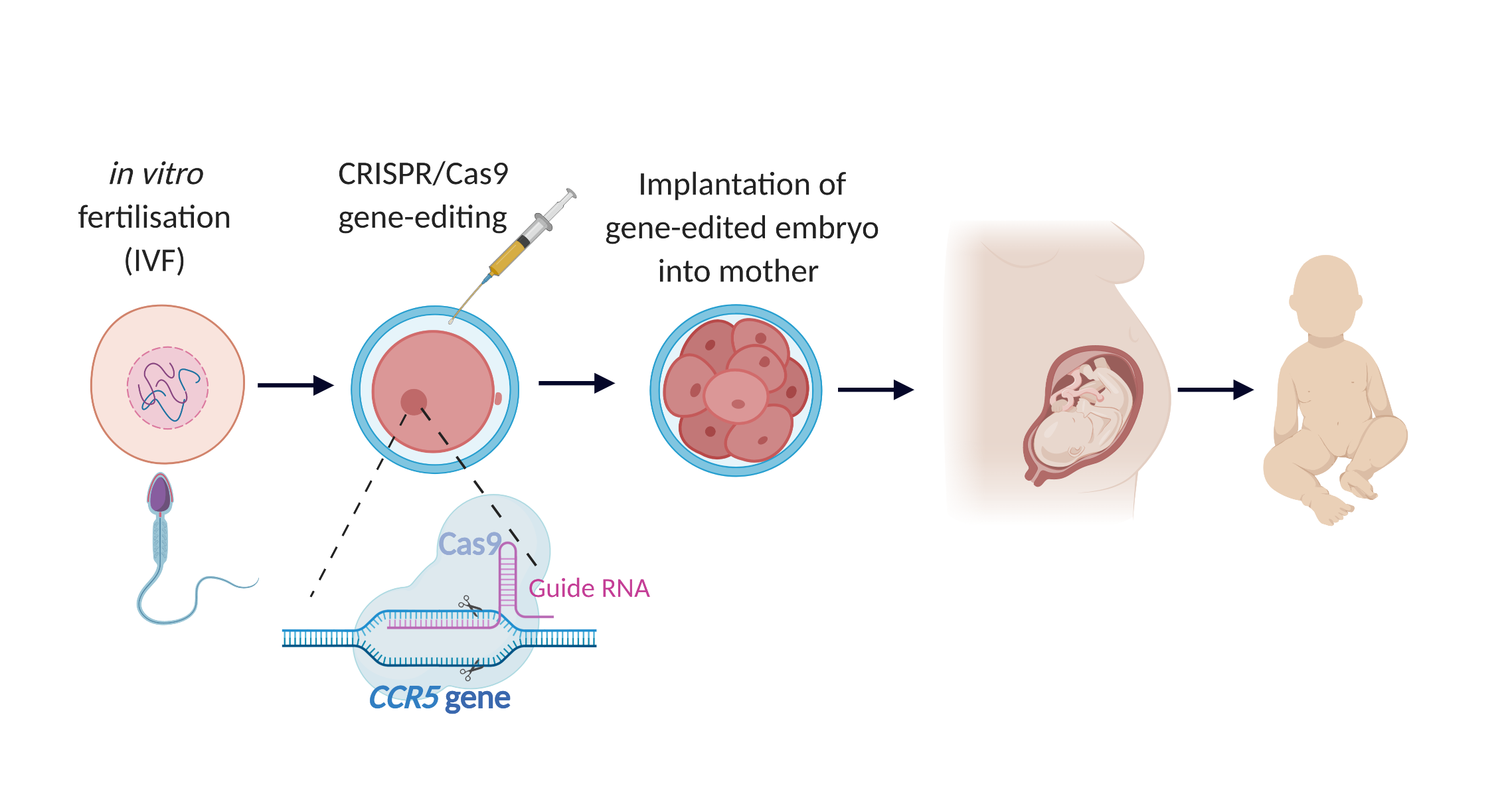
The scientific promise is straightforward. If a disease is caused by a known mutation in DNA, then editing that mutation at the embryonic stage could, in theory, stop the condition before it starts. This is conceptually different from treating a child or adult after symptoms appear. It is prevention at the earliest possible biological point.
The seductive pitch is that embryo editing could turn inherited disease from destiny into a solvable engineering problem. The danger is assuming biology will behave like software.
That distinction matters. A therapy delivered to an adult may affect that patient alone. An edit made to an embryo may affect every cell in the resulting person. If the edit reaches reproductive cells, it may also affect descendants. That is why scientists refer to this as germline editing, and why the debate is so emotionally and politically charged.
Embryo gene editing is not just better IVF
Supporters often frame the technology as an extension of IVF and embryo screening. But that framing can blur a critical distinction. With preimplantation genetic testing, clinicians examine embryos created through IVF and select those that do not carry a specific mutation. With embryo gene editing, clinicians would attempt to change the embryo itself.
That difference becomes important for families who cannot easily produce an unaffected embryo. Some couples may both carry disease-linked variants. Others may face odds so low that repeated IVF cycles become financially and emotionally crushing. In those cases, editing can sound less like enhancement and more like rescue.
The technical challenge beneath the promise
The most familiar gene-editing tool is CRISPR, often paired with enzymes such as Cas9. More recent systems include base editing and prime editing, which are designed to make more precise changes without cutting both strands of DNA in the same way. These advances are real, but precision is not the same as certainty.
Researchers still have to worry about off-target edits, where the tool alters the wrong location in the genome. They also have to worry about mosaicism, where some cells in the embryo carry the edit and others do not. In a future child, that could mean the intended correction is incomplete or unevenly distributed across tissues.
There is also the problem of interpretation. Human genomes are not clean instruction manuals. A variant that appears harmful in one context may behave differently depending on other genes, environment, ancestry, or unknown biological interactions. Editing one letter of DNA could have ripple effects that are not visible until years later.
The ethical fault line is consent
No future child can consent to being genetically altered. That does not automatically end the debate, because children also cannot consent to surgery, vaccination, or birth itself. Parents and physicians routinely make consequential medical decisions on behalf of children. But embryo editing raises a higher bar because the decision could be irreversible and heritable.
The ethical case is strongest when the target is a severe, well-understood, single-gene disease with no reasonable alternative. It is weakest when the target moves toward traits such as height, intelligence, athletic ability, or cosmetic preferences. The problem is that markets have a way of stretching definitions. What begins as disease prevention can drift toward optimization.
The line between preventing suffering and selling advantage will not be protected by good intentions alone.
This is where regulators face a brutal design problem. Ban too broadly, and families with serious genetic risks may lose a future medical option. Permit too loosely, and reproductive medicine could become a marketplace for engineered advantage.
Why this matters for biotech and public trust
The biotech industry is already living through a credibility test. Gene therapies have delivered astonishing results in some diseases, but they have also exposed hard truths about price, access, durability, and risk. Embryo editing raises the stakes even further because the customer is not just a patient. The customer may be a parent making decisions for a future person.
If companies move too aggressively, public backlash could set the field back for decades. If regulators move too slowly, work may migrate to jurisdictions with weaker oversight. Neither outcome is good for science or families.
Pro tip for reading the hype
When a company or researcher discusses embryo gene editing, watch for three details: whether the edit is intended for research only or pregnancy, whether the condition has alternatives through IVF screening, and whether long-term follow-up is realistically possible. If those answers are vague, the pitch is not ready for prime time.
Another signal is the target condition. A narrow focus on a severe, single-gene disorder is very different from broad language about improving future generations. The first is medicine. The second starts to sound like consumer genetics with a lab coat.
Embryo gene editing needs a global rulebook
National regulation is not enough. Reproductive technology already crosses borders, and wealthy patients can travel for procedures. If one country bans embryo editing while another quietly permits it, a global fertility tourism market could emerge before the science is mature.
A serious governance framework would need several layers:
- Clear limits: Only severe medical indications should be considered, not elective trait selection.
- Independent review: Decisions should not sit solely with clinics or companies that profit from procedures.
- Transparent data: Safety results, failed attempts, and adverse outcomes must not disappear into private files.
- Long-term monitoring: Children born after editing would need medical follow-up over years, not weeks.
- Equity safeguards: Access cannot be restricted to a luxury market for the wealthy.
The last point is especially important. If embryo editing ever becomes safe and legal, it could either reduce suffering or deepen inequality. A world where only affluent families can remove certain disease risks before birth would create a new biological layer to existing privilege.
The future could split in two
One future is cautious and medical. In that version, embryo editing remains rare, tightly regulated, and limited to devastating conditions where no practical alternative exists. Clinical use follows years of transparent research, and society treats each case as extraordinary.
The other future is commercial and chaotic. Clinics compete on genetic offerings. Regulators chase after marketing claims. Parents are pressured to consider edits not because their child faces a terrible disease, but because the technology exists and competitors are using it. That future is not inevitable, but it is plausible if governance lags behind capital.
The next few years will determine which path becomes more likely. The science will continue improving. The demand from some families will be real. The temptation for startups will be enormous. But the standard for moving from lab research to reproductive use must remain exceptionally high.
The bottom line on embryo gene editing
Embryo gene editing is one of the rare technologies that forces society to answer a question before the product is ready: not can we do it, but under what conditions should anyone be allowed to try? The potential upside is profound. Preventing a child from inheriting a devastating disease would be a landmark medical achievement. But the risks are equally profound because mistakes may not stop with one patient.
The smartest position is neither reflexive panic nor blind acceleration. It is disciplined skepticism. The field deserves research, transparency, and global debate. It does not deserve a race to the first marketable gene-edited baby.
Biotech has spent decades learning how to edit life. Now it has to prove it can edit its own incentives.
The information provided in this article is for general informational purposes only. While we strive for accuracy, we make no guarantees about the completeness or reliability of the content. Always verify important information through official or multiple sources before making decisions.