EU Border Walls Reignite
EU Border Walls Reignite
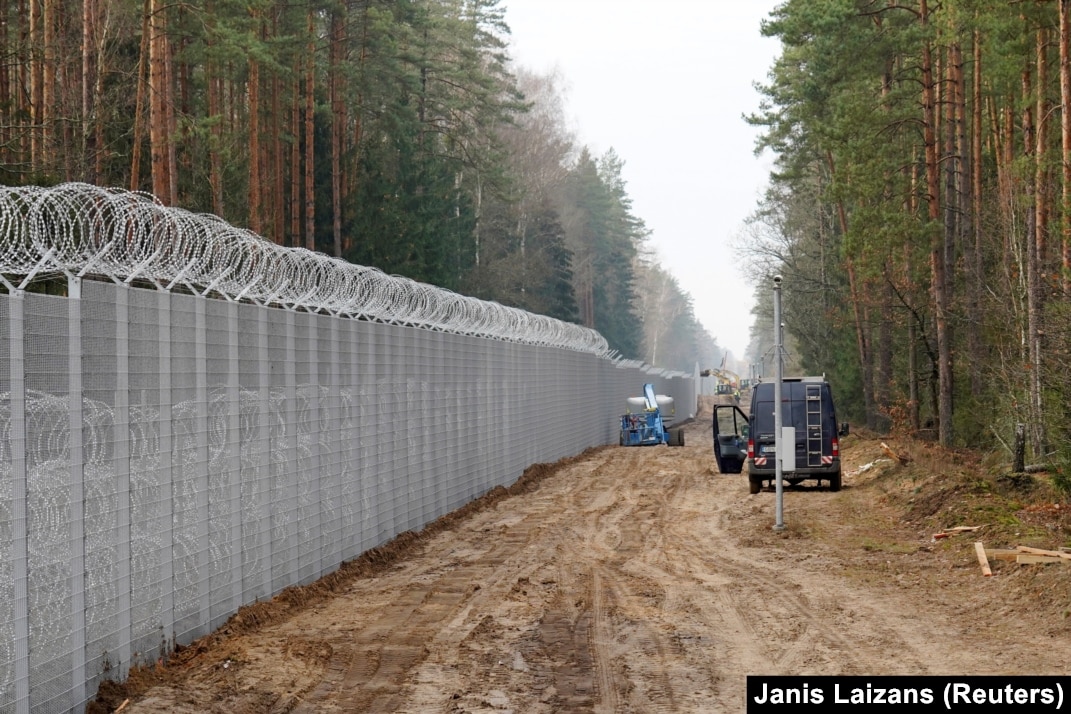
The EU border barriers debate is back, and this time it is not a fringe talking point. It is becoming a defining test of how Europe balances security, migration, and political survival. When leaders start treating physical barriers as a legitimate policy tool, the conversation changes fast: from abstract values to concrete infrastructure, from shared principles to hard borders. That shift matters because it reveals a deeper truth about the bloc’s current mood – anxious, defensive, and increasingly willing to trade symbolism for control. For policymakers, the stakes are enormous. For migrants, the consequences are immediate. And for the EU itself, the question is whether it can harden its perimeter without hollowing out the ideals it was built to defend.
- The
EU border barriersdebate signals a more security-first European posture. - Physical barriers may reduce political pressure, but they rarely solve migration pressure on their own.
- The move raises hard questions about EU unity, legal norms, and humanitarian credibility.
- Border infrastructure is only one layer of a much larger migration and asylum system.
- What happens next will shape Europe’s politics well beyond the current crisis cycle.
Why EU border barriers are back on the agenda
The return of physical border barriers in Europe is not happening in a vacuum. It is a response to a familiar political formula: rising migration pressure, public anxiety, and governments looking for visible action that can be explained in a headline. Walls, fences, and fortified checkpoints are easy to sell because they look decisive. They create an image of control, which is politically valuable even when the underlying migration system remains messy and overstretched.
That is the core tension behind the renewed interest in EU border barriers. On one hand, member states want stronger external borders because they believe a more secure frontier protects internal freedom of movement. On the other, critics argue that physical barriers are a blunt instrument that shifts the burden rather than solving the underlying problems of conflict, displacement, and uneven asylum processing.
The European debate also reflects a broader trend in democracies: when institutions struggle to deliver fast, coherent migration policy, visible infrastructure becomes a substitute for consensus. The result is a policy that is as much about signaling as it is about security.
Physical barriers are rarely just about borders. They are political instruments designed to reassure voters, deter crossings, and buy time for governments that cannot agree on the harder reforms.
What the shift means for EU migration policy
The most important issue is not whether a wall can be built. It is what its existence does to the architecture of EU migration policy. If border fortification becomes normalized, then the bloc is signaling that enforcement is once again taking priority over coordination. That could reshape how asylum claims are handled, how Frontex is deployed, and how member states negotiate responsibility-sharing.
To understand the tradeoffs, it helps to think about the border as a system, not a line. A fortified frontier can slow movement, but it cannot replace screening capacity, asylum adjudication, return agreements, or legal pathways. Without those pieces, pressure simply moves elsewhere. Migrant routes shift, smugglers adapt, and frontline countries absorb new costs.
What physical barriers can do
- Increase the cost and difficulty of unauthorized crossings.
- Provide a visible signal of state control to domestic audiences.
- Buy time for overwhelmed border agencies.
What physical barriers cannot do
- Eliminate the drivers of displacement, including war, repression, and economic collapse.
- Resolve asylum backlogs or improve coordination across the bloc.
- Prevent route diversification by smugglers and migration networks.
That last point is crucial. Migration pressure is dynamic. If one crossing becomes harder, the route changes. If one border becomes politically toxic, another one becomes the pressure point. A wall can displace the problem. It rarely erases it.
Why this matters beyond migration
The debate over EU border barriers is also a referendum on what kind of political project the EU wants to be. For years, the bloc has described itself as a guardian of liberal norms, a space where rights, mobility, and cooperation define legitimacy. But a hardening border strategy suggests a more defensive identity: less open, more reactive, and increasingly willing to prioritize security over symbolism.
That shift has consequences far beyond asylum policy. It affects how the EU is perceived by neighboring countries, how internal solidarity holds up under strain, and how populist parties frame the future of European integration. If center-right and centrist governments embrace physical barriers, they may undercut the far right’s monopoly on border politics. But they also risk validating the argument that Europe is moving away from openness because it has failed to make openness workable.
The real political risk is not that the EU builds more barriers. It is that it normalizes a permanent emergency mindset where exceptional measures become the default.
That matters because emergency politics tend to outlive the emergency. Once infrastructure is in place, it becomes easier to expand, harder to dismantle, and politically dangerous to question. Border hardware can outlast the crisis that justified it.
The strategic tradeoffs leaders cannot ignore
For policymakers, the choice is not between compassion and control. It is between different kinds of imperfect control. The central challenge is designing a migration system that is credible enough to maintain public trust without abandoning legal obligations or turning border management into theater.
A more serious strategy would treat physical barriers as a narrow tool, not a grand solution. That means pairing them with operational reforms that actually change outcomes on the ground.
- Faster asylum processing: reduce backlogs so border systems do not become permanent holding zones.
- Clearer legal pathways: create routes that reduce reliance on smugglers and irregular crossings.
- Targeted enforcement: focus resources on trafficking networks, not just migrants at the fence.
- Burden-sharing mechanisms: ensure frontline states are not left carrying the full political and logistical load.
Without those measures, physical barriers become a pressure-release valve for politics rather than a durable policy response.
How the EU can avoid a policy dead end
The biggest mistake Brussels could make is treating border fortification as proof that it has acted decisively. A fence is not policy success. It is a tactic. The real test is whether the EU can reduce disorder while preserving the legal and moral framework that gives its institutions legitimacy.
That requires a more disciplined approach:
- Use barriers selectively: deploy them where terrain, security, or transit patterns justify them, not as a universal reflex.
- Invest in capacity: expand screening, reception, and processing infrastructure at the same time.
- Measure outcomes: track route displacement, detention pressure, and humanitarian impact, not just crossing numbers.
- Protect oversight: maintain legal review and accountability so enforcement does not drift into abuse.
This is where the EU often struggles. It is good at producing frameworks, declarations, and compromise language. It is less good at sustaining execution under political pressure. But that is exactly what this moment requires.
Pro tip for reading the politics
Watch whether leaders talk about EU border barriers as a temporary response or a permanent feature. That language reveals whether Europe sees migration as a problem to manage or a threat to contain indefinitely.
The future implications are bigger than one border
The significance of the current debate stretches beyond the specific geography of any one crossing. If physical barriers become a mainstream EU response, then future crises – whether migration-related, geopolitical, or even climate-driven – may trigger the same instinct. Build first, debate later. That is a dangerous precedent for a union that depends on trust, rules, and shared restraint.
There is also a geopolitical layer. Europe faces a world where instability on its periphery is likely to continue. That means more pressure at the edges, not less. If the bloc chooses fortification without investing in diplomacy, development, and legal migration channels, it may end up externalizing humanitarian risk rather than reducing it.
The hard truth is that border policy cannot be separated from foreign policy. Conflicts, economic volatility, and state fragility all show up at Europe’s edge eventually. Walls can delay that reality. They cannot abolish it.
Europe does not need a border policy built on optics. It needs one built on capacity, coordination, and political honesty.
The bottom line
The comeback of EU border barriers is less about concrete and steel than it is about the mood of Europe. It reflects a bloc that feels under pressure, underprepared, and under constant political scrutiny. Physical barriers may satisfy the demand for action, but they are not a substitute for an actually functional migration system.
If the EU wants to stay credible, it has to do more than fortify its edges. It has to prove that control and legality can coexist, that border security does not require permanent crisis politics, and that Europe can still govern migration without abandoning the values it claims to defend. That is the real challenge now. Not whether walls can be built, but whether Europe can stop pretending that walls are the answer.
The information provided in this article is for general informational purposes only. While we strive for accuracy, we make no guarantees about the completeness or reliability of the content. Always verify important information through official or multiple sources before making decisions.


