Europe Shares Stall as Geopolitical Risk Shakes Markets
Europe Shares Stall as Geopolitical Risk Shakes Markets
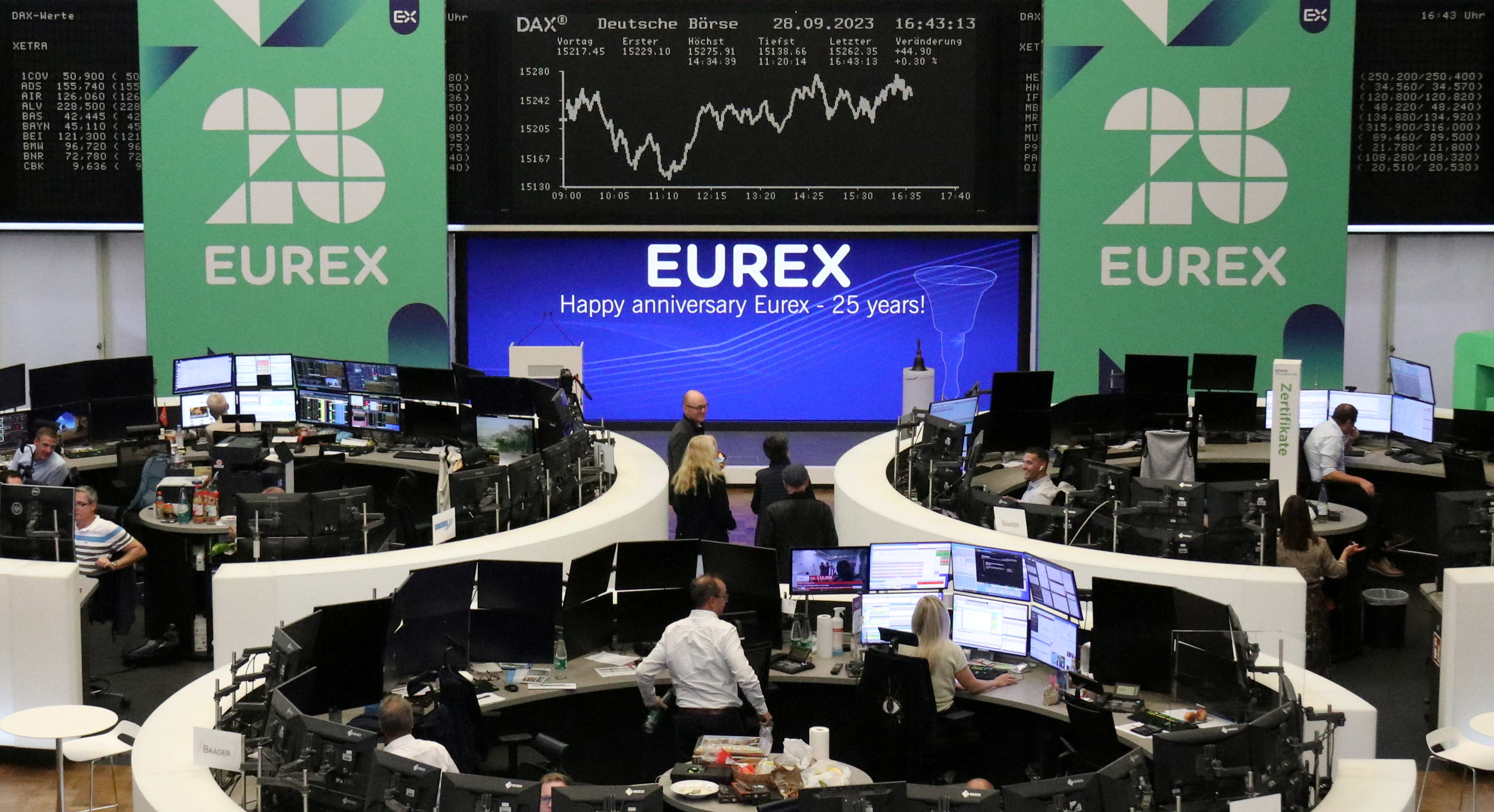
European shares are hitting the kind of wall investors know all too well: not a crash, not a breakout, just a cautious pause while the market tries to price uncertainty that refuses to stay contained. The latest move in European shares shows how quickly sentiment can freeze when geopolitical conflict moves from background noise to the main event. Traders are no longer just watching earnings and central banks. They are watching shipping routes, energy flows, defense spending, and whether risk appetite can survive another escalation. That matters because this kind of stall rarely stays isolated. It tends to ripple into currencies, commodities, bond yields, and the sector rotations that decide who leads the next leg of the market.
- European equities are pausing as investors reassess geopolitical and macro risk.
- Defensive sectors tend to hold up better when conflict uncertainty rises.
- Energy, defense, and safe-haven assets can benefit from prolonged tension.
- Market direction now depends as much on headlines as on fundamentals.
- Investors need a tighter risk framework, not just a conviction trade.
Why the European shares stall matters now
This is not just a flat session on a trading screen. A stall in European shares often signals that investors are recalibrating the probability of bad outcomes rather than reacting to one clean data point. Geopolitical conflict creates a messy pricing environment because it affects multiple inputs at once: inflation expectations, supply chains, energy costs, consumer confidence, and corporate margins. That combination forces investors into wait-and-see mode.
When markets stall under stress, it usually means two things are happening at once. First, traders are unwilling to chase risk assets higher without more clarity. Second, they are still reluctant to fully de-risk because the conflict may not spread in the way bears fear. That tension produces the kind of sideways action that looks boring on the surface but can be extremely informative underneath.
Markets do not need certainty to move. They need a narrative they can agree on. When the narrative fractures, equities tend to freeze before they reprice.
The geopolitical conflict effect on market structure
Conflict risk is not just about headlines. It changes how market participants behave across asset classes. Equity investors begin to discount higher volatility, while fixed income traders search for duration and safety. Commodity markets react to disruptions in energy, metals, and transport corridors. In Europe, where economic growth is already sensitive to energy prices and manufacturing pressure, the impact can be sharper than in less exposed regions.
That is why geopolitical conflict can create a broader market stall instead of a clean selloff. Participants often believe the event is serious enough to reduce exposure but not yet severe enough to justify a full panic exit. The result is a classic holding pattern: lower conviction, wider spreads, and thinner momentum.
What investors are likely watching
The market’s attention is usually concentrated in a few areas:
- Energy prices – Any disruption risk can feed directly into inflation and margins.
- Defense and aerospace – These names often gain from expectations of higher security spending.
- Banks and cyclicals – These can weaken if growth concerns intensify.
- Consumer discretionary – Sentiment-sensitive sectors tend to lose support first.
- Utilities and staples – Defensive positioning often becomes more attractive when uncertainty spikes.
The point is not that one sector always wins. The point is that uncertainty changes the ranking of what investors are willing to own.
Why the European shares story is bigger than equities
The equity tape is only one layer of the story. When European shares go sideways in response to conflict, it often reflects a much larger repricing across the financial system. Currency markets may lean toward the dollar or Swiss franc. Bond markets may price slower growth. Commodity markets may inject fresh inflation risk back into the conversation. And that matters because central banks cannot ignore conflict-driven shocks if they begin to feed through into pricing and consumer behavior.
For Europe specifically, the stakes are high. The region is highly exposed to external trade, imported energy, and industrial output. That means geopolitical instability can dent confidence more quickly than in more insulated economies. Even if the direct economic damage remains limited, the psychological effect can be enough to delay investment decisions and slow capital allocation.
How traders are adjusting risk
When the market feels fragile, the smartest investors stop asking where the index will close and start asking what kind of exposure they actually want. That usually means reducing leverage, tightening stops, and preferring businesses with pricing power and resilient cash flow.
A practical risk framework during conflict-driven volatility looks something like this:
- Prioritize balance sheet strength over headline growth.
- Favor businesses with low dependence on fragile supply chains.
- Keep position sizes smaller than usual when headlines are binary.
- Use
stop-losslevels with discipline, not emotion. - Watch correlation spikes, because diversification can break when panic spreads.
Pro tip: In these periods, the quality factor often matters more than the market-cap story. Investors tend to pay up for reliability when visibility collapses.
What the stall says about sentiment, not just prices
Markets can look indecisive for reasons that are actually quite decisive. A stall in European shares suggests that bullish catalysts are being offset by fear of escalation, and that the burden of proof has shifted back to the upside. Traders are no longer rewarding optimism automatically. They want evidence that the conflict will not worsen, that inflation will stay contained, and that earnings can hold up through the noise.
This is where sentiment becomes more important than valuation in the short term. A stock can look cheap on a spreadsheet and still trade poorly if investors believe the macro backdrop is deteriorating. That is especially true in Europe, where sectors are often more cyclical and more sensitive to external shocks than in the United States.
Sideways markets are often the market’s way of saying “I believe the risk, but I do not yet believe the worst-case scenario”.
Where the opportunities may emerge
Periods of caution often create the next set of winners. If conflict risk stays elevated, investors may gravitate toward companies and sectors with three traits: dependable earnings, minimal direct exposure to disrupted trade routes, and the ability to pass on costs. That can make healthcare, consumer staples, utilities, and select industrials relatively attractive.
Defense names may also stay in focus if governments signal a more durable shift in security spending. Energy producers and infrastructure-linked businesses can benefit too, though those trades can become crowded quickly. The real opportunity usually lies not in chasing the obvious names, but in identifying second-order beneficiaries: firms that gain from reallocation of capital, procurement shifts, or supply-chain rerouting.
Watch for these second-order effects
- Capital rotation into safer balance-sheet stories.
- Procurement demand for domestic industrial suppliers.
- Margin pressure for import-dependent manufacturers.
- Repricing of insurance and logistics costs across sectors.
Why this matters for the months ahead
The most important lesson from a stall like this is that markets are not waiting for a full resolution. They are pricing the probability of multiple outcomes at once. If the conflict escalates, volatility likely rises and equities may face another leg lower. If tensions stabilize, the market could quickly rotate back into risk assets, especially if economic data and earnings remain resilient.
That makes the next phase less about prediction and more about preparation. Investors who understand the interplay between geopolitics, inflation, sector leadership, and liquidity will be better positioned than those who treat every headline as a one-off. In a market this reactive, patience is not passivity. It is an edge.
For now, European shares are sending a clear message: the market is not convinced enough to buy aggressively, but not afraid enough to capitulate. That is a dangerous balance, but it is also where the next major move often starts.
The information provided in this article is for general informational purposes only. While we strive for accuracy, we make no guarantees about the completeness or reliability of the content. Always verify important information through official or multiple sources before making decisions.