Ferry Safety Fails Again
Ferry Safety Fails Again
A ferry carrying 260 people capsized off the northern Cyprus coast, and the story is bigger than one emergency. It is a hard reminder that passenger shipping still depends on a chain of decisions that has to go right every time: maintenance, loading, weather judgment, crew training, and rescue response. When one link fails, the consequences are immediate and public. For operators, regulators, and travelers, the ferry safety crisis is not abstract. It is the difference between a routine crossing and a mass-casualty scramble at sea. The uncomfortable question now is not just what happened on this voyage, but why modern maritime systems still leave so much room for catastrophe.
- The capsize spotlights weak points in passenger ferry operations and oversight.
- Maritime safety depends on training, vessel stability, and real-time decision-making.
- Incidents like this often expose deeper failures in regulation and enforcement.
- Passengers should treat safety protocols and evacuation readiness as essential, not optional.
- The industry may face renewed pressure to improve monitoring, loading controls, and emergency response.
What the capsize reveals about ferry safety crisis
The immediate tragedy is obvious, but the broader lesson is structural. A ferry does not capsize in a vacuum. Stability failures usually involve a messy combination of overload, shifting weight, weather exposure, mechanical issues, or delayed operational decisions. That is why the ferry safety crisis matters beyond this one route. Passenger shipping is often treated as routine infrastructure, yet it operates in conditions where seconds matter and margins can be thin.
The public tends to assume ferries are safer than they look. Usually, that is true. But the safety margin is only as good as the standards behind it. If a vessel is poorly maintained, if loading is not monitored properly, or if a crew lacks the authority to halt departure when conditions change, the system becomes brittle fast. The tragedy off northern Cyprus is a warning that maritime risk is often hidden until it is suddenly visible in the worst possible way.
When a ferry capsizes, it is rarely a single failure. It is usually a chain reaction that exposes how fragile the safety culture really is.
Why stability is the first line of defense
Ferries rely on balance. That sounds simple until you remember that balance changes with every vehicle, suitcase, passenger movement, wave, and gust of wind. Naval architects design vessels with stability in mind, but design can only do so much if operations ignore the limits. Even a slight miscalculation in cargo distribution or passenger movement can matter more than many travelers realize.
Loading discipline is not a minor detail
Vehicle ferries are especially vulnerable when cargo is unevenly positioned or secured poorly. Water on deck, open compartments, or shifting loads can rapidly change the vessel’s center of gravity. That is why loading procedures, weight checks, and verified deck control are not bureaucratic extras. They are core survival systems. If the operational team is rushed, undertrained, or pressured to keep the schedule moving, safety becomes negotiable in the worst way.
Weather decisions can make or break a voyage
Many maritime incidents happen when a route stays open longer than it should. Operators often face commercial pressure to sail, even when conditions are deteriorating. The problem is that weather at sea is not forgiving, and a vessel that feels manageable in harbor can become unstable in open water. The smartest maritime operators treat weather as a decision filter, not a background variable. That distinction saves lives.
The ferry safety crisis is also a governance problem
The hardest part of preventing maritime disasters is that the failures are often predictable but still not prevented. That is why the ferry safety crisis keeps returning in different forms across the globe. Regulations may exist on paper, but enforcement can be uneven. Inspection regimes may be underfunded. Aging vessels may remain in service too long. And when accidents do happen, accountability can become diluted across multiple agencies and jurisdictions.
There is a familiar pattern in transport disasters: warnings emerge after the fact, commissions are formed, and recommendations pile up. Then attention fades. The best safety systems do not wait for tragedy to correct themselves. They build redundancy, transparency, and a culture where stopping a voyage is seen as responsible, not weak.
Good maritime safety is invisible until it fails. Bad maritime governance is even harder to spot because it often looks like normal operations.
What regulators should be asking now
- Were stability limits followed before departure?
- Was the vessel properly maintained and inspected?
- Did the crew have the training and authority to delay or cancel sailing?
- Were emergency systems, life jackets, and evacuation routes accessible and working?
- Was rescue coordination fast enough once the capsize occurred?
These are not just post-incident questions. They are the minimum checklist for preventing recurrence. If authorities only investigate the wreck after the fact, they are already too late.
Why passengers should care more about safety signals
Most travelers do not pick ferry routes based on safety metrics. They choose price, convenience, and timing. That is understandable, but it also creates blind spots. The safest operators are the ones that communicate clearly, enforce seating and loading discipline, and invest in emergency readiness even when passengers never notice. That visible calm is usually a sign of good preparation.
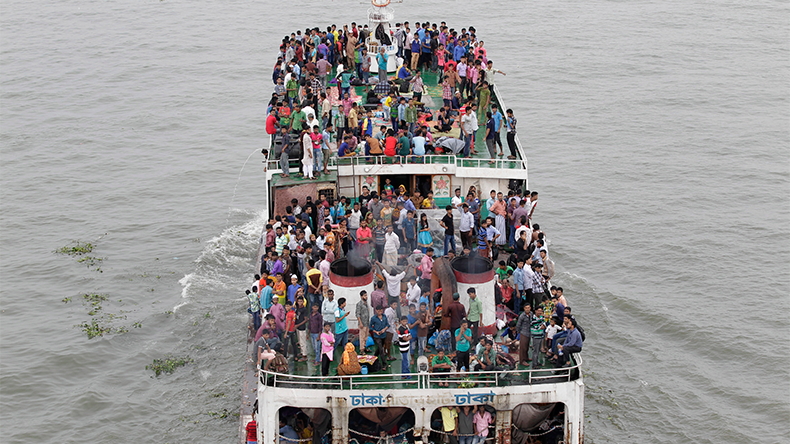
Passengers can still watch for warning signs. Overcrowding, visibly poor maintenance, unclear boarding instructions, and rushed departures are all red flags. If a crew seems indifferent to loading order or safety briefings, that is not a cosmetic issue. It can be a clue that the operator cuts corners elsewhere too. In transport, small signs often precede big failures.
Practical safety habits for travelers
- Pay attention to life jacket instructions and emergency announcements.
- Note exits, stairwells, and assembly points as soon as you board.
- Keep essentials easy to grab in case evacuation becomes necessary.
- Report overcrowding or unsafe boarding conditions when you see them.
- Take safety briefings seriously, even on short crossings.
These habits will not solve systemic failures, but they can improve the odds when systems break down.
How the industry should respond now
The shipping industry likes to frame itself as highly regulated, and in many places it is. But regulation is not the same as resilience. A vessel can be compliant and still be vulnerable if procedures are weak or enforcement is inconsistent. The response to this capsize should not be another round of performative concern. It should be a practical push toward stronger operational controls, better inspection regimes, and real-time monitoring of route conditions.
There is also a technology angle here. Modern ferry operators can use onboard sensors, digital loading systems, automated stability monitoring, and better communications with port authorities. None of that replaces judgment, but it does reduce guesswork. The point is not to turn every crossing into a lab experiment. The point is to make visible the conditions that lead to disaster before passengers are in the water.
The future of ferry safety crisis prevention
The next phase of maritime safety will likely hinge on whether operators treat this as a one-off tragedy or a systemic warning. If they choose the latter, the fixes are well known: tougher inspections, better crew training, more transparent incident reporting, and stronger authority for captains to refuse unsafe departures. If they choose the former, the cycle repeats.
There is also a reputational risk. Every serious accident chips away at public confidence in ferry travel. That can hurt tourism, regional mobility, and local economies that depend on passenger shipping. Safety is not just a moral obligation. It is an economic one. Operators that invest in prevention protect both people and the business model.
The real test after a ferry capsize is whether the industry learns something measurable, or just remembers it long enough for the headlines to fade.
Bottom line
The capsize off northern Cyprus is a brutal reminder that maritime transport still lives close to the edge when safety systems fail. The ferry safety crisis is not about one vessel alone. It is about whether operators, regulators, and passengers are willing to treat prevention as a serious discipline instead of an afterthought. Until the industry proves it can consistently manage stability, weather, loading, and emergency response, every crossing carries more risk than it should.
That is the real story here: not just that a ferry overturned, but that a supposedly routine journey can still become a test of whether the system works at all.
The information provided in this article is for general informational purposes only. While we strive for accuracy, we make no guarantees about the completeness or reliability of the content. Always verify important information through official or multiple sources before making decisions.