France Fires Expose a Bigger Climate Crisis

France Fires Expose a Bigger Climate Crisis
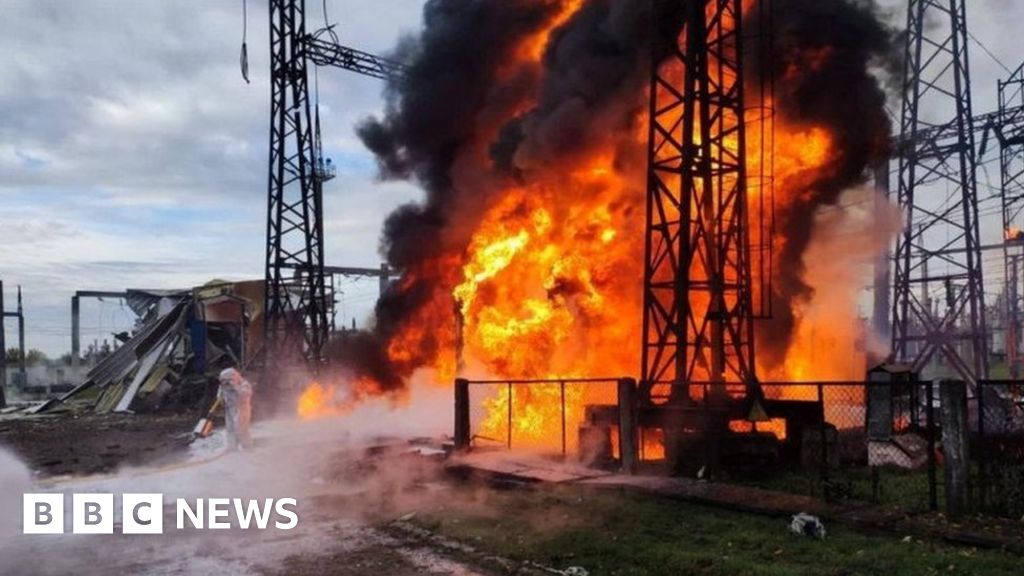
France’s wildfire season is no longer a seasonal nuisance – it is a stress test for everything from emergency response to urban planning. The fires threatening the Bordeaux region are not just another grim summer headline. They are a reminder that Europe’s heat, drought, and land management problems are converging faster than governments are adapting. For residents, the fear is immediate: evacuations, smoke, property loss, and the unsettling realization that places once considered relatively safe are becoming vulnerable. For policymakers, the stakes are larger still. Each major blaze now doubles as a verdict on preparedness, coordination, and climate strategy. The uncomfortable truth is simple: if France cannot contain this new normal, other countries may soon find themselves facing the same reckoning.
- France’s wildfire crisis is intensifying beyond traditional fire season boundaries.
- Bordeaux highlights how climate stress is spreading into regions once seen as lower risk.
- Response capacity matters, but prevention and land management matter just as much.
- The long-term issue is not only firefighting – it is building climate resilience into daily governance.
Why the France fires matter now
The phrase France fires sounds local, even contained, but that framing misses the larger point. These blazes sit at the intersection of climate change, public safety, and economic disruption. Hotter summers and longer dry spells are creating conditions where a single spark can escalate into a regional emergency. Bordeaux matters because it is not an abstract wildfire zone. It is a major cultural and economic center, surrounded by forests, farmland, transport corridors, and communities that depend on stable infrastructure. When fires threaten that ecosystem, the damage is not limited to burned acreage. It can ripple into supply chains, tourism, agriculture, insurance risk, and public confidence in the state’s ability to respond.
Europe has seen this movie before, but each year it becomes a little less surprising and a little more dangerous. That is what makes these events so politically explosive. They expose whether governments are still treating wildfires as exceptional disasters or as the predictable outcome of a warming continent.
The Bordeaux warning is bigger than one region
Bordeaux is a particularly useful case study because it sits outside the stereotype of the catastrophic wildfire frontier. That matters. When fires move into regions associated with vineyards, heritage towns, and dense population centers, the public narrative shifts. People stop asking whether the emergency is real and start asking why so little was done to prepare. That is the moment when climate policy becomes visible to ordinary citizens.
There are three reasons the Bordeaux fires hit harder than a standard summer fire report:
- They challenge assumptions about where Europe’s fire risks begin and end.
- They pressure local infrastructure that was not designed for prolonged emergency conditions.
- They raise the cost of delay because recovery in a high-value region is expensive and politically sensitive.
Once a region like Bordeaux is in the headlines for wildfires, the conversation inevitably expands. This is no longer only about forest management. It is about housing policy, water stress, rural depopulation, emergency logistics, and whether climate adaptation is being funded at the scale the moment demands.
Wildfires are increasingly less about isolated ignition points and more about system failure – a failure of planning, prevention, and political urgency.
France fires and the changing climate playbook
The old wildfire playbook assumed that fire was a temporary emergency: detect it, contain it, recover. But the France fires story reflects a different reality. Climate-driven fire risk is becoming chronic. That changes the response from reactive to structural. Fire brigades still matter, but so do land-use choices made months or years before the first flame.
What does that mean in practice? It means governments need to think less like disaster responders and more like risk managers. The goal is not only to suppress fires faster. It is to reduce the conditions that make megafires possible in the first place. That includes managing vegetation, hardening power infrastructure, revisiting building codes, and updating evacuation plans for communities that may now face smoke and fire threats multiple times in a single season.
Prevention is becoming more important than response
Fire suppression gets the headlines because it is dramatic. Prevention is less visible, less photogenic, and usually underfunded. But in a hotter Europe, it is the real battleground. Better forest corridors, controlled burns where appropriate, buffer zones around settlements, and smarter land maintenance can meaningfully change outcomes. None of these are glamorous. All of them are cheaper than rebuilding neighborhoods.
For local officials, this creates a painful tradeoff. Spending on prevention can be politically difficult because its benefits are measured in disasters that never happened. Yet every major wildfire season makes the case more clearly: prevention is not a luxury. It is the only rational response to recurring climate pressure.
What the Bordeaux fire reveals about resilience
The resilience question is not simply whether fire crews show up fast enough. It is whether the broader civic system can absorb shock without cascading failure. That means transportation routes, hospitals, communication networks, energy supply, and public alerts all need to work under stress. If one piece breaks, the consequences multiply.
There is also a social dimension here. Wildfires do not hit all communities equally. People with resources can leave early, replace damaged property, and navigate bureaucracy. Low-income residents, older adults, and rural households often have fewer options and slower access to recovery support. Any serious analysis of the France fires has to account for that inequality. Disaster response is never just technical. It is also a test of fairness.
The hidden cost is psychological
It is easy to focus on acres burned and homes threatened. But repeated wildfire exposure changes how people think about where they live. Families begin to question whether they should invest in a place that feels increasingly precarious. Businesses hesitate. Insurance markets tighten. The psychological toll becomes economic reality.
That matters because climate adaptation depends on public trust. If citizens believe authorities are always a step behind, they are less likely to follow evacuation orders, support land-use reforms, or accept the taxes needed for resilience projects. Winning that trust requires competence, consistency, and transparency before the next emergency hits.
Resilience is not just about surviving the fire. It is about preserving confidence in the institutions meant to protect people from the next one.
What governments and cities should do next
There is no single fix for a wildfire crisis this complex, but there is a clear hierarchy of priorities. The most effective response will combine emergency readiness with structural reform. Governments that treat these as separate categories will keep losing ground.
- Invest in early detection systems, including satellite monitoring and local sensor networks.
- Expand vegetation management around settlements, roads, and utility corridors.
- Update evacuation plans for faster alerts and clearer public communication.
- Harden critical infrastructure against heat, smoke, and fire-related outages.
- Rework building codes in high-risk areas to improve fire resistance.
There is also a governance lesson. Climate resilience has to move out of the environmental silo and into finance, housing, transportation, and regional planning. If it stays trapped inside one ministry, it will remain underpowered and reactive. That is not just bad administration. It is a strategic mistake.
Why this matters beyond France
The Bordeaux fires should be read as a warning for every country facing hotter, drier summers. What happens in France is not staying in France. The same pressures are already reshaping Spain, Italy, Greece, Portugal, and parts of central Europe. The pattern is familiar: longer dry periods, more combustible landscapes, greater exposure at the urban fringe, and emergency systems pushed closer to their limits.
For the rest of the world, the lesson is blunt. Wildfire risk is no longer confined to remote forests. It is moving into economically important regions, tourist corridors, and densely populated areas. That changes the political calculation. When the fires threaten tax bases, food systems, and national prestige, adaptation stops being optional.
The most important shift may be conceptual. Governments must stop asking how to return to normal after each fire season. Normal is changing. The question now is how to build institutions that can function when fire, heat, and drought become recurring features of life rather than rare emergencies.
The bottom line on France fires
The France fires are not just a summer disaster story. They are a preview of a more volatile Europe, where climate stress collides with outdated assumptions about risk. Bordeaux is a warning that no region is immune if the environmental and political systems around it are not built for what comes next. Fire crews can contain flames. Only policy can contain the trend.
If this moment is treated as an anomaly, Europe will keep paying for the same surprise twice. If it is treated as evidence, then the path forward becomes clearer: invest earlier, plan smarter, and assume the next fire season will be worse unless the system itself changes.
The information provided in this article is for general informational purposes only. While we strive for accuracy, we make no guarantees about the completeness or reliability of the content. Always verify important information through official or multiple sources before making decisions.