Tigray Child Recruitment Demands Action
Tigray Child Recruitment Demands Action
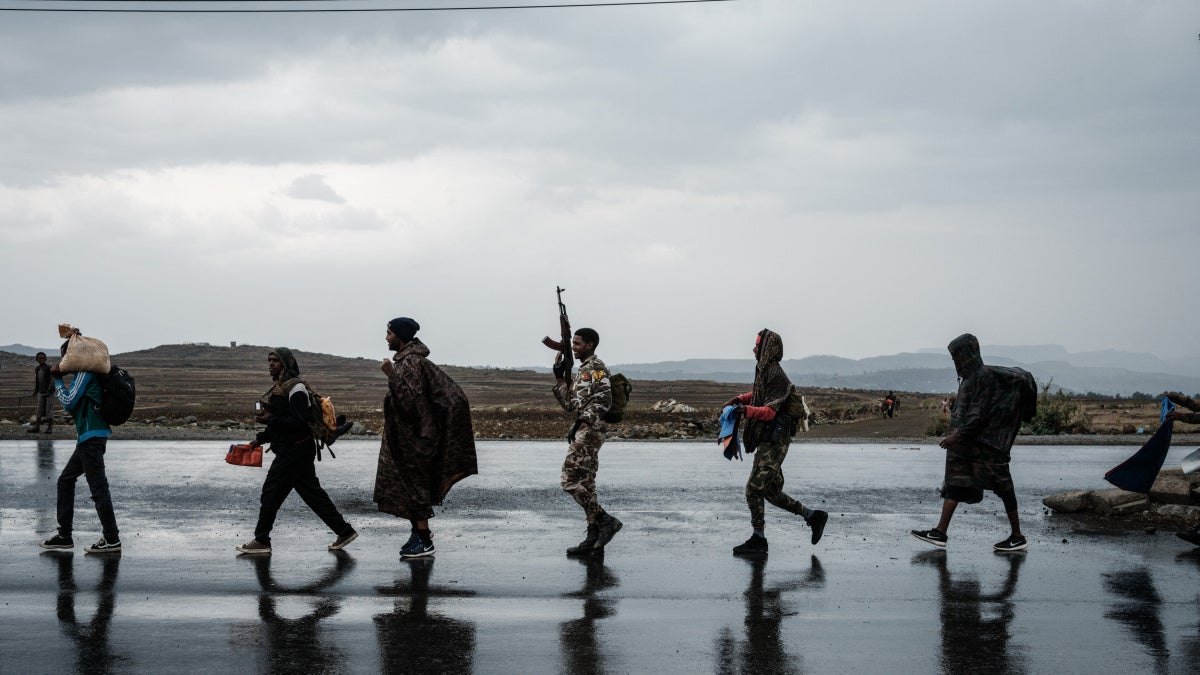
Reports of Tigray child recruitment cut through the fog of Ethiopia’s uneasy post-war moment with a brutal reminder: a ceasefire can silence artillery without ending the machinery of conflict. Families who believed the worst had passed are again facing the fear that boys may be pulled from classrooms, farms, and homes into armed ranks. The allegations now surrounding forces linked to the TPLF are not just another grim chapter in a long war. They are a test of whether Ethiopia’s peace process can protect civilians, restrain armed actors, and deliver accountability before the next generation is consumed by a conflict it did not choose.
- Forced recruitment of children is a grave violation under international humanitarian norms and can amount to a war crime.
- Tigray’s fragile security environment creates space for coercion, fear, and renewed militarization.
- Accountability matters now because delayed justice can normalize abuse and fuel future violence.
- Demobilization must include children, psychosocial care, family tracing, schooling, and community reintegration.
Tigray Child Recruitment Is a Warning Sign
The allegations that boys have been forcibly recruited in Tigray point to a wider breakdown: armed authority remains stronger than civilian protection in too many places. The official end of large-scale fighting did not automatically create trust, security, or a functioning rule-of-law system. In that gap, local commanders and political-military networks can still exert enormous pressure over communities.
For parents, the threat is immediate and personal. A boy sent to buy food, attend class, or help in a field can become vulnerable when armed groups treat youth as manpower. For communities, the impact is systemic. Forced recruitment drains schools, fractures families, spreads trauma, and makes any durable peace far harder to build.
Key insight: A peace agreement that does not protect children is not a peace architecture. It is a pause with paperwork.
Why the Allegations Against TPLF-Linked Forces Matter
The TPLF, once the dominant force in Ethiopia’s ruling coalition and later the central armed actor in the Tigray war, remains deeply embedded in the region’s political and security landscape. That makes allegations of child recruitment especially serious. They raise questions not only about rogue fighters, but about command responsibility, internal discipline, and the limits of post-war demobilization.
It is important to be precise. Allegations must be investigated, evidence must be preserved, and accused parties must have due process. But precision should not become paralysis. When communities report coercion, when boys disappear into armed structures, and when fear prevents families from speaking openly, the burden shifts to authorities and commanders to prove that children are being protected.
The Legal Line Is Not Ambiguous
Under IHL, the recruitment and use of children in hostilities is prohibited. The younger the child and the more coercive the recruitment, the more severe the violation. Forced recruitment can amount to a war crime, and commanders may be accountable if they ordered, enabled, ignored, or failed to prevent abuses by forces under their control.
This is not a technicality. The law recognizes what war does to children: it turns vulnerability into expendability. A child cannot meaningfully consent in a militarized environment shaped by hunger, fear, displacement, and political pressure.
The Post-War Vacuum in Tigray
Tigray’s conflict left behind devastated infrastructure, mass displacement, deep mistrust, and a crowded field of armed interests. Even where front lines have frozen, wartime institutions and habits can persist. Weapons remain accessible. Young people face limited schooling and employment. Families are often economically shattered. Those conditions make recruitment easier, whether by force, threat, manipulation, or survival pressure.
The risk is that militarization becomes normalized as a form of social organization. Boys may be told they are defending their community, avenging losses, or fulfilling a patriotic duty. But coercion wrapped in political language is still coercion. A community’s suffering cannot justify sacrificing its children.
Why Children Become Targets
Armed groups recruit children for grimly practical reasons. Children are easier to intimidate, cheaper to maintain, and less likely to challenge commanders. They can be used as porters, lookouts, messengers, guards, or fighters. Some are pushed into direct combat; others perform supporting roles that still expose them to attack, abuse, and lifelong trauma.
That distinction matters legally and morally. A child does not need to be carrying a rifle on a front line to be a victim of recruitment. If a boy is compelled to serve an armed structure, the harm has already begun.
Tigray Child Recruitment and the Accountability Test
Tigray child recruitment is now a measure of whether Ethiopia’s transition from war to peace is real or rhetorical. Accountability cannot be selective. If federal forces, regional forces, allied militias, or rebel-linked units have committed abuses, investigations must follow the evidence rather than the politics.
That is difficult in a polarized environment where each side has its own narrative of victimhood and resistance. But child protection cannot be subordinated to propaganda. The moral clarity is simple: no political cause is strengthened by forcing boys into war.
Editorial view: The fastest way to sabotage a peace process is to let armed actors believe children are available inventory.
What Real Accountability Requires
- Independent investigations with access to affected communities, former recruits, families, schools, and local officials.
- Protection for witnesses so parents and children can speak without retaliation.
- Command-chain scrutiny to determine who ordered, tolerated, or failed to stop recruitment.
- Transparent reporting that separates verified facts from political claims.
- Child-centered remedies including education, trauma care, and family reunification.
Accountability should not be reduced to courtroom symbolism. Prosecutions may be necessary, but the broader mission is prevention: making it costly for armed actors to recruit children and safe for communities to refuse.
The Missing Piece Is DDR
Post-conflict settings often turn to DDR, short for disarmament, demobilization, and reintegration. In theory, DDR helps fighters leave armed groups, surrender weapons, and return to civilian life. In practice, poorly designed DDR can overlook children, exclude informal recruits, or treat boys as security problems rather than victims.
A credible program in Tigray would need to identify children associated with armed forces or groups, remove them from command structures, and provide long-term support. That means schooling, vocational training, mental health services, and community reconciliation. Reintegration is not a press release. It is a years-long process of rebuilding trust around children who may be stigmatized, traumatized, or feared.
Pro Tip for Policymakers
Do not make demobilization dependent on children proving they were combatants. Many recruited children never receive formal status, uniforms, or records. If aid systems require paperwork that armed groups never issued, the most vulnerable victims will be locked out of support.
Schools Are the Front Line of Prevention
If armed groups want boys, schools become more than educational institutions. They become protective infrastructure. Keeping classrooms open, teachers paid, and students fed can reduce vulnerability to recruitment. Families are more likely to keep children in school when education feels safe, practical, and connected to a future.
But schools can also become surveillance points or recruitment pools if armed actors operate nearby. Protection requires clear boundaries: no armed presence in schools, no political mobilization of students, no intimidation of teachers, and rapid response channels when children are threatened.
This is where local civil society matters. Community elders, women’s groups, teachers, religious leaders, and youth networks often detect recruitment pressure before outside institutions do. They need resources, protection, and credible pathways to escalate warnings.
Why This Matters Beyond Ethiopia
The alleged forced recruitment of boys in Tigray is not only an Ethiopian crisis. It reflects a global pattern in which unresolved conflicts mutate into semi-permanent systems of coercion. When peace deals are incomplete, armed groups hedge against future fighting by holding on to fighters, weapons, and command structures. Children become part of that insurance policy.
That should alarm diplomats and humanitarian agencies. A conflict that continues to absorb children is not stabilizing. It is regenerating. The next escalation may already be forming inside the very networks that a peace process failed to dismantle.
The Future Risk
If allegations are ignored, three outcomes become more likely. First, families lose faith in civilian authorities and may seek protection from rival armed actors. Second, recruited boys grow into traumatized young men with limited options outside violence. Third, political leaders learn that international outrage is temporary and manageable.
The alternative is harder but possible: investigate abuses, protect witnesses, remove children from armed structures, fund reintegration, and make child recruitment a red line in every negotiation.
A Red Line That Must Hold
The central issue is not whether one faction can explain its security fears better than another. Tigray has suffered profoundly, and Ethiopia’s wider conflict has produced immense civilian harm across communities. But suffering does not grant permission to recruit children. If anything, it raises the obligation to protect them.
Tigray child recruitment demands more than concern. It demands a coordinated response from Ethiopian authorities, regional leaders, humanitarian actors, and international partners. The boys at risk are not symbols, bargaining chips, or future fighters. They are children, and the credibility of Ethiopia’s peace depends on whether they are treated that way.
The information provided in this article is for general informational purposes only. While we strive for accuracy, we make no guarantees about the completeness or reliability of the content. Always verify important information through official or multiple sources before making decisions.