Gaza Genocide Demands Real Time Accountability
Gaza Genocide Demands Real Time Accountability
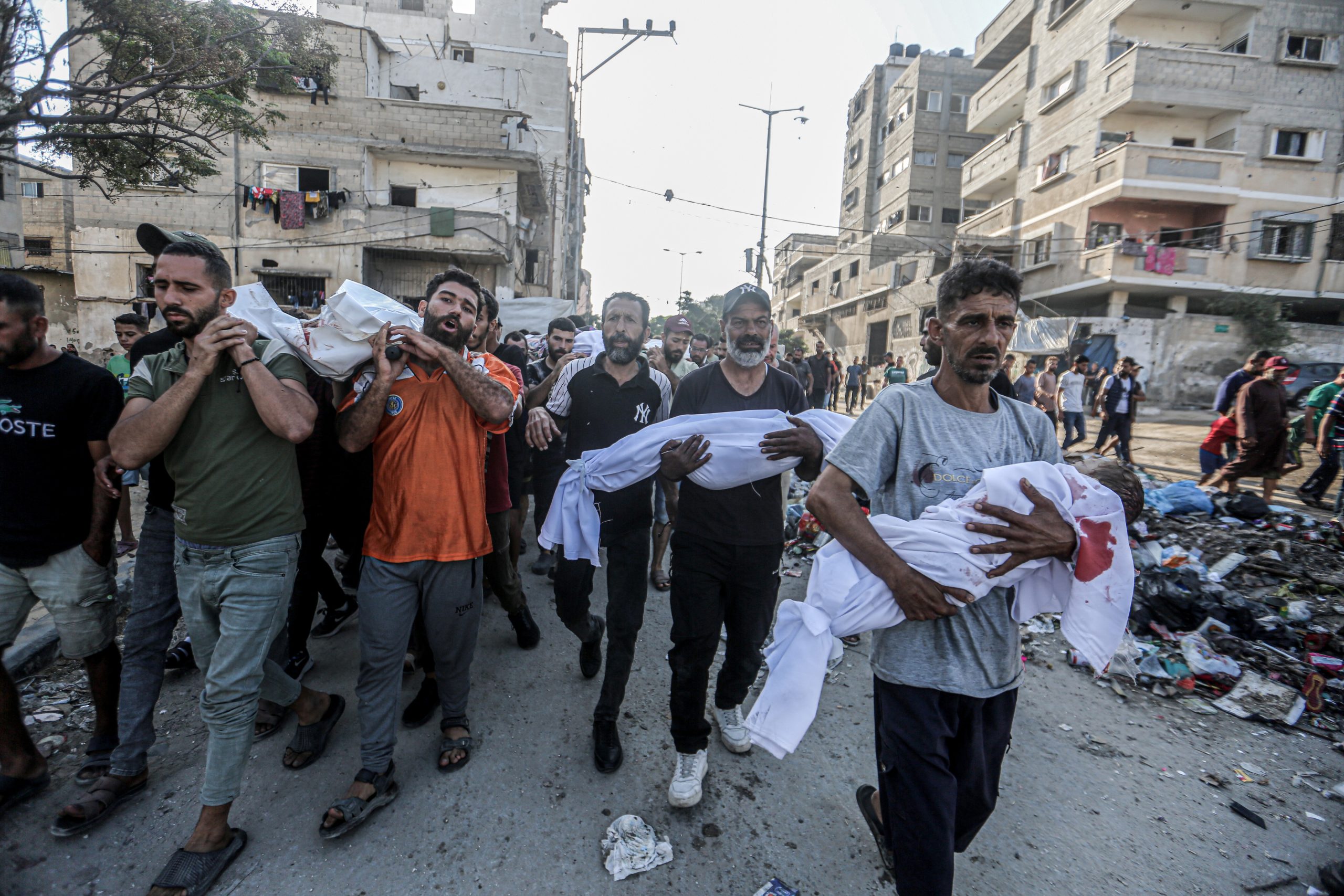
The Gaza genocide debate has moved from distant tribunal language into the live feed of everyday life, where bombed streets, hospital corridors, displacement routes, and phone-shot testimonies now collide with international law in real time. That shift matters because the public is no longer waiting years for archives to open or commissions to publish findings. The evidence, the outrage, the denial, and the propaganda are all happening simultaneously. For viewers, policymakers, journalists, and human rights investigators, the pain point is brutal: how do you make sense of mass suffering when the record is being created faster than institutions can respond? Al Jazeera’s video framing of Gaza as a catastrophe unfolding before the world captures a deeper media-era reality. Accountability is no longer only about what happened. It is about what the world could see while it happened.
- Real-time documentation has changed how war crimes and mass atrocity allegations are reported, preserved, and contested.
- The phrase Gaza genocide carries legal, political, and moral weight, making precision and verification essential.
- Digital evidence can strengthen accountability, but only if protected through methods like
metadatareview,geolocation, andchain of custody. - The biggest failure may not be lack of visibility, but the gap between visibility and action.
Why the Gaza Genocide Debate Feels Different
Previous atrocities were often reconstructed after the fact through survivor testimony, satellite imagery, government records, and investigative journalism. Gaza is different because its destruction has been documented in near real time by civilians, doctors, journalists, aid workers, and analysts working with phones, drones, maps, and live broadcasts. The result is a public record that is immediate, emotionally overwhelming, and politically explosive.
That does not make the record simple. Real-time evidence is powerful, but it is also vulnerable to miscaptioning, manipulation, selective framing, and platform suppression. The speed that makes footage urgent also makes it easier for governments, partisans, and bad-faith actors to muddy the facts. This is why serious coverage must separate three layers: what can be verified, what can be legally alleged, and what must still be adjudicated.
Visibility is not the same as accountability. A world that can watch suffering live still has to decide whether seeing is enough.
The charge of genocide is among the gravest in international law. It is not simply a synonym for mass killing. It requires analysis of acts, intent, protected groups, patterns of harm, official statements, military conduct, deprivation of life-sustaining conditions, and the broader context of displacement and destruction. That is why the Gaza genocide debate is so consequential: it asks whether the institutions built after the twentieth century’s worst crimes can operate under the pressure of a twenty-first-century information war.
Gaza Genocide and the Evidence Problem
The modern evidence landscape is both richer and more chaotic than anything previous generations of investigators faced. A single strike can produce dozens of clips from different angles, hospital images, satellite traces, eyewitness posts, official denials, and counterclaims within minutes. This creates a paradox: there may be more documentation than ever, yet public agreement on facts can fracture faster than evidence can be authenticated.
The Rise of OSINT in Atrocity Documentation
OSINT, or open-source intelligence, has become central to modern conflict reporting. Investigators can use visible landmarks, shadows, weather patterns, road layouts, and satellite imagery to confirm where and when footage was captured. In Gaza, this kind of analysis can help establish patterns: repeated strikes near medical facilities, destruction of residential blocks, damage to schools and shelters, and the geography of forced displacement.
But OSINT is not magic. It depends on access, preservation, and methodological discipline. If platforms remove footage, if devices are destroyed, if internet access collapses, or if journalists are killed, the record becomes fragmented. That is why the loss of local reporters is not only a human tragedy. It is an evidentiary rupture.
Why metadata and chain of custody Matter
For footage to move from public outrage into legal accountability, investigators need more than viral reach. They need metadata, original files, timestamps, device information, upload histories, and witness corroboration. They need a reliable chain of custody so that courts can assess whether material has been altered or taken out of context.
This is where newsrooms, human rights groups, and legal teams increasingly overlap. A journalist may publish a verified scene. An investigator may preserve the original material. A legal team may later connect that scene to command structures, military orders, or policy decisions. The public sees a clip. Accountability requires an architecture.
The Media War Around Gaza Genocide
The information battlefield around Gaza is not a side story. It is part of the conflict’s power structure. Language choices shape public perception: massacre, war, self-defense, terrorism, ethnic cleansing, genocide, collateral damage, siege. Each word carries a political payload. The more severe the allegation, the more intense the fight over terminology becomes.
Al Jazeera’s framing places the emphasis on what is unfolding in real time, but the broader media ecosystem is deeply uneven. Palestinian voices have often had to prove their suffering through images of unbearable intimacy, while official narratives from powerful states receive institutional deference. That asymmetry is not new, but real-time documentation has made it more visible.
The central media question is no longer whether Gaza is visible. It is whether visibility can overcome the political systems designed to neutralize it.
There is also a platform problem. Social networks reward graphic immediacy while often punishing context. Algorithms can amplify trauma, bury corrections, and elevate outrage over verification. Content moderation systems may remove war evidence as violent content, even when that material could be crucial for future investigations. The same infrastructure that lets civilians document destruction can also erase or distort the archive.
What International Law Can and Cannot Do
International law was designed to draw a line between war and atrocity, between military necessity and collective punishment, between civilian harm and criminal conduct. In practice, enforcement depends on politics, jurisdiction, evidence, and state cooperation. That is why many people watching Gaza feel a profound disconnect: the legal vocabulary exists, the footage exists, the institutions exist, yet the killing and deprivation continue.
The term genocide requires proof of specific intent to destroy a protected group, in whole or in part. That intent can be inferred from conduct, policy, statements, and patterns, but it is not a casual label. At the same time, insisting on legal precision should not become a tactic for moral delay. Waiting for final judgments cannot be an excuse to ignore urgent risks, especially when civilians are trapped, displaced, hungry, injured, or bereaved.
The Gap Between Warning and Prevention
The promise of international law is prevention, not merely retrospective condemnation. If genocide, war crimes, or crimes against humanity are alleged with credible evidence, states and institutions have duties to assess risk and act. The tragedy of real-time atrocity documentation is that warning signs can be broadcast globally and still fail to trigger meaningful protection.
This is the uncomfortable lesson of Gaza: a livestreamed crisis can still be politically contained. Governments can express concern while supplying weapons, call for restraint while blocking consequences, or praise humanitarian access while civilians face systemic deprivation. The optics of concern can become a substitute for policy.
Why This Matters Beyond Gaza
The Gaza genocide debate will shape the next decade of conflict accountability. If real-time documentation fails to produce meaningful consequences in one of the most visible crises on earth, authoritarian governments and military coalitions will learn a dangerous lesson: saturation coverage does not necessarily create deterrence.
That has implications far beyond the Middle East. Future conflicts will unfold under similar conditions: civilian uploads, satellite monitoring, AI-assisted verification, platform censorship, state propaganda, and public fatigue. The question is whether democracies, courts, and newsrooms can build systems that transform evidence into action before mass harm becomes historical record.
Pro Tip for Readers
When viewing conflict footage, do not treat virality as verification. Look for whether credible journalists or investigators have confirmed location, date, source, and context. Be wary of recycled footage, emotional captions without evidence, and accounts that post only to inflame. At the same time, do not let the existence of misinformation become an excuse to dismiss documented suffering. Skepticism should sharpen moral clarity, not dissolve it.
The Future of Real Time Accountability
The next phase of accountability will likely depend on three forces working together. First, local witnesses and journalists must be protected because they are closest to the facts. Second, digital preservation systems must secure original evidence before it disappears. Third, international institutions must move faster, because the timeline of harm is now measured in live updates, not annual reports.
There is a role for technology here, but it should not be romanticized. AI tools can help sort footage, detect duplicates, translate testimony, and identify locations. They can also generate fakes, accelerate propaganda, and overwhelm investigators with synthetic noise. The future will reward institutions that combine technical verification with human judgment, regional expertise, and legal discipline.
The archive of Gaza is being built under bombardment. Whether it becomes evidence, memory, or another record of ignored warnings depends on what happens next.
Gaza Genocide Forces a Global Reckoning
The power of Al Jazeera’s real-time framing is that it refuses the comfort of distance. It confronts viewers with a crisis that is not safely sealed in the past. The Gaza genocide allegation is being argued while families search rubble, while hospitals strain or collapse, while displaced people move again and again, and while officials debate language from podiums far from the blast zones.
That simultaneity is the defining feature of this moment. The world is not discovering Gaza after the fact. It is watching, debating, archiving, denying, mourning, and litigating in the same breath. The moral question is no longer whether enough images exist to understand the scale of suffering. The question is whether institutions and publics can still act when the evidence is already in front of them.
The information provided in this article is for general informational purposes only. While we strive for accuracy, we make no guarantees about the completeness or reliability of the content. Always verify important information through official or multiple sources before making decisions.