Gene Edited Citrus Fights Back
Gene Edited Citrus Fights Back
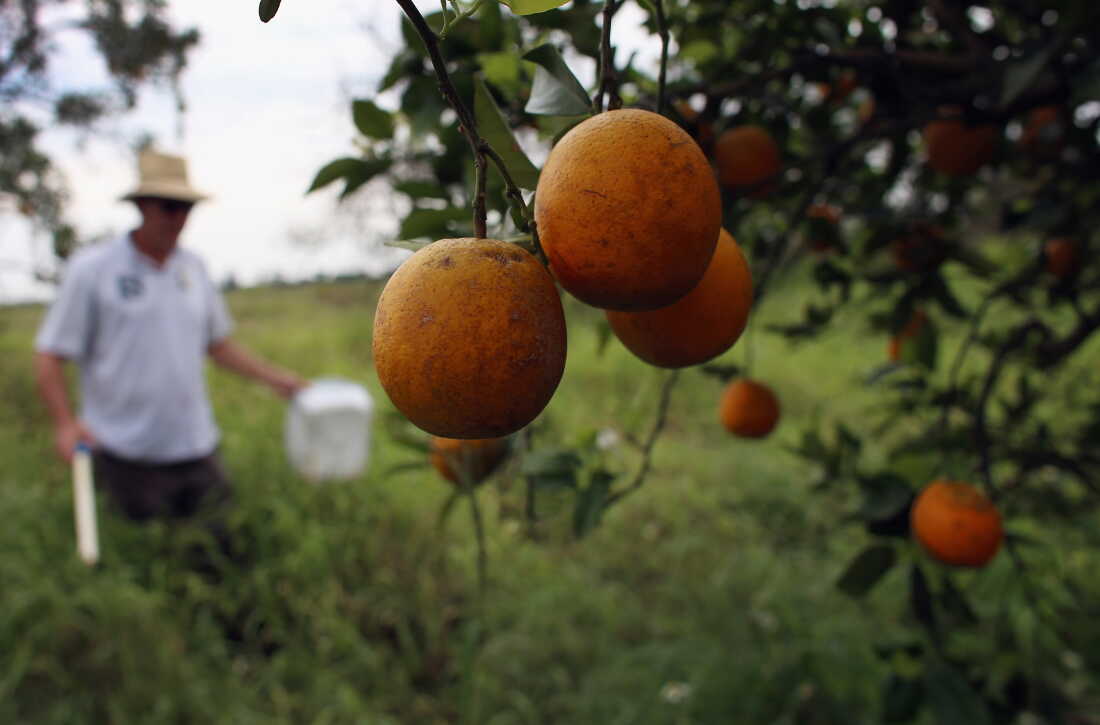
Florida citrus is not facing a normal agricultural downturn. It is fighting an existential collapse driven by citrus greening, a disease that has crushed yields, raised costs, and turned once-reliable groves into high-risk bets. That is why gene edited citrus is suddenly more than a lab story: it is a potential reset button for one of America’s signature fruit industries. The promise is simple but enormous: trees engineered with more disease tolerance, faster breeding cycles, and a better chance of surviving a pathogen that traditional tools have struggled to contain. The risk is just as real. If the science overpromises, if regulators move too slowly, or if shoppers reject the idea, Florida’s citrus comeback could stall before it leaves the nursery.
- Florida citrus growers need new tools because citrus greening has devastated production and made conventional recovery strategies expensive and uncertain.
CRISPRand relatedgene editingmethods could help breeders develop trees that resist or tolerate disease faster than traditional breeding.- The biggest barriers are not only scientific: regulation, consumer trust, cost, and grove-level performance will determine adoption.
- Gene edited trees may reshape the future of fruit farming if they prove durable, affordable, and acceptable to the market.
Why Gene Edited Citrus Matters Now
Florida’s citrus industry has spent years battling Huanglongbing, often shortened to HLB and commonly called citrus greening. The disease is spread by the Asian citrus psyllid, a tiny insect that carries bacteria into trees. Once infected, trees can produce small, bitter, misshapen fruit and gradually decline. There is no simple cure at orchard scale.
For growers, the pain is brutally practical. A citrus grove is not a software startup. You cannot pivot a tree overnight. Planting decisions stretch across years, labor is tight, land is expensive, and every failed season compounds debt. Many growers have already tried aggressive nutrition programs, insect control, removal of infected trees, and new rootstock strategies. Some approaches help. None have delivered a broad, permanent rescue.
The central question is not whether gene edited citrus is scientifically interesting. It is whether it can survive the real world: insects, heat, hurricanes, thin margins, and skeptical buyers.
That is the opening for gene editing. Instead of waiting decades to cross-breed a useful trait into commercial varieties, scientists can target specific parts of a plant’s DNA and adjust how it responds to disease. The best-case scenario is not a miracle tree. It is a tougher tree: one that can keep producing quality fruit even under disease pressure.
How Gene Edited Citrus Works
The excitement around gene edited citrus often centers on CRISPR, a tool that can make precise changes in an organism’s genome. In plants, researchers may use it to disable a gene that makes the tree vulnerable, boost a natural defense pathway, or alter biological signals that pathogens exploit.
That distinction matters. Traditional GMO crops often involve moving genetic material from one species into another. Some gene editing approaches can make changes that resemble mutations that might occur naturally or through conventional breeding, only faster and more targeted. That does not automatically make the technology risk-free, but it changes the regulatory and public conversation.
Editing for resistance versus tolerance
There are two broad goals. Resistance means the tree blocks infection or dramatically reduces pathogen success. Tolerance means the tree may still become infected but continues to grow and produce marketable fruit. In the near term, tolerance may be the more realistic win. A tree that keeps yielding despite HLB could give growers a commercial lifeline even if the disease remains present in the environment.
But durability is the hard part. Pathogens evolve. Insects move. Groves are messy biological systems. A trait that looks promising in a greenhouse must still perform across multiple seasons, soil types, weather events, and pest pressures. For perennial crops, the proof cycle is painfully long.
Why citrus is harder than row crops
Corn and soy can be tested, replanted, and scaled quickly. Citrus trees take years to mature. That slows everything: research, field validation, commercial rollout, and grower confidence. A new citrus variety also has to satisfy processors, fresh fruit buyers, juice brands, nurseries, and consumers. Disease survival alone is not enough.
Flavor, juice quality, fruit size, yield consistency, shelf life, and compatibility with existing grove systems all matter. A gene edited orange that survives but produces poor juice is not a rescue plan. It is a research milestone looking for a business case.
Gene Edited Citrus Faces a Trust Test
The science may be advanced, but the marketing challenge is old-fashioned: will people buy it? Food technology lives or dies on trust, and citrus occupies a special emotional space. Orange juice is breakfast nostalgia, not a niche biotech product. Any perception that the fruit has been unnaturally manipulated could create friction, especially if messaging is vague or defensive.
The industry should not assume that technical distinctions between gene editing, transgenic engineering, and conventional breeding will be obvious to shoppers. They will not be. The story must be concrete: fewer dying trees, more stable local farms, potentially less chemical pressure, and a path to keeping domestic citrus production alive.
If the public only hears engineered fruit, the industry loses the narrative. If people hear saved groves, resilient farming, and transparent oversight, the conversation changes.
Transparency will matter. Producers and researchers should avoid the temptation to bury the technology behind bland branding. Consumers are not allergic to innovation, but they are increasingly hostile to feeling managed. Clear labeling policies, plain-language explanations, and credible safety reviews could do more for adoption than any glossy campaign.
The Business Stakes for Florida Growers
For Florida, this is not just a science experiment. It is an economic survival strategy. Citrus has historically supported growers, pickers, processors, truckers, equipment dealers, juice plants, and rural communities. When production falls, the damage spreads far beyond the grove.
Gene edited citrus could shift the financial model in several ways. Healthier trees could improve yield predictability. Nurseries could sell new varieties adapted to HLB pressure. Processors could stabilize supply. Brands could market domestic resilience at a time when climate and disease are making food supply chains feel more fragile.
But adoption will depend on cost. Growers who have endured years of losses may not be able to gamble on expensive new trees without strong evidence. They will want field data, not hype. They will ask basic questions: How many years until production? What is the expected yield under heavy disease pressure? What are the licensing fees? Will insurers, lenders, and processors support the switch?
Pro Tip for industry leaders
The smartest rollout would start with pilot groves designed for radical transparency. Publish performance benchmarks, compare edited trees against current varieties, disclose management requirements, and invite growers to see the results directly. In agriculture, credibility often travels faster through neighboring farms than through press releases.
Regulation Could Make or Break Gene Edited Citrus
Regulators face a delicate balance. Move too slowly, and an already battered industry loses more acreage. Move too casually, and public confidence suffers. The key issue is how agencies classify specific gene editing changes. Some edits may be treated differently from older GMO methods, depending on whether foreign genetic material remains in the final plant and how the trait functions.
For developers, regulatory uncertainty raises costs. For growers, it complicates planning. For consumers, it can create confusion. A clear pathway is essential because trees are long-term investments. Nobody wants to plant a grove that later becomes trapped in a market access dispute or labeling controversy.
Export markets add another layer. Even if a gene edited citrus variety is accepted domestically, trading partners may have different rules. That matters for fresh fruit, juice ingredients, and multinational brands that prefer consistent sourcing standards. A trait that works biologically still needs a route through global commerce.
What Could Happen Next
The near future is likely to be incremental, not cinematic. Expect more field trials, more debate over regulatory categories, more partnerships between universities and industry, and more attention from investors looking at climate-resilient agriculture. The first successful products may not be perfect. They may be transitional varieties that buy the industry time.
Longer term, the implications stretch beyond oranges. If gene edited citrus works, the same playbook could influence other tree crops facing disease and climate pressure: bananas, apples, almonds, cacao, coffee, and more. Perennial agriculture is entering a period where biology and software-like iteration are starting to overlap. That is thrilling, but it also demands humility. Ecosystems do not behave like apps.
The best outcome is not a future where every agricultural problem is answered by editing a gene. It is a future where growers have a wider toolkit: better genetics, smarter pest monitoring, improved soil practices, diversified varieties, and more resilient supply chains. Gene edited citrus should be judged as part of that system, not as a silver bullet.
The Bottom Line on Gene Edited Citrus
Florida citrus needs a breakthrough, and gene edited citrus is one of the most credible candidates on the table. The technology offers speed and precision at a moment when slow breeding cycles and relentless disease pressure have left growers with few comfortable options.
Still, the path from lab success to orchard recovery is steep. The trees must perform over years, not months. The economics must work for growers who have already absorbed heavy losses. Regulators must provide clarity. Consumers must be treated like stakeholders, not obstacles.
If those pieces align, gene edited citrus could become a defining case study in how modern biotechnology helps legacy agriculture survive. If they do not, it will become another promising tool that arrived too late, cost too much, or failed to earn trust. The stakes are bigger than orange juice. This is a test of whether food systems can adapt fast enough when disease, climate, and economics collide.
The information provided in this article is for general informational purposes only. While we strive for accuracy, we make no guarantees about the completeness or reliability of the content. Always verify important information through official or multiple sources before making decisions.