Herrera Pressures Texas GOP and Tests Trump
Herrera Pressures Texas GOP and Tests Trump
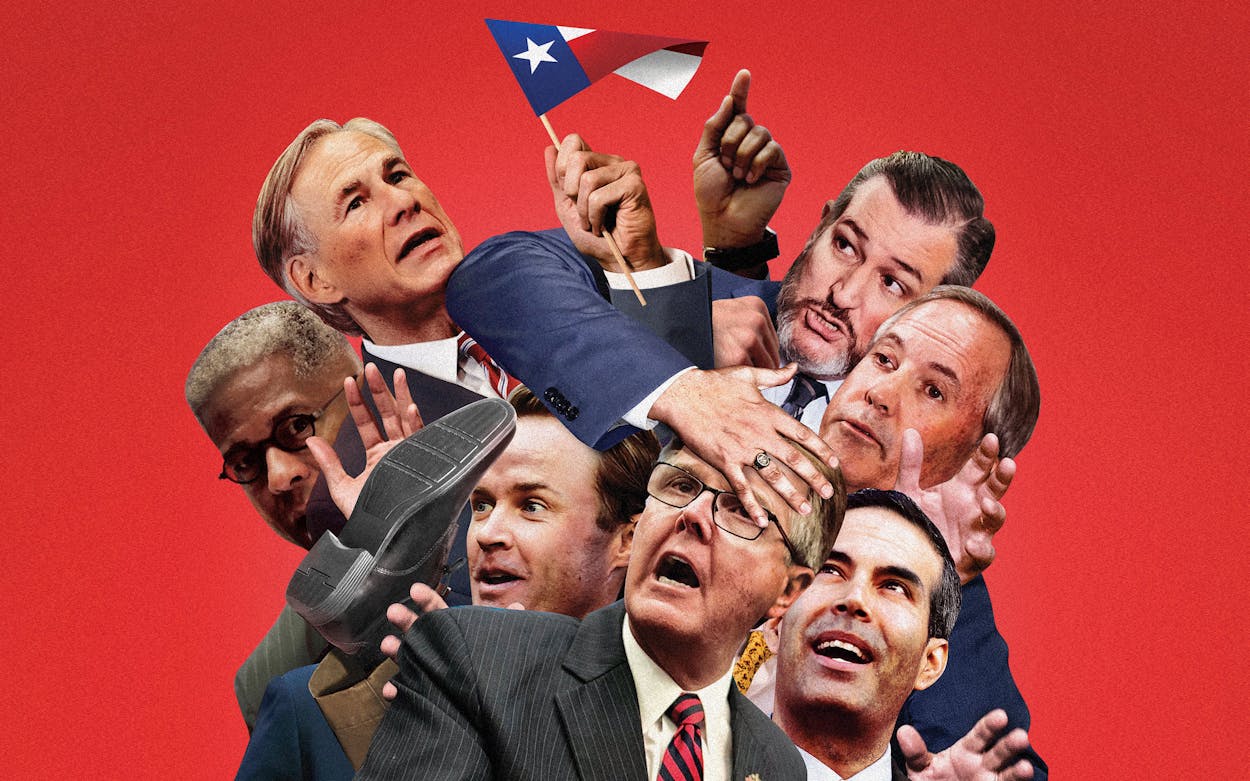
Texas politics is entering another pressure cycle, and this one is less about policy than power. A Republican split in the state House is not just an internal squabble: it is a live test of how much influence Donald Trump still has over the party’s machinery, candidates, and downstream governing strategy. For conservatives, that matters because every intraparty fracture now carries national consequences, from fundraising and endorsements to committee control and legislative momentum. For everyone else, it is a reminder that the Republican coalition is still being renegotiated in public, one high-stakes fight at a time. Herrera’s role in that fight puts a spotlight on a simple question with complicated answers: who actually gets to define Republican loyalty when the former president’s brand still dominates the field?
- Herrera’s maneuvering exposes a deeper Texas GOP power struggle.
- The fight is about more than one race: it is about control of party identity.
- Trump’s endorsement remains powerful, but not uncontested.
- Texas remains a national proving ground for Republican strategy.
The Texas GOP split is really a power test
The headline conflict may look local, but the stakes are national. Texas is one of the most important Republican laboratories in the country, and what happens inside its House caucus often foreshadows broader party behavior. If a figure like Herrera can shape the terrain around a Republican legislative fight, it suggests the party’s internal loyalties are still fluid. That is a problem for leaders who want discipline, and an opportunity for those who want to reposition themselves as the next generation of conservatism.
The immediate issue is control. Not just control of seats, but control of the story. Who is seen as sufficiently pro-Trump? Who is seen as pragmatic enough to govern? Who can survive a primary challenge if the party’s base decides to punish deviation? Those questions increasingly define Republican politics in Texas, where the line between local governance and national branding has become almost invisible.
What looks like a statehouse dispute is often a proxy war over the Republican Party’s future.
How Trump’s grip on Texas politics still works
Trump’s influence in Texas politics remains one of the most important facts in the modern GOP. Even as the party debates its next phase, his endorsement can still elevate candidates, reshape fundraising, and force competitors to think twice. That power is not absolute, though. It depends on local actors, donor networks, media ecosystems, and whether voters still treat his approval as the final word.
For a Republican in Texas, alignment with Trump is both shield and weapon. It can protect a candidate from establishment criticism, but it can also invite expectations that are hard to meet. Once the brand is attached, every compromise looks like betrayal to some voters. That creates a brittle political environment where strategic flexibility is limited and symbolism often matters more than legislative craft.
Why Herrera’s position matters
Herrera’s importance lies in leverage. If she can influence the direction of a Republican fight, she becomes more than a participant. She becomes a signal that the old assumption – that Trump-backed politics automatically settles disputes – no longer holds in every room. That is especially true in Texas, where a growing class of ambitious Republicans is trying to prove they can inherit the movement without merely repeating it.
That creates a practical problem for party leaders. They need unity to keep control of the House and shape the policy agenda, but unity is harder when ambition is high and factions are competing for ownership of the brand. If every internal disagreement becomes a loyalty test, the party may win individual battles while losing its ability to govern coherently.
Why this Texas House fight matters now
The Texas House is more than a chamber. It is where ideology becomes procedure, and procedure becomes power. Committee assignments, floor strategy, and coalition building are not glamorous, but they determine whether a majority can actually produce outcomes. That is why a fight involving Herrera and the larger Republican ecosystem deserves attention beyond the state line.
Here is the strategic reality: every state-level feud that attracts Trump-world attention can shape the next cycle of candidate recruitment, donor behavior, and messaging discipline. If Republicans in Texas cannot settle internal power disputes cleanly, they risk normalizing a politics of permanent factional warfare. That may energize some voters, but it can also exhaust the broader coalition that actually wins general elections.
The governance tradeoff
Republicans often say they want a party of action, not drama. Yet the modern incentive structure rewards conflict. Primary voters like confrontation. Cable and social media reward spectacle. Donors reward winners, not necessarily institutional stability. The result is a governing class that can become trapped between the demands of activists and the realities of legislating.
That tension is why this Texas House fight matters. It shows how quickly a localized dispute can become a referendum on whether the GOP still has room for internal disagreement. If the answer is no, the party risks turning every statewide contest into a purity contest. If the answer is yes, then figures like Herrera may be part of a broader effort to build a more durable Republican coalition.
Power in today’s GOP is less about formal hierarchy and more about who can claim the right kind of legitimacy.
The political strategy behind the conflict
There is a reason these fights are so hard to resolve. They are not just about votes; they are about incentives. A candidate who openly challenges the dominant faction may lose short-term support but gain credibility with voters who want a fighter. A candidate who bends too much toward the party establishment may appear weak. In the Trump era, both authenticity and obedience are political currencies, and they often move in opposite directions.
For Republicans, the question is whether the party can reconcile those impulses. Can it support disciplined governance while still rewarding the confrontational style that energized its base? Can it keep Trump aligned with local priorities without becoming dependent on his personal approval? Those are not abstract questions. They shape who runs, who wins, and who gets to define the party’s future vocabulary.
What to watch next
- Whether Republican leaders try to contain the conflict quickly or let it play out publicly.
- Whether Trump weighs in directly and changes the balance of power.
- Whether donors and activist groups take sides and harden the split.
- Whether the episode affects candidate recruitment ahead of the next election cycle.
The bigger national implication
Texas is not just another red state. It is the kind of place where the Republican Party tests its most important ideas before exporting them nationally. If Trump’s hold remains strong there, it strengthens the argument that his style still defines the GOP. If local players like Herrera can challenge that assumption, it suggests a party in transition, not a party locked in place.
That transition has consequences. The GOP’s future depends on whether it can broaden its appeal without alienating its core. It also depends on whether state-level leaders can build institutions that survive beyond one dominant personality. That is the real story beneath the noise: the struggle to move from movement politics back to governing politics without losing the voters who made the movement powerful in the first place.
How Republicans can navigate the next phase
If Texas Republicans want to avoid constant internal combustion, they need a clearer playbook. Not every disagreement needs to become a test of ideological purity, and not every show of independence should be treated as disloyalty. The party’s strongest path forward is likely a disciplined but flexible coalition that can tolerate disagreement without collapsing into public self-destruction.
- Separate messaging fights from legislative fights whenever possible.
- Reward candidates who can win swing districts, not only those who can win primaries.
- Use leadership to settle disputes before they become national drama.
- Build policy wins that give the base concrete results to rally around.
The hard part is that this requires restraint, and restraint is not the modern GOP’s natural instinct. But if the party wants to survive beyond the Trump era, it will need more than loyalty tests and viral moments. It will need an actual governing model.
Bottom line
Herrera’s pressure campaign inside Texas politics is bigger than one fight and bigger than one state. It exposes the continuing tension between Trump-era loyalty and the Republican Party’s need to evolve. That tension is not going away anytime soon. In fact, it may define the next chapter of conservative politics.
For now, the Texas House remains a proving ground. Herrera is testing the limits of influence. Trump is still the gravitational center. And the Texas GOP is once again discovering that internal power struggles rarely stay local for long.
The information provided in this article is for general informational purposes only. While we strive for accuracy, we make no guarantees about the completeness or reliability of the content. Always verify important information through official or multiple sources before making decisions.