Houthi Strikes Escalate Yemen Risk
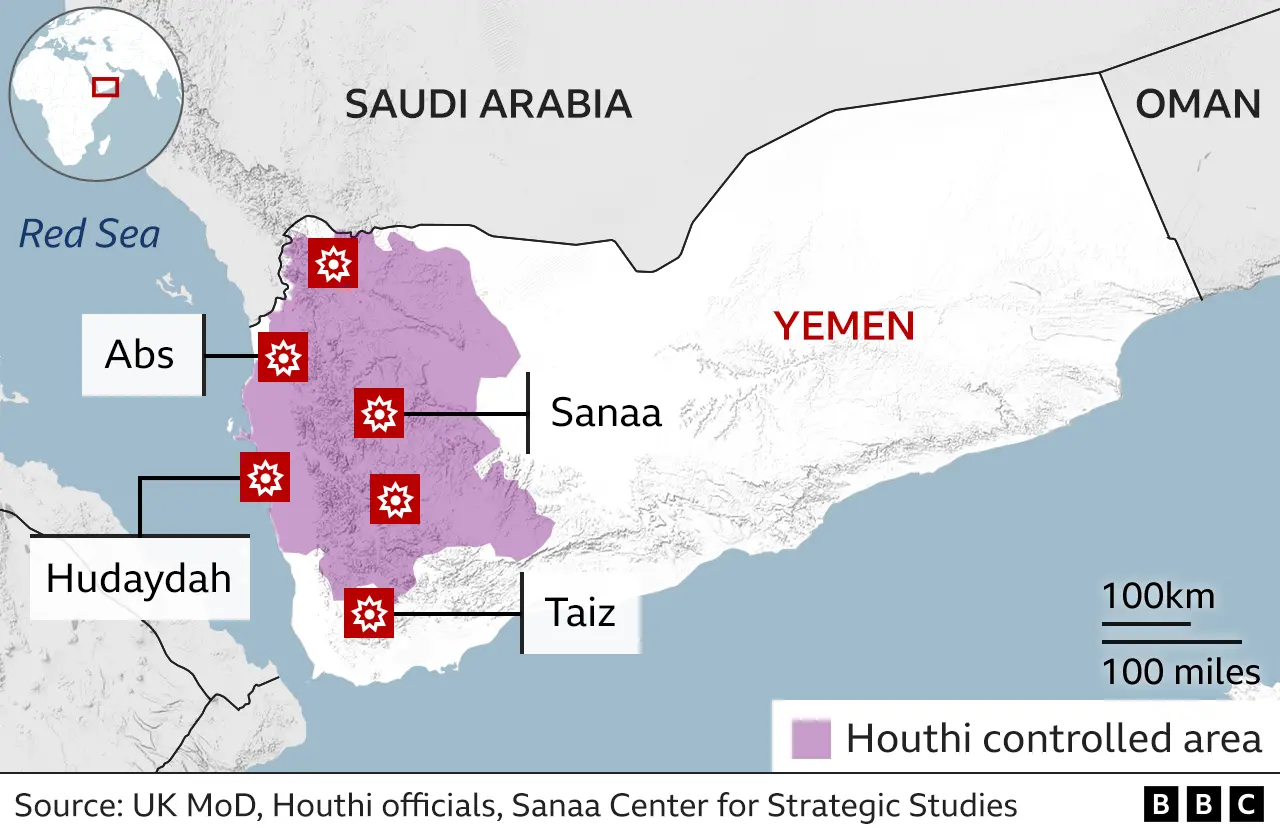
Houthi strikes are forcing a new reality in Yemen and Saudi Arabia
The latest Houthi strikes are not just another burst of violence in a long war. They are a reminder that Yemen remains one of the most dangerous fault lines in the Middle East, and that Saudi Arabia cannot assume the battlefield stays inside Yemen’s borders. Every strike raises the cost of complacency, every retaliatory threat widens the regional ripple effect, and every pause in diplomacy now looks more fragile than the last. For civilians, the pain is immediate. For policymakers in Riyadh, Sanaa, and beyond, the strategic problem is bigger: how do you contain a conflict that keeps changing shape faster than the peace process can catch up?
- Houthi attacks are reinforcing Yemen’s instability and widening regional security fears.
- Saudi Arabia faces pressure to harden defenses while avoiding a deeper escalation spiral.
- The conflict’s next phase may be defined by drones, missiles, and deterrence rather than diplomacy alone.
- Humanitarian conditions remain the most important metric, even as military headlines dominate.
Why Houthi strikes matter now
The immediate story is about violence, but the bigger story is about strategic leverage. The Houthis have spent years proving that a non-state actor can wield outsized influence through a relatively low-cost mix of missiles, drones, and asymmetric warfare. That matters because it changes how adversaries calculate risk. A single strike can disrupt shipping, unsettle energy markets, and force military responses that are far more expensive than the attack itself. That imbalance is exactly what makes the current phase so dangerous.
Saudi Arabia has spent years trying to reduce its exposure to attacks from Yemen while also pursuing an uneasy de-escalation. But the recent strikes suggest the threat environment has not been neutralized. It has adapted. And when a conflict adapts this quickly, traditional military deterrence becomes less reliable unless it is paired with sustained diplomacy, intelligence coordination, and civilian protection.
What makes the Yemen conflict so hard to contain is not just the number of attacks. It is the way each new strike tests the limits of regional deterrence without offering a clean path to resolution.
Houthi strikes and Saudi Arabia’s defense calculus
Saudi Arabia’s core problem is simple: it has to prepare for attacks without creating the impression that escalation is inevitable. That is a difficult balance. A stronger defense posture can reduce vulnerability, but it can also invite more testing by adversaries looking for weaknesses. The kingdom has invested heavily in air defenses, surveillance, and border security, yet the persistence of Houthi strikes shows that defense is never absolute. It is a contest of adaptation.
Why Saudi Arabia cannot treat this as a local problem
The strikes are about Yemen, but their consequences travel far beyond it. Any attack that threatens Saudi territory, energy infrastructure, or commercial confidence becomes a regional issue. Investors read the risk premium. Airlines and shippers reassess routes. Diplomatic partners measure whether the conflict could spill into wider confrontation. That is why even limited attacks can have strategic weight well beyond the immediate damage they cause.
Saudi policymakers now face a familiar but unresolved question: how do you defend against a persistent threat without turning every response into an escalation trigger? The answer likely involves layered defense, tighter coordination with allies, and continued backchannel diplomacy. But the challenge is that none of those tools works fast enough on its own.
Yemen’s war keeps rewarding the side that can disrupt more cheaply
One of the harshest realities of this conflict is that the side able to disrupt at low cost often gains disproportionate attention. That does not mean it wins militarily, but it can shape the political agenda. The Houthis have demonstrated an ability to stretch their influence across a wide geography while forcing opponents to spend heavily on interception, response, and readiness. That is a classic asymmetrical advantage.
For Yemen, this is catastrophic. The longer the conflict remains tied to strike-and-response logic, the harder it becomes to prioritize reconstruction, governance, and humanitarian recovery. The country has already absorbed years of displacement, economic breakdown, and institutional collapse. Further strikes only deepen that damage by making normal life more expensive, more uncertain, and more dangerous.
The humanitarian stakes are still the real story
Military developments dominate headlines, but civilians pay the price. In Yemen, that means damaged infrastructure, strained medical systems, disrupted supply chains, and persistent fear. Every escalation can mean more difficulty delivering aid and more instability in already fragile areas. That is why any credible analysis of Houthi strikes has to include the humanitarian lens. Without it, the story becomes a narrow security briefing instead of a full account of what is at stake.
It also means that any durable solution must do more than suppress attacks. It has to create incentives for restraint and rebuild the civic structures that wars erode first. That is easier said than done, but it is the difference between temporary calm and genuine peace.
What the latest escalation could change next
The near-term future likely hinges on three forces: deterrence, diplomacy, and fatigue. Deterrence matters because both sides need to believe the costs of further escalation are real. Diplomacy matters because military pressure alone rarely produces a stable endgame in Yemen. Fatigue matters because after years of conflict, all parties eventually face pressure to avoid open-ended confrontation. The problem is that these forces do not arrive neatly or simultaneously.
If the current pattern continues, expect three developments. First, Saudi Arabia may further strengthen its layered air and missile defense posture. Second, regional partners may intensify intelligence-sharing and maritime monitoring. Third, diplomatic channels may become more active behind the scenes even if public rhetoric hardens. Those moves would not solve the conflict, but they could reduce the chance that each strike becomes a broader regional crisis.
In conflicts like Yemen, the absence of a major headline can be misleading. Quiet periods often mean reorganization, not resolution.
How to read the conflict without getting lost in the noise
If you are trying to follow the significance of the latest Houthi strikes, focus on the signals that actually change the trajectory of the war:
- Target selection: Are the strikes aimed at military sites, infrastructure, or symbolic targets?
- Response pattern: Does Saudi Arabia respond defensively, diplomatically, or with broader military pressure?
- Regional spillover: Do shipping, energy, or border security conditions worsen after each attack?
- Humanitarian access: Does escalation disrupt aid deliveries or civilian movement?
- Negotiation status: Do backchannel talks continue even when public tensions spike?
Those five indicators tell you more than the daily headlines. They reveal whether the conflict is moving toward managed containment or toward another destabilizing cycle.
Why this matters beyond Yemen
This story is not only about one country or one armed group. It is a test case for how the region handles persistent, low-cost, high-impact threats. The lesson for Saudi Arabia, and for outside powers watching closely, is that modern security is no longer just about controlling territory. It is about resilience, air defense, intelligence, crisis diplomacy, and protecting civilian systems that can fail under pressure.
For global markets and policymakers, the message is equally blunt: the Red Sea, Gulf shipping lanes, and energy corridors remain vulnerable to shocks linked to the Yemen conflict. That means every new attack can become a much larger economic story within hours. For civilians, the stakes are more basic and more brutal. They need safety, food, power, and a political process that does not collapse every time the battlefield shifts.
The latest Houthi strikes do not settle the war. They expose its most dangerous truth: this conflict is still easy to inflame and hard to end. Until the underlying political settlement catches up with the military reality, the region will keep living with the possibility that one strike can become the next crisis.
The information provided in this article is for general informational purposes only. While we strive for accuracy, we make no guarantees about the completeness or reliability of the content. Always verify important information through official or multiple sources before making decisions.


