India’s Sacred River Ritual Reveals a Bigger Crisis
India’s Sacred River Ritual Reveals a Bigger Crisis
Every year, millions of people step into India’s rivers in search of purification, blessing, and belonging. But the same sacred waters that carry faith also carry a warning: the country’s river systems are under intense pressure from pollution, urban growth, and climate stress. The ritual holy dip is not just a spiritual act. It is a public stress test for India’s water infrastructure, environmental enforcement, and ability to balance tradition with modern public health. That tension matters far beyond one holiday. It speaks to how a fast-growing nation manages the places where culture, ecology, and policy collide. And if these rivers keep absorbing the weight of ceremony without real protection, the cost will be measured not only in water quality, but in public trust.
- Holy dips remain a powerful symbol of faith, identity, and mass participation.
- India’s rivers are carrying a growing burden from sewage, runoff, and overuse.
- Religious gatherings expose gaps in sanitation, crowd control, and environmental planning.
- The future of sacred rivers depends on treating them as both cultural sites and critical infrastructure.
- Water stewardship is now a governance issue, not just an environmental one.
The holy dip is more than ritual
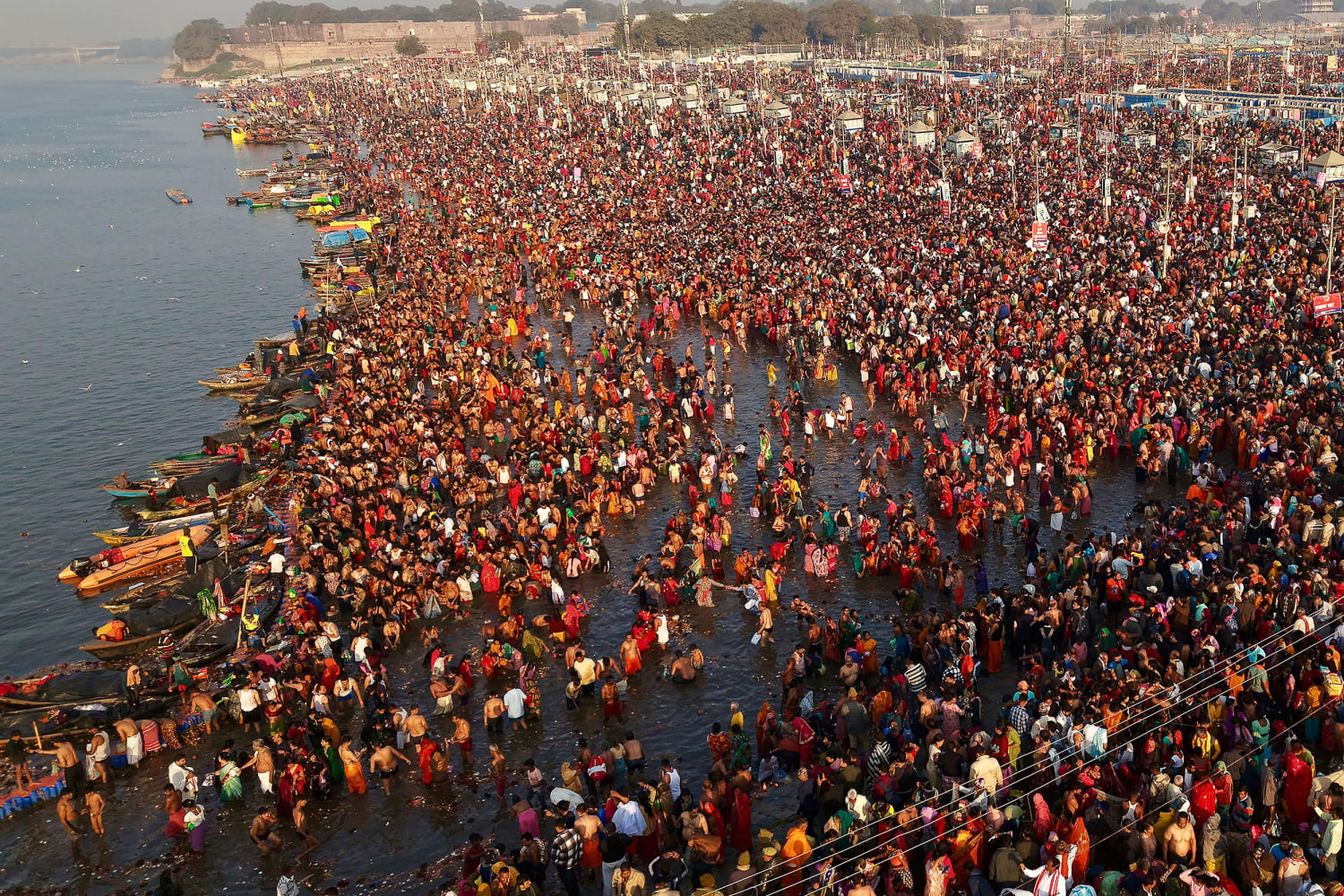
The annual rush to rivers on sacred holidays is often described as devotion, and that is accurate. But it is also logistics at a national scale. Pilgrims travel by train, bus, and on foot. Temporary camps rise overnight. Local authorities scramble to manage sanitation, crowd flow, and emergency response. At the center of it all is the holy dip, a practice rooted in spiritual cleansing and communal memory.
That is precisely why these gatherings matter. They are not fringe events. They are a recurring, high-visibility snapshot of how India manages public space when religion, mobility, and basic services converge. If the riverbanks are dirty, the drains overflow, or the water is visibly degraded, the ritual becomes a mirror held up to the state.
When sacred water turns into a sanitation challenge, the issue is no longer only religious. It becomes a governance problem with public health consequences.
Why the holy dip still matters in modern India
For many participants, the act is deeply personal. It can mark renewal, gratitude, or a promise fulfilled. But the scale of the event also gives it national significance. Rivers like the Ganges, Yamuna, and others are not just waterways. They are living cultural systems that shape festivals, pilgrimage economies, and regional identity.
That cultural weight makes reform difficult. No government wants to appear to interfere with belief. Yet no responsible government can ignore the fact that sacred rivers are under strain. The challenge is not to dilute tradition. The challenge is to protect the conditions that allow tradition to continue safely.
MainKeyword: holy dip in India is becoming a policy issue as much as a religious practice.
The hidden infrastructure behind a religious gathering
Large river rituals depend on an enormous amount of behind-the-scenes coordination. Even a well-run event needs transport links, crowd barriers, medical stations, drinking water, toilets, waste collection, and police deployment. Without these systems, the risk rises quickly: contamination, stampedes, heat stress, and disease outbreaks.
What can go wrong
- Water quality degradation: Heavy foot traffic, runoff, and upstream pollution can worsen already fragile conditions.
- Waste overload: Temporary gatherings can overwhelm local disposal capacity in hours.
- Public health exposure: Shared bathing areas can become vectors for skin infections and gastrointestinal illness.
- Crowd pressure: Narrow ghats and riverbanks make management difficult during peak hours.
These are not abstract risks. They are predictable outcomes when millions of people concentrate in the same place, often within a short window. And the more extreme the attendance, the more visible the shortcomings in planning become.
India’s river crisis is bigger than one festival
The holy dip is only the most visible symptom of a much larger issue: India’s rivers are under continuous stress from untreated sewage, industrial discharge, agricultural runoff, sand mining, and encroachment. Add climate variability, and the problem gets worse. Lower flows can concentrate pollutants. Extreme rains can flood banks and spread contamination. Heat waves can raise the health stakes for pilgrims and residents alike.
This is why the conversation cannot stop at festival management. If sacred rivers are routinely unsafe, the root problem lies upstream – literally and institutionally. Real reform requires sewage treatment, stricter discharge enforcement, riverbank restoration, and better coordination between state agencies.
India does not just need cleaner rituals. It needs cleaner rivers, period.
What a better model looks like
A smarter approach would treat sacred river events as recurring national operations, not one-off religious surges. That means planning for them the way cities plan for elections, major sporting events, or disaster response. The stakes are similar: dense crowds, limited space, and high reputational risk if anything fails.
Practical steps that can reduce harm
- Real-time water monitoring: Publish localized water quality readings before and during major rituals.
- Temporary sanitation grids: Expand toilets, handwashing stations, and waste pickup around ghats.
- Riverbank protection: Restrict dumping, construction, and erosion-prone activity near pilgrimage zones.
- Health readiness: Deploy mobile clinics and rapid response teams for dehydration, injuries, and infection.
- Better crowd design: Use entry lanes, timed access, and clearer signage to reduce choke points.
These measures are not radical. They are basic public administration. The difference is scale and consistency. If they are applied only during crisis years, they will never be enough.
The politics of sacred water
River management in India is never just technical. It is political. Any cleanup campaign can be framed as either environmental stewardship or an attack on religious practice, depending on who is speaking and how. That makes the policy environment unusually fragile. Officials often choose symbolic gestures because they are safer than structural reforms.
But symbolism cannot treat sewage. It cannot restore flows. It cannot stop untreated effluent from entering waterways day after day. If sacred rivers are to survive as sacred spaces, governments will need to accept a hard truth: reverence without investment is not preservation. It is neglect with better branding.
Why this matters far beyond India
India’s river rituals are uniquely large, but the underlying problem is global. Cities and countries everywhere are struggling to reconcile heritage, tourism, public health, and environmental limits. Pilgrimage sites, festival grounds, and religious landmarks often suffer from the same pattern: they are treasured, heavily used, and underprotected.
That creates a useful lens. If a place is important enough to bring millions of people together, it is important enough to maintain like critical infrastructure. The line between cultural preservation and environmental policy is thinner than governments like to admit.
The future of the holy dip
The holy dip will likely remain central to Hindu religious life. Its emotional and spiritual power is not in doubt. What is in doubt is whether the rivers can continue to absorb the pressure of that devotion without further collapse.
The most optimistic future is one where sacred bathing remains intact because rivers are better protected, not because the damage is hidden. That requires a shift in mindset: from reacting to festival chaos to investing in river health year-round. It also requires public honesty. If a river is polluted, say so. If a ghats system is unsafe, fix it. If a ritual has outgrown the infrastructure around it, modernize the infrastructure instead of pretending the problem is temporary.
That is the real lesson in this annual scene. The holy dip is not a relic of the past. It is a live test of whether India can honor its traditions without sacrificing the waters that give them meaning.
The information provided in this article is for general informational purposes only. While we strive for accuracy, we make no guarantees about the completeness or reliability of the content. Always verify important information through official or multiple sources before making decisions.