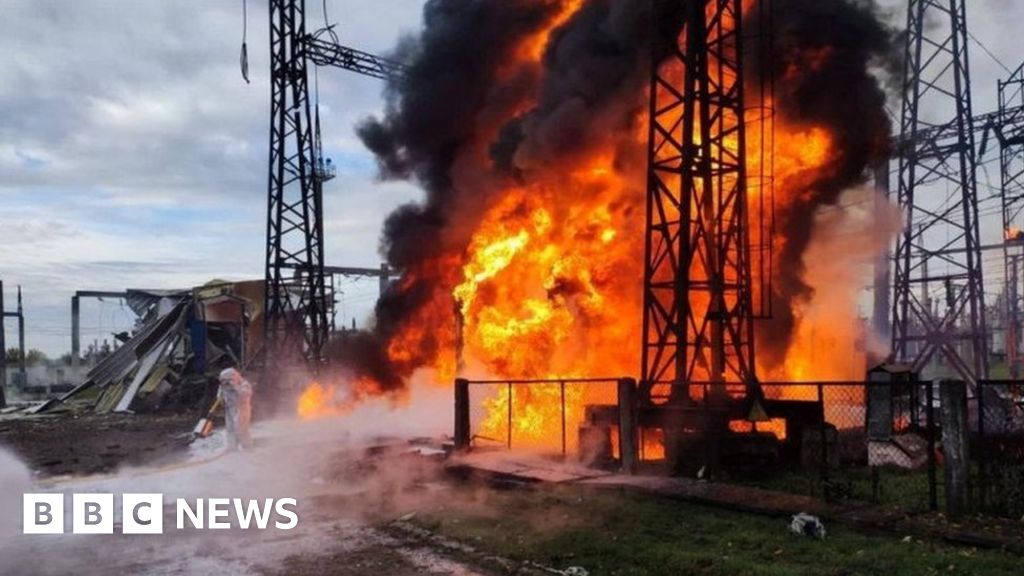
Iran escalates aerial chess with US assets

Iran escalates aerial chess with US assets
The latest Iran drone strikes on US assets show a playbook evolving in real time. Tehran is not simply harassing targets; it is stress-testing radar networks, refueling logistics, and alliance red lines. By hitting high-value enablers like AWACS and KC-135 tankers, Iran is signaling it can blind and starve US airpower in a region already jittery about escalation. The campaign blends cheap loitering munitions, long-range cruise systems, and information ops to pressure Washington without tipping into open war. For militaries and policymakers, the question is whether this pattern becomes a normalized pressure valve or the fuse for something bigger.
- Iran drone strikes on US assets now prioritize enablers such as
AWACSand tankers, not just forward bases. - Layered air defenses struggle against mixed salvos of drones and cruise missiles when sustained over weeks.
- Tehran is probing alliance cohesion and logistics depth as much as hardware.
- Regional carriers and maritime chokepoints face secondary risk from diverted patrol assets.
Iran drone strikes on US assets timeline
In the past month, Iran-linked forces have widened their target set beyond symbolic hits on remote outposts. The strike on a US E-3 AWACS platform and accompanying air tankers is a calculated escalation. These aircraft extend radar horizons, manage air tasking orders, and refuel strike packages. Taking them off the board forces the US to shorten sortie durations or push refuel tracks farther from contested airspace, raising operational risk.
From proxies to direct fingerprints
Earlier attacks relied on partner militias to maintain plausible deniability. The precision and timing of recent salvos point to direct Iranian coordination. The use of long-range cruise and ballistic systems suggests central tasking rather than local initiative.
Expanding beyond static bases
Fixed bases like Al Asad have long been in the crosshairs. Targeting airborne command nodes moves the confrontation into a dynamic domain, where air defense coverage is thinner and response times shorter.
Why enablers are the soft underbelly
Hitting an airfield damages runways; hitting AWACS and tankers disrupts the command web itself. These platforms are finite and slow to replace. Training new crews and certifying airframes take months, not days. By contrast, Iran can churn out low-cost drones with commercial-grade components.
Logistics math favors the attacker
A KC-135 sortie requires a sizable ground crew, specialized parts, and carefully sequenced fuel logistics. A drone packed with a 20-kilogram warhead costs a fraction and can be launched from dispersed sites. This asymmetry is the core of Tehran’s bet.
Air defense saturation as a strategy
Modern systems like Patriot, NASAMS, and THAAD are built for high-end threats. Sustained mixed salvos force defenders to expend premium interceptors on cheap drones. Over weeks, that erosion becomes decisive, as reload cycles lag operational tempo.
Key insight: When defenders must choose between conserving interceptors and risking a critical hit, the attacker owns the decision space.
Operational lessons for commanders
The strikes expose gaps that commanders will need to close quickly.
Harden the airborne network
Dispersal is no longer just for fighter squadrons. Airborne command posts need variable orbit patterns, decoy emissions, and rapid relocation drills. Passive sensors and spectrum discipline can reduce targeting signatures.
Protect the refuel chain
Shifting refuel tracks farther from contested airspace buys time but reduces loiter. Commanders should preplan redundant tracks and integrate more buddy-refuel capable fighters to absorb tanker losses.
Fuse kinetic and cyber defenses
Iran has paired physical strikes with electronic probing. Hardening link-16 and satellite comms against jamming ensures that even if a node is lost, the network does not fragment.
Strategic context: signaling without full-scale war
Tehran’s leadership knows a direct clash with the US would be catastrophic. The current pattern is calibrated pressure: expensive enough to be noticed, limited enough to avoid triggering Article 5-style commitments from allies.
Testing alliance patience
Each strike forces Washington to choose between reprisal, restraint, or covert response. Regional partners watch for hesitation as a measure of US resolve. Any perceived delay in protecting shared assets could accelerate hedging toward local arrangements or even quiet accommodations with Tehran.
Maritime ripple effects
As AWACS and tankers are pulled to protect air corridors, naval task forces may lose dedicated surveillance. This creates opportunity for harassment in chokepoints like the Strait of Hormuz, where small-boat swarms thrive when radar coverage blinks.
Technology stack: what the salvos reveal
Footage and debris suggest Iran is iterating fast on propulsion, guidance, and swarming logic.
Guidance and navigation
Evidence of terrain-contour matching and multi-band navigation indicates resilience against GPS jamming. That complicates defense because fallback to inertial systems keeps drones on target even under electronic attack.
Warhead tailoring
Instead of large payloads, many drones carry shaped charges optimized for critical components like radar dishes and refuel booms. Small holes in a radome or fuel line can sideline an aircraft for weeks.
Launch flexibility
Mobile launchers on civilian trucks and concealed coastal pads allow staggered salvos that arrive from multiple bearings. This forces defenders to spread sensors, diluting firepower.
MainKeyword-driven risk map
Iran drone strikes on US assets will likely expand into three risk zones.
Forward air hubs
Locations with frequent tanker turnarounds and maintenance crews remain high value. Expect more decoy drones to draw out interceptors before a main wave.
Critical orbit points
Standardized orbits for AWACS are predictable. Altering altitude blocks, adjusting racetrack patterns, and varying data-link timings can reduce predictability.
Shared allied infrastructure
Hosts that support both US and partner air wings may see increased pressure as Tehran bets allies will be slower to respond than US forces on sovereign soil.
Future implications: from regional to global playbook
What happens in the Gulf will not stay there. Other actors are watching how cheap autonomous systems can sideline premium platforms.
Proliferation risk
Iran has a history of exporting designs to partners. Expect variants of these drones to appear in other theaters, challenging NATO air policing and UN missions.
Policy and procurement shifts
Budgets will tilt toward attritable counter-drone systems, high-energy lasers, and rapid magazine depth for air defenses. Expect renewed urgency around dispersed command-and-control architectures that can survive attrition.
Escalation ladder
If a strike cripples a crewed platform with casualties, domestic pressure in the US could trigger retaliatory strikes on Iranian soil. Tehran’s calculus depends on keeping damage below that threshold while extracting political leverage.
Pro tips for defenders and planners
- Adopt layered defense with cheap interceptors and electronic warfare to preserve high-end missiles.
- Train crews on rapid relocation and dark operations to shrink radar and emissions signature.
- Preposition spare parts for
AWACSand tankers to cut downtime after minor damage. - Integrate uncrewed
loyal-wingmanplatforms to extend sensor coverage without risking crewed assets. - Simulate mixed-salvo attacks weekly to stress-test command networks and logistics.
Bottom line
Iran is turning persistence into power. By repeatedly striking the connective tissue of US airpower, it is rewriting the deterrence script. The contest now is less about who fields the most advanced aircraft and more about who can sustain operations under constant, low-cost pressure. For Washington and its partners, adapting fast will determine whether this remains a manageable nuisance or evolves into a strategic crisis.
The information provided in this article is for general informational purposes only. While we strive for accuracy, we make no guarantees about the completeness or reliability of the content. Always verify important information through official or multiple sources before making decisions.