Iran Faces a Power Vacuum
Iran Faces a Power Vacuum
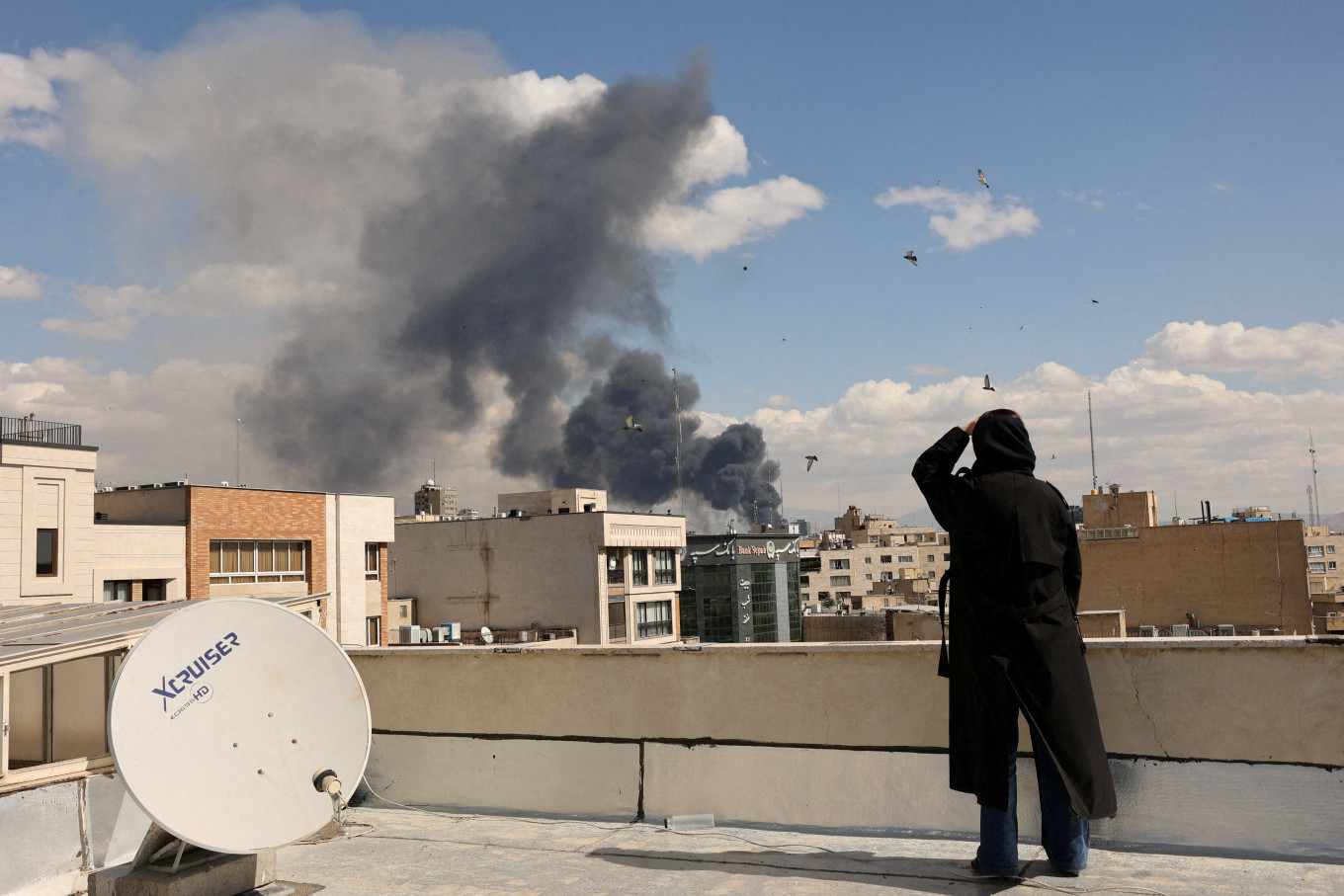
Iran’s political system is entering one of its most dangerous moments in decades. The reported death of Supreme Leader Ali Khamenei after wartime conditions has set off more than a funeral plan – it has opened a succession crisis with consequences far beyond Tehran. For a state built around rigid continuity, the loss of its top decision-maker during or after conflict creates a rare kind of instability: one where ritual, security, and raw politics collide at once. That makes this more than a leadership story. It is a test of whether Iran’s institutions can absorb a seismic shock without fracturing, and whether regional rivals will read the moment as weakness, escalation, or both. The next few days could shape military posture, diplomatic strategy, and the balance of power across the Middle East.
- Iran’s dayslong funeral signals a leadership transition that is politically as important as it is symbolic.
- The real issue is succession: who can unify the clerical, military, and security wings of the state.
- Regional actors will treat any hesitation in Tehran as a strategic opening.
- Markets and energy routes could react quickly if instability spreads beyond protocol and into policy.
What Khamenei’s death means for Iran’s power vacuum
The phrase power vacuum is not just a newsroom cliché here. In Iran, the supreme leader is the anchor that connects the Islamic Republic’s ideology to its security apparatus. Remove that anchor abruptly, especially after conflict, and every center of influence starts moving to protect itself. The clerical establishment will want continuity. The Islamic Revolutionary Guard Corps will want control. Reformist and pragmatic factions will want predictability, even if they have little leverage. The question is not simply who replaces Khamenei, but whether the system can stage-manage the transition without exposing its internal fault lines.
A state funeral in Iran is never only a memorial. It is a political performance, a loyalty test, and a message to rivals. A dayslong ceremony suggests the leadership understands that this is not a routine handoff. It is a period of vulnerability that demands choreography, not spontaneity. That choreography matters because any visible disorder can be interpreted as weakness by domestic opponents and foreign adversaries alike.
When a system depends on a single figure to arbitrate elite competition, the loss of that figure creates more than succession drama. It creates an institutional stress test.
The succession battle inside the Islamic Republic
Iran’s succession process is formally rooted in clerical legitimacy, but the practical decision-making is always political. The Assembly of Experts has a constitutional role, but the outcome will likely be shaped by security interests, factional bargaining, and the need to avoid visible division. That means the real contest may happen behind closed doors, where figures with revolutionary credentials, military influence, and religious standing try to narrow the field.
Why the IRGC matters more than ever
If you want to understand Iran’s next move, follow the institutions that control coercion. The IRGC is not just a military force. It is an economic actor, a political broker, and a guardian of the regime’s survival logic. In moments like this, it becomes the most important stabilizer – or destabilizer – in the room. If the guard corps signals support for a consensus successor, the transition is easier to manage. If it backs a narrow factional solution, rival power centers may resist, even if only quietly at first.
That does not mean the IRGC will openly seize control. More likely, it will work through influence: shaping the list of acceptable candidates, framing the security narrative, and ensuring that the transition does not weaken the state’s ability to project force. In a system as layered as Iran’s, that kind of soft control can matter more than a formal takeover.
The clerical question is just as hard
Iran’s supreme leader is supposed to embody both religious authority and political legitimacy. But over time, the regime has increasingly depended on governance and security rather than broad theological consensus. That creates a problem: the more the state leans on coercive institutions, the harder it becomes to find a successor who can command genuine clerical respect while also satisfying the security elite. The result may be a compromise figure – someone acceptable rather than inspiring, durable rather than transformative.
That kind of choice can keep the system intact in the short term. It can also deepen the perception that legitimacy is now procedural, not spiritual. For a state that has spent decades presenting itself as the guardian of revolutionary authenticity, that is not a small contradiction.
Why the funeral itself is a political weapon
Funeral politics in authoritarian systems are often underestimated. They provide an unusually concentrated moment for message control, public emotion, and elite signaling. In Iran’s case, a dayslong funeral can serve several purposes at once: it can project stability, glorify continuity, and buy time for elite bargaining. It can also suppress speculation by flooding the public sphere with state-managed symbolism.
But rituals have limits. If the event is perceived as overly scripted, it may look brittle. If security is heavy-handed, it can suggest fear. If attendance becomes a proxy for factional loyalty, the funeral could reveal more than the leadership wants. The state will likely try to avoid that. Still, when a succession crisis arrives, even careful choreography can become a source of comparison – who stood where, who spoke, who was absent, and who seemed to be in charge.
State rituals are not just theater. They are a live read on who is still aligned, who is hedging, and who is already preparing for the next era.
How the region could react to Iran’s power vacuum
Iran’s neighbors and adversaries will be watching for three signals: internal coherence, external restraint, and command continuity. If Tehran appears distracted, regional actors may test its posture through proxies, maritime pressure, diplomatic maneuvering, or cyber activity. If it reacts aggressively, that may reassure hardliners at home but raise the risk of wider escalation. If it signals caution, rivals may interpret that as an invitation to press harder.
The Middle East is already shaped by overlapping conflicts and brittle deterrence. A transition in Tehran does not happen in a vacuum, even if the phrase is useful. It intersects with ongoing tensions involving Gulf states, Israel, armed groups aligned with Iran, and global powers that still treat Iranian stability as a strategic variable. That means the stakes are not just political – they are operational.
Energy markets will not wait for the dust to settle
Any serious instability in Iran triggers immediate market attention because of the country’s role in regional security and energy flows. Traders do not need a full-blown crisis to move prices. They need uncertainty. If the succession process raises questions about internal control, maritime security, or proxy coordination, oil and shipping markets could price in risk within hours. That is why even a ceremonial transition can become economically consequential.
For businesses exposed to the region, the takeaway is straightforward: monitor shipping routes, insurance language, sanctions exposure, and contingency plans. Political succession in Iran is not only a diplomatic event. It is a supply-chain variable.
What this means for Iran’s future
The biggest question is whether Khamenei’s death produces continuity or acceleration. Continuity would mean the regime manages a controlled handoff, preserves deterrence, and avoids visible splits. Acceleration would mean the succession process exposes deeper contradictions: between clerical authority and military power, between ideology and governance, and between the state’s revolutionary identity and its need for pragmatic survival.
That is why the coming period matters so much. A carefully managed transition could preserve the Islamic Republic’s core architecture for years. A messy one could invite factional struggle, greater repression, or foreign opportunism. In extreme cases, it could force the regime to choose between legitimacy and control – and when authoritarian systems face that choice, they usually pick control, even at a steep cost.
The bottom line on Iran’s power vacuum
Iran is not merely burying a leader. It is trying to contain the blast radius of a historic transition while the region watches for signs of weakness. The funeral will be part tribute, part warning, and part negotiation. The real story, though, is what happens after the ceremony ends and the cameras move on. Who speaks for the state? Who keeps the security apparatus aligned? Who can prevent the succession from becoming a split? Those answers will determine whether Iran emerges with a new order – or a deeper crisis disguised as continuity.
For policymakers, investors, and rivals alike, the lesson is the same: do not confuse ritual with resolution. The dayslong funeral may project confidence, but the real test is whether Iran can convert mourning into a transfer of power without opening the door to instability that lasts far longer than the ceremony.
The information provided in this article is for general informational purposes only. While we strive for accuracy, we make no guarantees about the completeness or reliability of the content. Always verify important information through official or multiple sources before making decisions.