Iran Forever War Risk Grows
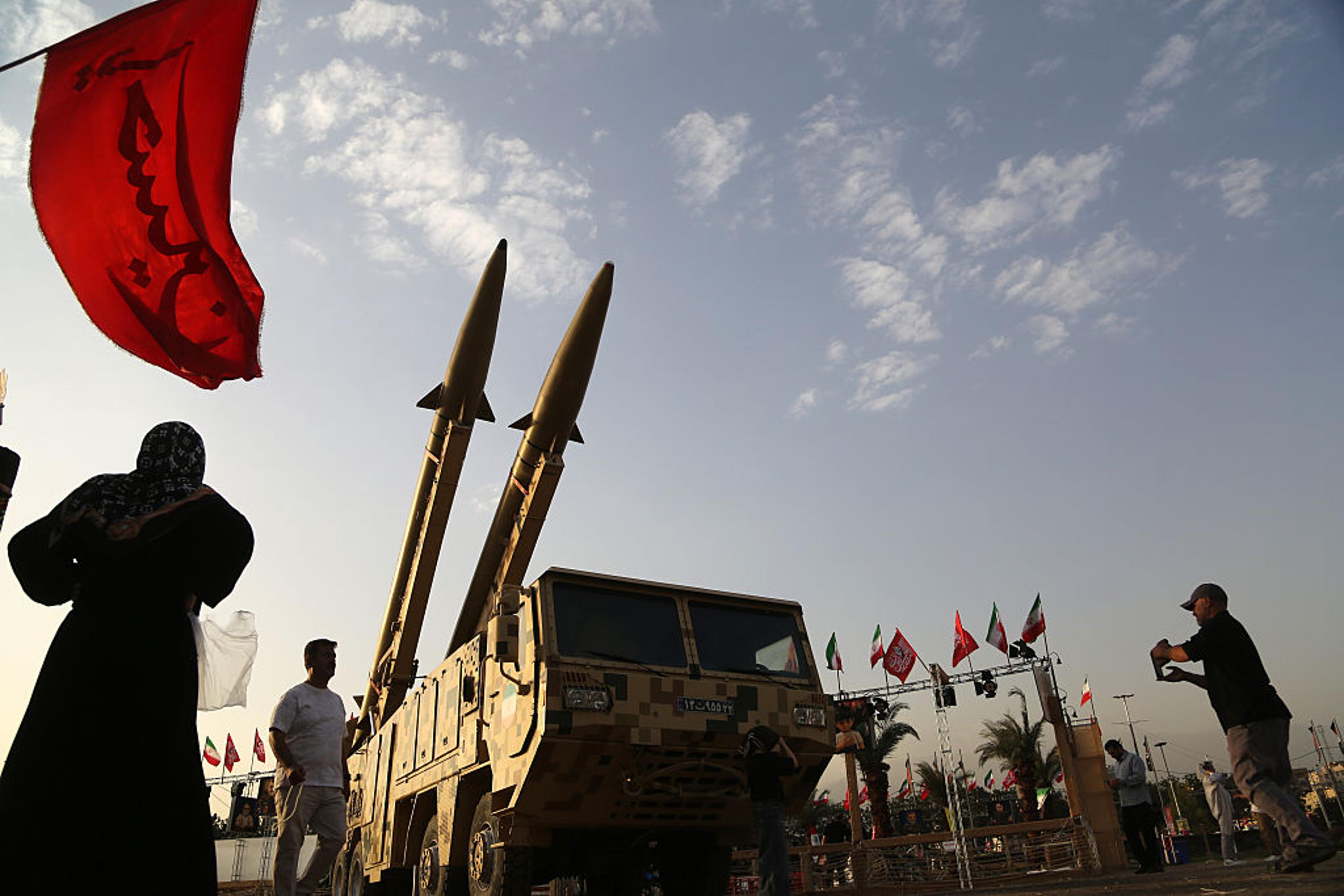
Iran Forever War Risk Grows
The phrase Iran forever war should make Washington flinch. It signals the same pattern that dragged the United States into open-ended conflicts before: urgent strikes, shifting objectives, limited public debate, and the quiet assumption that escalation can be managed forever. The danger is not just a dramatic regional blowup. It is a slower, more familiar slide into a conflict that begins as deterrence, becomes retaliation, and then hardens into policy. For voters, policymakers, and anyone watching the Middle East, the core question is brutally simple: is the U.S. trying to prevent a war with Iran, or is it building the machinery to fight one indefinitely?
- The biggest risk is mission creep: limited military action can quickly become an open-ended strategic commitment.
- Iran is not Iraq or Afghanistan: its networks, geography, and military doctrine create a far more complex conflict environment.
- Domestic politics matter: presidents often frame escalation as restraint until events outpace messaging.
- The real test is clarity: without defined goals and exit conditions, deterrence can become permanent warfare.
Why the Iran forever war debate is back
The fear behind the Iran forever war debate is not theoretical. The U.S. has spent decades learning how easily Middle East conflicts can expand beyond their original intent. A strike meant to restore deterrence can trigger proxy attacks. Proxy attacks can justify new deployments. New deployments can create new targets. Soon, the public is told that leaving would be dangerous because the conflict has become too important to walk away from.
That cycle is what makes the Iran question so combustible. Iran is not merely a state actor with a conventional military. It operates through regional partners, asymmetric tactics, cyber capabilities, maritime pressure points, and political influence networks. That gives Tehran multiple ways to respond without always crossing the threshold that would trigger a full-scale U.S. war. It also gives Washington multiple excuses to stay engaged.
Forever wars rarely begin with leaders promising forever. They begin with leaders promising control.
This is where strategic ambiguity becomes a liability. When officials say the goal is to deter Iran, degrade its capabilities, protect U.S. personnel, defend allies, preserve shipping lanes, and prevent nuclear escalation, those goals may all sound reasonable. But together they can form a mandate with no endpoint.
Iran forever war warning signs to watch
The warning signs of a long conflict are often visible before the public narrative catches up. They do not always look like an invasion. Sometimes they look like a steady normalization of military activity.
1. Objectives keep expanding
A limited response can be defensible if it is tied to a narrow objective. But the danger rises when the mission expands from stopping a specific attack to reshaping a regional balance of power. If the U.S. starts by targeting immediate threats and ends up managing Iran’s entire network of partners, the conflict has already changed character.
Pro Tip: Watch the verbs used by officials. Defend, deter, and respond suggest limited aims. Degrade, restore order, and eliminate threats can signal a much wider campaign.
2. The conflict becomes bureaucratic routine
Forever wars become durable when they disappear into process. Congressional briefings replace public debate. Troop movements become operational updates. Strikes are described as routine. Legal justifications are recycled from older authorizations. The public learns about conflict through carefully worded statements rather than democratic deliberation.
That does not mean every deployment is reckless. It means the system is built to continue once activated. Military planners plan. Regional commanders request resources. Allies ask for reassurance. Rivals test boundaries. The machine keeps moving.
3. Retaliation becomes the strategy
Retaliation can be necessary. But retaliation is not a strategy by itself. If Iran or aligned groups strike U.S. interests, Washington may feel compelled to respond. If that response invites more attacks, the U.S. faces a familiar dilemma: hit harder, absorb damage, or negotiate under fire. Each option carries political risk.
The result can be a loop where both sides insist they are not seeking war while continuing actions that make war more likely. That is the essence of escalation management, and it is far less precise in practice than it sounds in policy papers.
Why Iran is a uniquely dangerous conflict
Iran presents a different challenge from previous U.S. campaigns. It has a large population, difficult terrain, hardened military infrastructure, and strategic depth. It also has leverage points across the region, including Iraq, Syria, Lebanon, Yemen, the Gulf, and maritime chokepoints. A direct conflict could quickly become a distributed conflict.
That distribution is the nightmare scenario. The U.S. might not face one battlefield. It could face a series of connected crises: attacks on bases, pressure on shipping, rocket fire against allies, cyber operations, energy market shocks, and political destabilization in fragile states. Even if Washington avoids a ground invasion, it could still become locked into a long air, naval, intelligence, and special operations campaign.
The most dangerous assumption in any Iran crisis is that escalation will stay neatly within the boundaries drawn in Washington.
The nuclear dimension adds another layer. If conflict convinces Iran that nuclear capability is essential for regime survival, military action could accelerate the very outcome it is meant to prevent. If the U.S. believes Iran is racing toward a threshold, pressure for preemptive action grows. That is how strategic dilemmas tighten.
The domestic politics of an Iran forever war
No U.S. president wants to be seen as weak on Iran. That political reality has shaped policy across administrations. Leaders may campaign against endless wars while still ordering strikes, expanding sanctions, and reinforcing regional deployments. The contradiction is not always hypocrisy. It is often the product of a political system that punishes restraint after an attack but rarely rewards prevention when nothing happens.
Congress also plays a central role, even when it avoids responsibility. A real debate over war powers would force lawmakers to define what the U.S. is willing to fight for, how long it is willing to fight, and what success would look like. Without that debate, the executive branch fills the vacuum.
Voters should be skeptical of language that frames major military decisions as temporary technical measures. A short-term deployment can become semi-permanent. A narrow strike package can become a precedent. A defensive mission can become a regional posture.
What a smarter Iran strategy would require
A serious strategy does not mean pretending Iran poses no threat. It means matching tools to goals and refusing to confuse motion with success. The U.S. can protect personnel, support allies, and deter attacks without sleepwalking into an indefinite war. But doing so requires discipline.
- Define the endpoint: Every military action should be tied to a clear political objective and an exit condition.
- Separate deterrence from regime change: Mixing the two creates confusion and invites escalation.
- Use diplomacy as infrastructure: Communication channels matter most when both sides are hostile.
- Demand congressional ownership: If the mission is important enough to fight, it is important enough to authorize publicly.
- Measure second-order effects: A successful strike that produces a larger war is not a strategic success.
The role of allies
Allies can strengthen deterrence, but they can also complicate decision-making. Israel, Gulf states, and European governments do not always share the same threat perception or timeline. A U.S. strategy that relies on alliance coordination must account for the possibility that partners may escalate in ways Washington does not fully control.
This is especially important in a region where signaling is often misread. What one actor sees as deterrence, another may see as preparation for attack. What one capital calls a defensive strike, another may treat as an opening salvo.
Why this matters beyond the Middle East
An Iran forever war would not stay contained to foreign policy. It would affect defense spending, oil markets, inflation risk, presidential politics, military readiness, and U.S. credibility in Asia and Europe. A prolonged conflict would consume attention at a time when Washington is also managing competition with China, Russia’s aggression in Europe, and a volatile global economy.
There is also a trust issue. After Iraq and Afghanistan, the public is less willing to accept optimistic forecasts about limited military action. That skepticism is healthy. It does not require isolationism. It requires proof. If leaders argue that escalation is necessary, they must explain the costs, the legal basis, the expected duration, and the plan if deterrence fails.
Public skepticism is not a weakness in national security. It is a safeguard against strategic autopilot.
The bottom line on the Iran forever war risk
The U.S. may not be planning a forever war with Iran. But forever wars are not always planned. They emerge from unresolved tensions, vague missions, political pressure, and repeated decisions that seem manageable in isolation. The danger is not one dramatic announcement. It is accumulation.
The right question is not whether Washington can win a clash with Iran in the narrow military sense. The right question is whether military action can produce a stable political outcome at an acceptable cost. If leaders cannot answer that clearly, then the country is not looking at a strategy. It is looking at a trap.
For now, the most important demand is clarity. What is the mission? Who authorized it? What would success look like? What would failure look like? And most importantly, how does it end?
The information provided in this article is for general informational purposes only. While we strive for accuracy, we make no guarantees about the completeness or reliability of the content. Always verify important information through official or multiple sources before making decisions.


