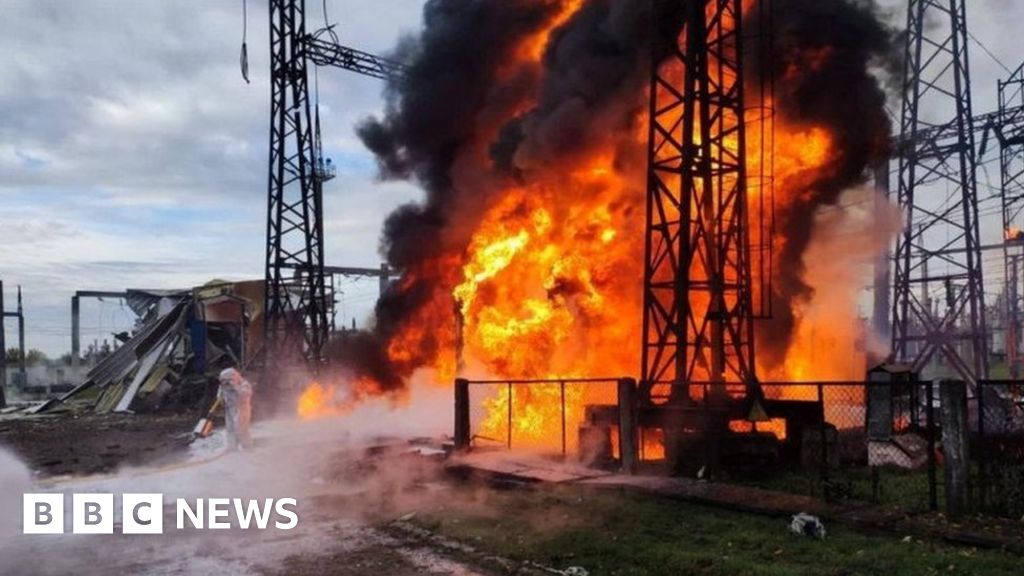
Iran Fuel Tanker Blast Exposes a Deadly Safety Gap
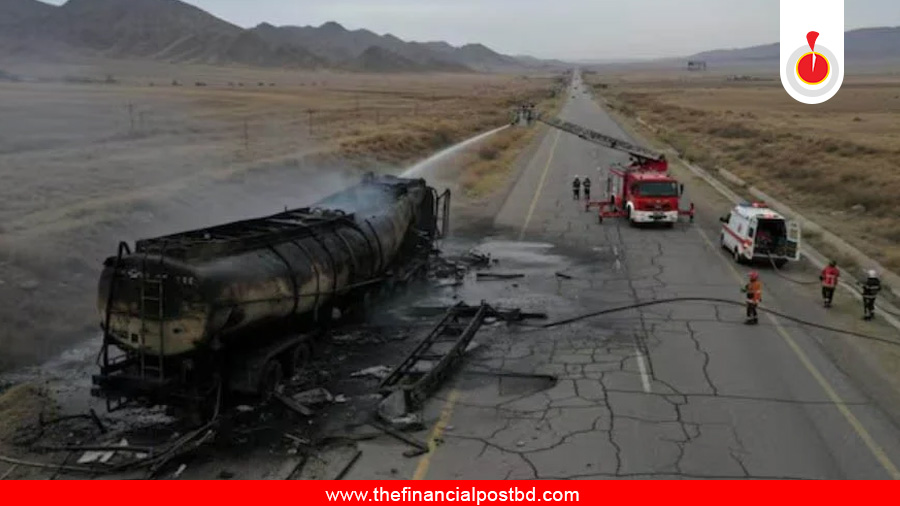
A single vehicle carrying fuel can turn a public road into a mass-casualty zone in seconds. The Iran fuel tanker blast in the country’s west, which killed at least 10 people, is not just another grim transport accident. It is a warning about the fragile systems that sit between daily life and catastrophe: aging roads, high-risk cargo, uneven enforcement, and emergency services forced to respond after the worst has already happened. For residents, the pain is immediate – families lost, survivors injured, communities shaken. For policymakers and operators, the lesson should be broader. Fuel transport is essential, but it is also one of the most unforgiving parts of modern infrastructure. When a fuel tanker fails, the consequences do not stay contained to the driver, the vehicle, or the company that owns it.
- At least 10 people were killed in a fuel tanker explosion in western Iran.
- The disaster highlights the high-risk nature of transporting flammable cargo by road.
- Emergency response, tanker maintenance, route planning, and enforcement are now central questions.
- The incident should push a wider debate about
hazardous materialssafety across the region.
Iran Fuel Tanker Blast Turns a Road Incident Into a National Safety Question
The reported blast in western Iran appears, at first glance, to be a localized tragedy: a tanker, a fire, fatalities, and emergency crews trying to stabilize a chaotic scene. But fuel tanker explosions rarely remain simple traffic stories. They expose the invisible risk architecture of a country: how dangerous goods move, how roads are monitored, how quickly fire services can deploy, and how well local communities are protected from industrial-scale hazards passing through everyday spaces.
A fuel tanker is essentially a moving storage tank filled with energy-dense material. Depending on the cargo, heat, collision damage, vapor buildup, and ignition sources can create conditions for a rapid fire or explosion. That is why tanker crashes are treated differently from ordinary vehicle accidents. They require perimeter control, specialized firefighting foam, evacuation decisions, and an incident command structure that can coordinate police, firefighters, medical teams, and local authorities.
Key insight: The most dangerous part of a tanker crash is not always the initial impact. It is the chain reaction that follows when flammable liquid, vapor, heat, and crowd exposure converge.
The deaths reported in this blast underline a harsh reality: once ignition occurs, response teams are often racing against physics. The best safety outcomes usually come from prevention, not heroics after the fireball.
Why the Iran Fuel Tanker Blast Matters Beyond the Death Toll
Every fatal transport disaster carries a human cost that statistics cannot fully capture. But this incident also matters because Iran, like many countries with major fuel distribution networks, depends heavily on road transport to move petroleum products across long distances, varied terrain, and populated corridors. That means the risks are systemic rather than exceptional.
Western Iran includes mountainous routes, busy regional roads, and areas where heavy vehicles may share space with smaller cars, pedestrians, roadside shops, and residential zones. When a tanker moves through such environments, the public becomes part of the risk field, even if they have no relationship with the cargo or company involved.
That is the uncomfortable bargain of energy logistics. Societies need fuel to power homes, farms, factories, hospitals, and transport networks. Yet the movement of that fuel creates danger at every stage: loading terminals, highways, depots, parking areas, and delivery points. A serious blast forces the question that officials often prefer to delay: is the current safety system good enough for the level of risk being carried?
The Hidden Technical Risk Inside a Fuel Tanker
Fuel tanker disasters are often described simply as explosions, but the underlying mechanics are more complex. A tanker carrying gasoline, diesel, or another flammable product can become hazardous if the tank shell is ruptured, valves fail, fuel leaks, or vapors accumulate. A spark from a collision, electrical fault, hot surface, or open flame can then trigger ignition.
Emergency crews assessing a tanker accident must think in terms of flash point, vapor cloud, blast radius, and secondary ignition. These are not abstract terms. They determine how far civilians should be moved, whether nearby buildings are at risk, and whether responders can safely approach the vehicle.
- Leak control: Crews must identify whether fuel is actively escaping and where it is flowing.
- Evacuation zone: Authorities need to keep bystanders away from heat, fumes, and explosion risk.
- Fire suppression: A fuel fire may require foam systems rather than standard water streams.
- Traffic shutdown: Roads must be closed quickly to prevent additional vehicles from entering the hazard area.
In many disasters, early crowd control can be just as important as firefighting. People often move toward crash scenes to help, film, or watch. Around a tanker, that instinct can be fatal.
What Investigators Should Scrutinize After the Blast
The immediate cause of the Iran fuel tanker blast may take time to establish. Serious investigations typically examine the vehicle, driver, road conditions, cargo records, company procedures, and emergency response timeline. The goal should not be to find the fastest scapegoat. It should be to understand how multiple layers of protection failed.
Vehicle Maintenance and Tank Integrity
Investigators will likely look at the tanker’s maintenance history, braking system, tires, valves, tank shell, and inspection records. A worn tire, faulty brake, corroded fitting, or compromised valve can become catastrophic when paired with flammable cargo. For high-risk vehicles, maintenance is not routine paperwork. It is a life-safety system.
Pro Tip for operators: Treat every inspection of a hazardous materials vehicle as a prevention event, not a compliance ritual. The cheapest defect to fix is the one found before the truck leaves the depot.
Driver Fatigue and Route Pressure
Fuel logistics often operate under time pressure. Drivers may face long routes, difficult weather, congested roads, and delivery deadlines. Fatigue can degrade reaction time and decision-making, especially on rural or mountainous roads. Even highly experienced drivers can be overwhelmed when mechanical failure, traffic conflict, or poor visibility hits at the wrong moment.
Modern safety programs increasingly rely on telematics, driver monitoring, speed controls, and route planning to reduce these risks. But technology only works when companies and regulators are willing to act on the data.
Emergency Response Readiness
A tanker explosion tests whether local emergency systems have trained for industrial fire scenarios. The difference between a controlled response and a wider disaster may come down to minutes: how fast dispatchers classify the incident, whether the nearest fire units have foam capacity, whether police can secure the perimeter, and whether hospitals are alerted for burn and trauma casualties.
Editorial view: If a region permits fuel tankers on public roads, it must also invest in the emergency capacity to handle the worst-case scenario. Anything less shifts the burden of risk onto ordinary people.
The Broader Infrastructure Problem
Iran is not alone in facing the risks of fuel transport. Across the world, tanker crashes expose a familiar pattern: heavy reliance on road freight, uneven enforcement, mixed vehicle standards, and communities built close to transport corridors. The challenge is especially acute where fuel demand is high but alternative transport options, such as rail pipelines or tightly controlled industrial routes, are limited.
Road-based fuel distribution is flexible and often unavoidable. But flexibility can become danger when routes pass through dense areas or when companies operate with weak oversight. The safest systems use layered controls: certified vehicles, trained drivers, monitored speeds, approved routes, emergency planning, and strict penalties for violations.
- Route zoning: Keep tankers away from crowded markets, schools, and dense residential areas where possible.
- Time controls: Limit high-risk cargo movement during peak traffic or poor visibility.
- Digital tracking: Use
GPSandtelematicsto monitor speed, stops, and route deviations. - Public warning protocols: Train communities on how to move away from tanker crash scenes.
- Independent audits: Review tanker fleets and operators before disasters force scrutiny.
These measures are not futuristic. They are standard risk-reduction practices in countries and companies that treat hazardous transport as a core public safety issue.
Why This Disaster Should Change Public Behavior Too
Policy failures deserve scrutiny, but public behavior around crash scenes also matters. One recurring danger in tanker accidents is crowd formation. People may gather to assist, recover spilled fuel, take photos, or watch emergency crews. If vapors ignite, a secondary explosion can kill people who survived the original crash.
The safest rule is simple: if a tanker is leaking, smoking, burning, overturned, or involved in a major collision, move away immediately and keep moving until authorities establish a safe perimeter. Do not approach with a phone. Do not attempt to collect fuel. Do not assume distance is safe just because flames look contained.
For communities near tanker routes, local authorities should provide basic public safety messaging around flammable liquids, evacuation signals, and emergency numbers. Public education may sound modest compared with infrastructure reform, but it can save lives in the first chaotic minutes before professional responders arrive.
What Comes Next After the Iran Fuel Tanker Blast
The immediate priority is care for victims, support for families, and a transparent investigation. But the longer-term test is whether the deaths lead to reform or fade into another line in a disaster archive. A credible response should include a public accounting of the suspected cause, review of tanker safety enforcement, inspection of similar fleets, and assessment of emergency readiness in high-risk corridors.
There is also a business dimension. Fuel distributors and transport contractors should expect greater pressure to prove that their fleets are safe, their drivers are trained, and their routes are defensible. Insurance costs, regulatory reviews, and public scrutiny often intensify after deadly incidents. Companies that treat safety as a cost center may find that the real cost arrives after a disaster.
The Iran fuel tanker blast is a tragedy first. But it is also a systems failure until proven otherwise. Roads are shared public spaces, and dangerous cargo demands a higher standard of care. If the response stops at condolences, the same risks will remain on the road, waiting for the next spark.
The information provided in this article is for general informational purposes only. While we strive for accuracy, we make no guarantees about the completeness or reliability of the content. Always verify important information through official or multiple sources before making decisions.