Ireland Israel Draw Ignites Football Fury
Ireland Israel Draw Ignites Football Fury
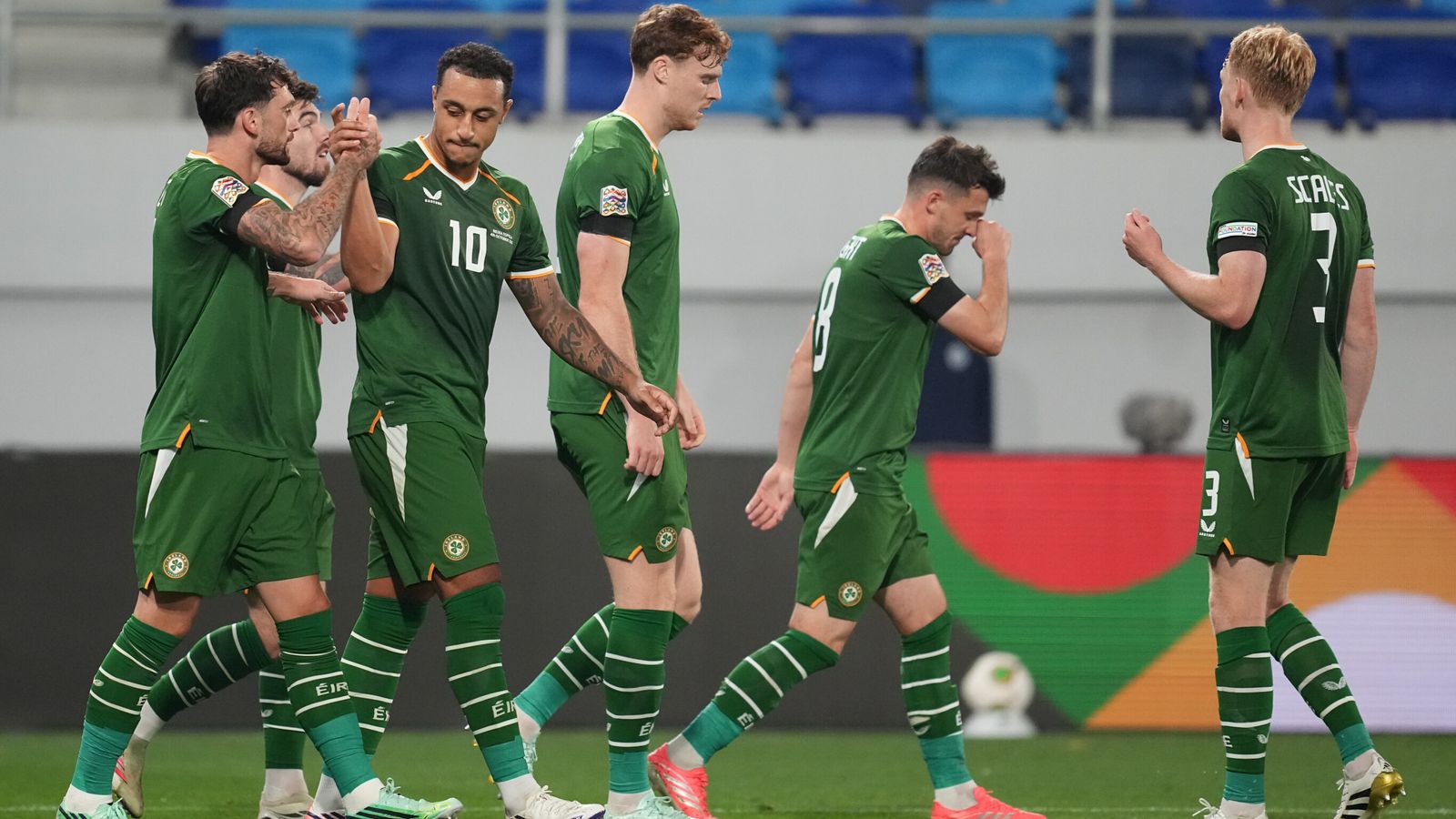
A tense fixture can survive hard tackles, hostile chants, and late-game gamesmanship. It becomes something else when the argument shifts from football to conduct. The Ireland Israel draw has landed in that uncomfortable space, with spitting allegations turning an already ill-tempered match into a disciplinary and reputational problem for everyone involved. For supporters, the frustration is obvious: the football itself is no longer the headline. For governing bodies, the stakes are higher. They now have to show whether the sport’s rules can handle flashpoints that unfold under pressure, in full public view, and amid politically charged scrutiny.
- The Ireland Israel draw was overshadowed by allegations of spitting and escalating on-field hostility.
- The central question now is whether officials documented enough detail for a credible disciplinary process.
- Incidents like this test football’s ability to separate sporting punishment from political noise.
- Clubs, federations, and players need clearer standards for conduct, communication, and post-match accountability.
Why the Ireland Israel draw became bigger than the score
Draws are usually remembered for missed chances, tactical compromises, or controversial refereeing decisions. This one is being remembered for something uglier. Allegations of spitting are among the most inflammatory claims in football because they sit outside the normal grammar of physical competition. A late challenge can be reckless. A shirt pull can be cynical. Spitting is viewed as personal, degrading, and deliberately disrespectful.
That is why this match immediately moved beyond the usual post-game debate. The central issue is no longer whether one team pressed well, defended deep, or wasted possession. It is whether the conduct on the pitch crossed a line that demands formal action under the relevant disciplinary code.
When football becomes a dispute over dignity rather than performance, the governing body cannot treat it as just another heated match.
The difficulty is that emotional matches often produce competing accounts. Players protest. Benches erupt. Cameras may capture one angle but miss another. A referee may see the reaction but not the trigger. That ambiguity makes the administrative process crucial. The referee report, the match commissioner report, broadcast footage, and any available tunnel or technical-area evidence become the backbone of whatever happens next.
The allegation that changes the disciplinary math
Spitting allegations carry a different weight from routine misconduct because they imply intent and humiliation. Most football rulebooks treat spitting as a sending-off offense when seen by officials. If missed during live play, it can still become the subject of retrospective review, depending on the competition’s procedures and available evidence.
That creates a two-track problem. First, officials must decide whether the allegation is supported by clear evidence. Second, administrators must decide what sanction is proportionate if the claim is upheld. Suspensions, fines, formal warnings, and team-level penalties may all be on the table, depending on jurisdiction and the seriousness of the incident.
What investigators will likely examine
- Video angles: Whether broadcast or internal footage clearly shows the alleged act.
- Player testimony: Statements from the accused player, the complainant, nearby opponents, and teammates.
- Official reports: Notes from the referee team, fourth official, and
match commissioner. - Sequence of events: Whether the allegation followed a tackle, verbal exchange, confrontation, or off-ball incident.
- Prior conduct: Any recent disciplinary record that may influence the sanction phase.
The biggest mistake would be to rush to punishment based on outrage alone. The second biggest mistake would be to hide behind uncertainty if the evidence is strong. Football loses credibility in both directions: by overreacting without proof, or by underreacting when misconduct is obvious.
A politically charged fixture puts football’s neutrality claim under stress
Any match involving Israel in the current climate is likely to attract scrutiny beyond sport. That does not mean every incident should be politicized. It does mean administrators need to understand that their decisions will be read through a broader lens of fairness, consistency, and institutional courage.
Football likes to insist that it exists apart from politics, but international sport has never been that simple. National teams carry flags, anthems, histories, and public sentiment onto the pitch. When emotions flare, the disciplinary system has to do something difficult: enforce the rules without appearing to adjudicate the politics around the fixture.
The strongest response is not the loudest one. It is the one that applies the same standard regardless of the badge on the shirt.
That standard matters for Ireland, for Israel, and for every federation watching. If the evidence supports sanctions, they should follow. If it does not, officials should explain the limits of the evidence clearly. Silence invites conspiracy. Vague statements invite escalation. Transparent process is not a luxury here. It is the only way to keep a combustible match from becoming a longer institutional crisis.
How referees lose control in matches like this
Ill-tempered games rarely explode from nowhere. They usually build through small failures: an early foul that goes unpunished, dissent that is tolerated too long, a confrontation that draws no meaningful warning, or a bench that senses the referee team is losing authority. By the time a serious allegation emerges, the match temperature may already be dangerously high.
Referees are asked to manage the impossible. They must interpret contact at speed, communicate authority, protect player safety, and avoid becoming the story. But when flashpoints stack up, match control becomes as much psychological as technical. Players test boundaries. Coaches pressure the fourth official. Supporters amplify every grievance.
The warning signs officials cannot ignore
There are recognizable signals when a match is drifting. Repeated off-ball clashes, players surrounding the referee, delayed restarts, and sarcastic applause are not just irritants. They are indicators that the normal incentives have broken down. The official response must be early, visible, and consistent.
Tools such as yellow cards, formal warnings to captains, and tighter management of the technical areas exist for this reason. So does VAR, where available, although video review is not a cure-all. VAR can identify missed violent conduct, but it cannot repair a match atmosphere that has already collapsed.
Why the Ireland Israel draw matters for player responsibility
The Ireland Israel draw is also a reminder that players are not merely performers. They are public actors in a high-pressure entertainment system where every gesture can be clipped, slowed down, and interpreted in real time. That is not always fair, but it is the job now.
Elite athletes often speak about passion as if it explains everything. It does not. Passion can fuel commitment, but it cannot excuse conduct that degrades an opponent. Football’s best rivalries are intense precisely because they remain inside a shared code. Once that code breaks, the spectacle becomes smaller, nastier, and less defensible.
There is also a practical dimension. Players who lose discipline hurt their teams. A suspension can alter qualification campaigns, damage dressing-room trust, and force coaches into tactical compromises. A reputation for volatile conduct can influence how referees perceive future challenges. In international football, where squads have limited time together, those consequences are magnified.
The communications test for federations
What happens after the match may matter almost as much as what happened during it. Federations have to speak with care, but care should not become evasiveness. A good statement acknowledges the seriousness of the allegation, commits to cooperation with any investigation, avoids prejudging the outcome, and makes clear that abuse or harassment of players will not be tolerated.
A bad statement does the opposite. It inflames supporters, frames the entire incident as a conspiracy, or treats serious misconduct as a public-relations inconvenience. In the social media era, that approach is not just irresponsible. It is strategically foolish.
Pro tip for sports bodies handling volatile incidents
The best crisis response is built before the crisis. Federations should have a pre-approved protocol for allegations involving violent conduct, discrimination, spitting, tunnel incidents, or confrontations with officials. That protocol should define who speaks, what evidence is preserved, when players are interviewed, and how updates are issued.
This is not bureaucracy for its own sake. It protects the integrity of the process and reduces the chance that emotion fills the information vacuum.
What should happen next
The next phase should be procedural, not performative. Authorities should gather all available footage, obtain written accounts, review the official reports, and determine whether the alleged behavior can be established to the required standard. If charges are brought, the accused party must have a fair opportunity to respond. If charges are not brought, the reasoning should be communicated with enough clarity to preserve trust.
There is also room for broader review. If the match became repeatedly confrontational, officials should examine whether preventive action could have been taken earlier. That is not about scapegoating referees. It is about learning from a fixture that clearly pushed the limits of match control.
Accountability is not just punishment after the fact. It is the willingness to ask why the match reached that point in the first place.
The bigger lesson for international football
International football is entering an era where sport, identity, and global conflict collide more frequently and more visibly. Governing bodies cannot rely on old assumptions that a whistle and a handshake will contain everything. The modern game needs better conduct enforcement, faster evidence preservation, and more mature communication.
That does not mean sterilizing football. The sport should remain emotional, confrontational, and dramatic. But there is a line between intensity and contempt. Spitting allegations, if substantiated, sit firmly on the wrong side of that line.
The Ireland and Israel players may eventually remember this match differently from the public. They may think about tactical errors, missed chances, or the frustration of a result that got away. But the outside world will remember the flashpoint. That is the cost of a game losing its center of gravity.
Final verdict on the Ireland Israel draw
The Ireland Israel draw should be treated as more than a bad-tempered footnote. It is a test of how football responds when allegations of serious misconduct overshadow the match itself. The right answer is not instant condemnation, and it is not institutional shrugging. It is disciplined investigation, transparent standards, and consequences that match the evidence.
Football sells emotion better than almost any sport on earth. But emotion without boundaries becomes chaos. If authorities want players, fans, and federations to trust the game, they need to prove that even the ugliest moments can be handled with clarity, fairness, and backbone.
The information provided in this article is for general informational purposes only. While we strive for accuracy, we make no guarantees about the completeness or reliability of the content. Always verify important information through official or multiple sources before making decisions.