Japan Slows City Streets
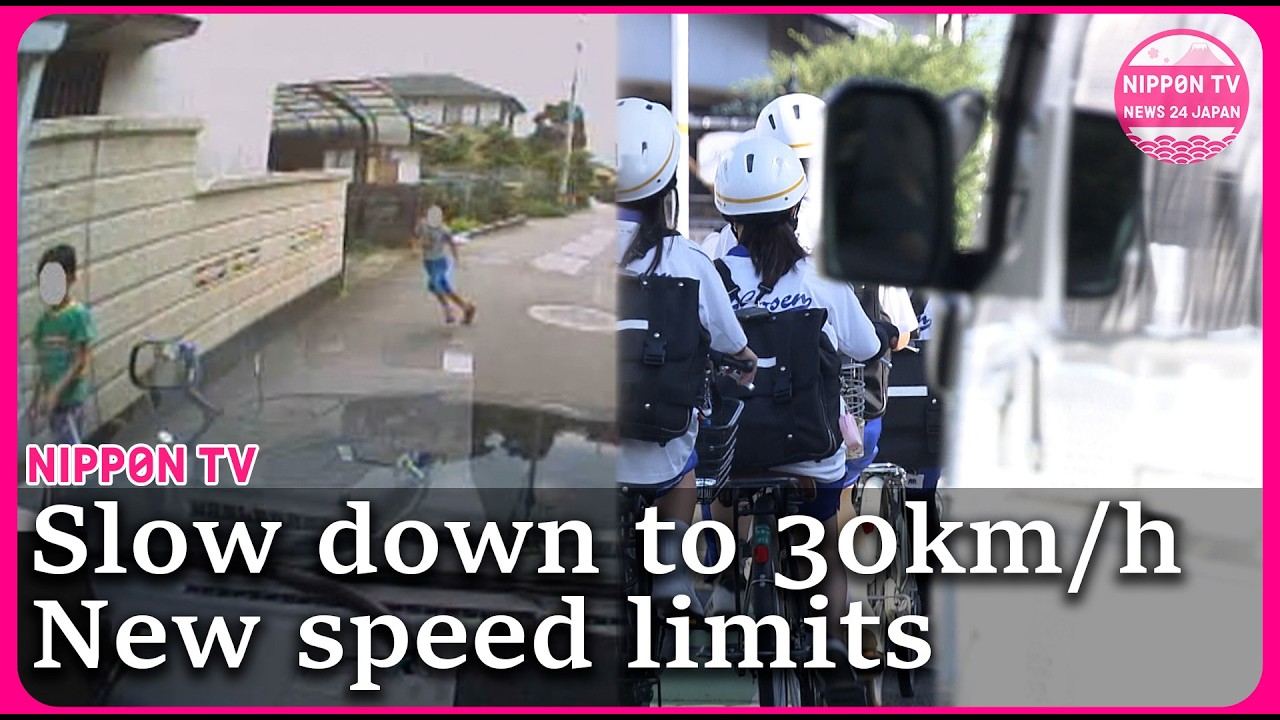
Japan Slows City Streets
Japan is about to make one of the clearest bets in urban safety: slower cars save lives. The new Japan 30km/h speed limit for narrow city streets is not just a traffic tweak. It is a direct response to the daily danger faced by pedestrians, cyclists, children, older residents, and drivers navigating roads never designed for modern vehicle volume. For anyone living in a dense city, the pain point is familiar: streets that function as neighborhood lifelines are also treated like shortcuts. Japan’s move signals a broader global shift away from speed as the default measure of transport efficiency and toward survivability, visibility, and calmer local mobility. The big question is whether a lower limit on paper can meaningfully change behavior on the asphalt.
- Japan will lower speed limits to
30km/hon many narrow urban streets. - The policy targets local roads where pedestrians and vehicles often share constrained space.
- Lower speeds dramatically reduce crash severity, especially for vulnerable road users.
- Enforcement, street design, and navigation data will determine whether the rule succeeds.
- The move could influence other dense, aging, and transit-heavy cities worldwide.
Why Japan’s 30km/h Speed Limit Matters Now
Japan’s road network is a lesson in urban contradiction. Its trains are famously precise, its major roads are highly regulated, and its cities are among the most walkable in the world. Yet many residential streets remain narrow, intimate, and complicated. They often lack generous sidewalks, clear separation between people and vehicles, or the visual cues that force drivers to slow down.
That makes the new 30km/h cap more than a symbolic safety measure. It targets the streets where a small misjudgment can have enormous consequences. At 50km/h, a driver has less time to react and a pedestrian has far less chance of survival. At 30km/h, braking distance shrinks, impact forces fall, and the street becomes more forgiving.
Key insight: The purpose of a lower speed limit is not to make every trip slower. It is to make everyday mistakes less fatal.
This is especially urgent in Japan, where the population is aging quickly. Older pedestrians are more physically vulnerable in collisions and may need more time to cross streets. Children, delivery riders, and cyclists also benefit from streets where vehicle speed is predictable and constrained.
The Real Target Is Not Highways
The policy focuses on narrow urban roads, not Japan’s expressways or major arterials. That distinction matters. High-speed roads are engineered for flow, separation, and long sightlines. Local streets are not. They are where residents step out of homes, students walk to school, delivery vans stop unpredictably, and bicycles weave through tight corridors.
On these streets, the old logic of traffic management starts to break down. A higher speed limit may save seconds for a driver, but it raises risk for everyone outside the vehicle. The new rule effectively says that residential access roads should behave like shared civic space, not miniature raceways.
From Traffic Flow To Human Tolerance
For decades, many cities optimized streets around throughput: how many cars can move through a corridor per hour. Japan’s new limit reflects a different metric: how much risk can a neighborhood tolerate?
That framing is important because local streets are not merely transport infrastructure. They are social infrastructure. They connect homes, shops, schools, clinics, train stations, and public spaces. When traffic feels hostile, people walk less, cycle less, and avoid lingering in their own neighborhoods. A 30km/h limit is a low-tech intervention with potentially high social impact.
Japan’s 30km/h Speed Limit And The Science Of Survival
The physics are brutally simple. Speed multiplies harm. A vehicle traveling faster needs more distance to stop, gives the driver less time to process hazards, and transfers more energy in a collision. That is why so many road safety experts support 30km/h or 20mph limits in residential areas.
Japan’s policy aligns with the global Vision Zero philosophy, which treats traffic deaths as preventable rather than inevitable. The idea is not that humans will stop making errors. It is that streets should be designed and regulated so ordinary errors do not become death sentences.
- Lower speed improves reaction time: Drivers can detect pedestrians, cyclists, and obstacles earlier.
- Shorter braking distance reduces impact risk: A car has a better chance of stopping before contact.
- Crash severity drops sharply: Vulnerable road users are more likely to survive at
30km/hthan at higher speeds. - Noise and stress decrease: Slower traffic can make residential streets feel less aggressive.
The Enforcement Problem
A speed limit without enforcement can become street theater. Japan’s challenge will be converting a legal threshold into everyday driver behavior. That may require a mix of police enforcement, automated monitoring, signage, public education, and street redesign.
The hardest part is that many drivers respond more to road geometry than posted numbers. If a street feels wide and unobstructed, people tend to drive faster. If it feels narrow, textured, and residential, they slow down. That means the best version of this policy will likely combine 30km/h signs with physical traffic calming.
What Cities Can Learn From Japan’s 30km/h Speed Limit
The lesson for other countries is not simply to copy the number. It is to match speed to street purpose. A road outside a school, clinic, train station, or dense shopping street should not invite the same behavior as a regional connector. Japan’s move gives policymakers a clean template: identify narrow urban streets where vulnerable users mix with vehicles, then set a survivable speed as the default.
There is also a technology angle. Modern vehicles increasingly rely on GPS, ADAS, and map-linked speed data. If Japan’s road databases update reliably, navigation apps and in-car systems could reinforce the new limit automatically. Over time, ISA or intelligent speed assistance systems may make compliance less dependent on memory and more integrated into the driving experience.
Pro tip for city leaders: Do not announce lower limits as anti-car policy. Frame them as pro-neighborhood, pro-child, and pro-survival policy.
Design Will Decide The Outcome
The most successful slow-street programs usually combine regulation with visual and physical cues. Japan already has an advantage: many of its local streets are naturally narrow. But even narrow streets can encourage risky driving if they are treated as cut-through routes.
Expect cities to lean on measures such as painted edge lines, raised crossings, school-zone markings, curb extensions, planters, textured pavement, and tighter turning radii. These tools communicate something signs cannot: this is a place where drivers are guests.
The Trade-Off Drivers Will Notice
Critics will argue that the policy adds friction to daily travel. They are not entirely wrong. Some trips will take longer, especially for drivers who use backstreets to avoid congestion. Delivery operators and logistics firms may need to adjust routing assumptions. Ride-hailing and taxi services could see marginal changes in arrival estimates.
But the trade-off is smaller than it looks. On short urban streets, the time saved by driving faster is often erased at intersections, crossings, traffic lights, parking maneuvers, and congestion. The real effect of speeding through narrow roads is less about efficiency and more about perceived control. Lower limits challenge that perception.
For Japan, the bigger gain may be cultural. Once drivers accept 30km/h as normal on neighborhood streets, the road environment changes. Parents become more comfortable letting children walk. Older residents feel less exposed. Cyclists face fewer high-speed overtakes. The city becomes less dominated by the threat profile of the car.
What Comes Next For Urban Mobility
Japan’s new speed limit could become a quiet catalyst for broader mobility reform. Slower local streets make cycling more viable. They improve the first and last kilometer around train stations. They support compact retail corridors and safer school commutes. They also complement Japan’s push to adapt infrastructure for an older society.
The next frontier will be data. Authorities will need to measure whether crashes fall, whether compliance improves, and whether certain streets still require redesign. If the numbers are strong, the policy could expand or inspire similar reforms across Asia and beyond.
There is a global audience watching because nearly every dense city faces the same contradiction: residents want convenience, but they also want streets that do not feel dangerous. Japan’s answer is pragmatic rather than flashy. It does not require autonomous vehicles, futuristic sensors, or a wholesale rebuild of the city. It starts with a number: 30km/h.
The Bottom Line
The Japan 30km/h speed limit is a small legal change with large urban implications. It recognizes that narrow city streets are not just conduits for vehicles. They are where everyday life happens. The policy will succeed only if Japan treats enforcement, design, and public communication as part of the same system. But the direction is right: when streets are crowded, mixed-use, and human-scaled, speed is not freedom. It is risk. Slowing down may be the fastest way to make cities work better.
The information provided in this article is for general informational purposes only. While we strive for accuracy, we make no guarantees about the completeness or reliability of the content. Always verify important information through official or multiple sources before making decisions.