Kenya’s Elephant Poisoning Crisis Exposes a Bigger Wildlife Failure
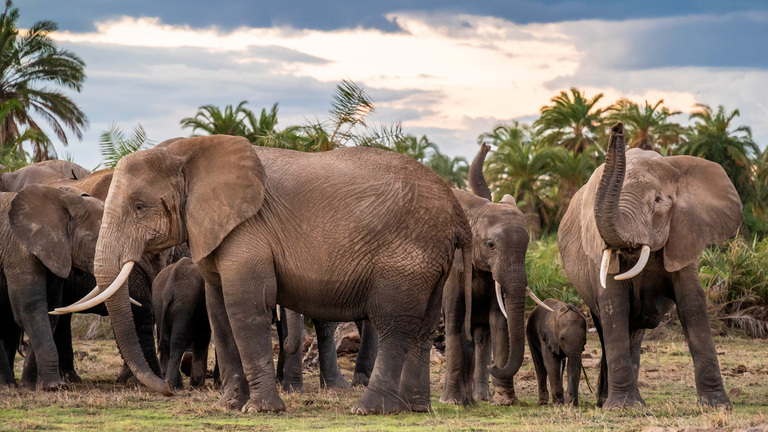
Kenya’s Elephant Poisoning Crisis Exposes a Bigger Wildlife Failure
Elephant deaths in a Kenyan park are not just another conservation headline. They are a blunt warning that wildlife protection is being outpaced by organized poaching methods, human pressure, and enforcement gaps that still leave critical habitats vulnerable. When poison enters a protected landscape, the problem is no longer only about one species or one incident. It becomes a systems failure: surveillance, ranger protection, community trust, and cross-border wildlife crime all start to look weaker than they should. That is what makes the latest elephant poisoning case so alarming. It suggests the people killing wildlife are adapting faster than the institutions meant to stop them, and that the cost is being paid by species already under intense pressure from habitat loss and climate stress.
- Elephant poisoning is a high-impact tactic that can kill multiple animals quickly and quietly.
- The incident points to broader weaknesses in park security, intelligence, and enforcement.
- Wildlife crime is increasingly tied to local conflict, resource pressure, and organized networks.
- Conservation now depends as much on community strategy as on frontline patrols.
- The future of elephant protection may hinge on faster detection, better forensics, and stronger regional cooperation.
The elephant poisoning crisis in Kenya is a warning shot
The immediate horror of poisoned elephants can obscure the larger lesson: this is not a random act of cruelty, but a sign of how modern wildlife crime works. Poison is attractive to poachers because it is low-cost, fast, and difficult to trace in the field. It can take down not only elephants, but also vultures, lions, hyenas, and other scavengers that feed on contaminated carcasses. That makes the impact ripple far beyond the target species.
For Kenya, a country whose parks are central to both biodiversity and tourism revenue, the stakes are enormous. Elephant populations are symbolic, economically valuable, and ecologically important. They help shape landscapes, disperse seeds, and maintain habitat diversity. When they are killed in protected areas, it sends a message that even conservation strongholds can be breached.
Poison is one of the most destabilizing tools in wildlife crime because it turns a single kill into a wider ecological and operational crisis.
Why poison has become such an effective weapon
Poisoning is not new, but its persistence reveals why anti-poaching strategies often struggle. Traditional anti-poaching efforts are built around spotting gunshots, snares, tracks, vehicles, and suspicious human movement. Poison can slip through those layers. A carcass may look like an isolated death until rangers or vets confirm toxins through post-mortem investigation.
There is also a tactical reason poachers use poison: it reduces the need for confrontation. Firearms create noise, raise risk, and invite intervention. Poison is quieter. In some cases, it is used to retaliate against wildlife that raids crops or competes with livestock. In others, it is deployed for meat, ivory, or opportunistic criminal gain. The result is the same: a cheap, scalable method that can wipe out an animal and the surrounding scavenger network.
The problem is not just the poison itself. It is the conditions that make poison useful. Weak local enforcement, limited ranger coverage, porous park boundaries, and high human-wildlife conflict all create the environment where poisoning becomes a rational criminal tactic.
What this means for Kenya’s wildlife security model
The elephant deaths highlight a hard truth about conservation: protected area status does not equal protection. Parks can still be undermined by weak intelligence, underfunded field operations, and delayed forensic response. If a poisoning incident is discovered late, the evidence can degrade quickly. That makes it harder to identify perpetrators and harder to build prosecutions that stick.
For wildlife agencies, this means the old formula of more patrols is no longer enough on its own. Rangers need support from community informants, drone surveillance, mobile reporting systems, rapid necropsy capability, and stronger coordination with prosecutors and border agencies. In other words, anti-poaching has become a multidisciplinary operation.
Why ranger capacity matters more than ever
Rangers are often the first line of defense, but they cannot solve a poisoning crisis without tools. They need:
- Rapid-response teams that can reach carcasses before evidence is lost.
- Forensic training to recognize toxin exposure and preserve samples.
- Secure communications so field teams can report suspicious activity immediately.
- Predictive intelligence that identifies hotspots before attacks happen.
Without that support, even a well-run park can become reactive instead of preventive.
The elephant poisoning crisis and the community factor
Any serious conservation analysis has to deal with the human side of the problem. Wildlife crime does not happen in a vacuum. In many regions, local communities bear the costs of living near protected land while seeing few of the benefits. Crop loss, livestock predation, and restricted access to land can create resentment. That resentment does not excuse poisoning, but it helps explain why enforcement alone rarely solves the problem.
This is where the most effective conservation programs separate themselves from symbolic ones. Community engagement is not a soft add-on. It is part of security. When residents have economic incentives to protect wildlife, when compensation systems are credible, and when reporting suspicious activity feels worthwhile, the intelligence environment improves dramatically.
Conservation fails fastest when local people are treated only as bystanders. The parks that survive are usually the ones that turn communities into stakeholders.
That principle matters in Kenya because elephants are among the clearest examples of wildlife that can generate revenue through tourism and protect ecosystems at the same time. The challenge is ensuring that those benefits are visible on the ground, not just in policy statements.
Why this matters beyond one park
It would be easy to frame the incident as an isolated tragedy, but that misses the bigger trend. Wildlife crime is becoming more adaptive. As surveillance improves in some areas, criminals shift tactics. As gun-based poaching becomes riskier, poison becomes more appealing. As parks tighten, boundary areas become pressure points. This is the logic of displacement, and conservation agencies face it constantly.
The broader implications reach beyond Kenya. Poaching networks operate across borders, and wildlife crime often overlaps with other illicit economies, including corruption, smuggling, and land conflict. That means the response cannot be purely local. It has to involve regional cooperation, shared intelligence, and court systems that can actually punish offenders.
For conservation leaders, the lesson is uncomfortable but necessary: protecting charismatic species requires boring institutional competence. The drama is in the headline. The solution is in logistics.
How technology can change the equation
Technology will not solve elephant poisoning on its own, but it can make a real difference if deployed carefully. The most promising tools are not flashy. They are practical.
- Camera traps can reveal movement patterns along known access routes.
- Satellite mapping can identify emerging pressure zones near park borders.
- AI-assisted analytics can flag unusual patrol gaps or repeated incidents.
- Mobile reporting tools can help communities and rangers share alerts faster.
- Field toxicology kits can speed up initial screening for poison exposure.
Still, technology only works when it is embedded in operations. A drone without a response team is just an expensive camera. An alert system without trained staff becomes noise. The most effective wildlife protection systems combine hardware, human judgment, and legal follow-through.
Pro tip for conservation programs
If you want better anti-poaching outcomes, prioritize response time over raw data volume. A smaller system that gets actionable alerts to trained people within minutes is more valuable than a large system that produces reports nobody can act on.
The future of elephant protection depends on enforcement that actually lands
The next phase of elephant conservation will be measured less by public statements and more by operational precision. Did investigators collect samples quickly enough? Did rangers intercept the supply chain? Did prosecutors have enough evidence to make a case? Did communities trust the reporting process? Those are the questions that separate a tragic event from a repeat pattern.
There is also a broader policy lesson here. If Kenya and other wildlife-rich countries want to protect elephant populations, they have to treat poisoning as both an environmental crime and a public safety issue. That means tighter controls on toxic substances, better coordination with agriculture and health authorities, and stronger penalties for those who weaponize poison against wildlife.
The hardest part is that the threat is evolving faster than public attention spans. Elephants are large, visible, and beloved, but conservation systems are often built for visible threats. Poison thrives in the blind spots. Closing those blind spots will take more than sympathy. It will take money, training, political will, and an acceptance that wildlife protection is now a high-skill, high-stakes security problem.
Kenya’s elephant poisoning crisis is therefore bigger than one park and bigger than one species. It is a stress test for the entire conservation model. If the response is slow, fragmented, or performative, the poachers and poisoners will learn exactly where the weaknesses are. If the response is fast, coordinated, and rooted in local trust, then this tragedy might still force the reforms wildlife protection has needed for years.
The information provided in this article is for general informational purposes only. While we strive for accuracy, we make no guarantees about the completeness or reliability of the content. Always verify important information through official or multiple sources before making decisions.