Khanna Exposes Settler Harassment and U.S. Policy Pressure
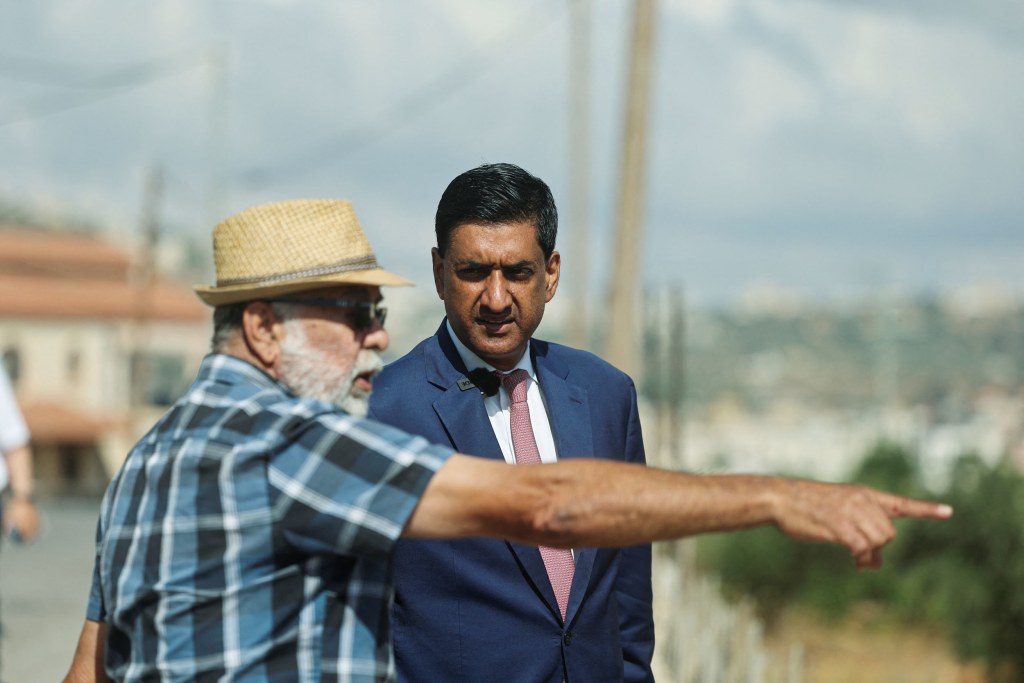
Khanna Exposes Settler Harassment and U.S. Policy Pressure
When a sitting member of Congress says he was harassed by Israeli settlers, it is not just a personal complaint. It is a signal flare. The episode lands at a moment when U.S. lawmakers, diplomats, and rights advocates are already under pressure to explain what accountability looks like on the ground and who, exactly, is willing to enforce it. For Rep. Ro Khanna, the issue is bigger than one confrontation. It touches the credibility of American engagement, the safety of public officials traveling in volatile areas, and the widening gap between political rhetoric and lived reality in the West Bank. The story also forces a harder question: if elected officials can be targeted and brushed aside, what happens to everyone else trying to document, mediate, or simply move through the region?
- The reported harassment of Ro Khanna adds political weight to long-running concerns about settler violence and impunity.
- The incident highlights how fragile conditions remain for lawmakers, journalists, and aid workers in contested areas.
- U.S. policy credibility is increasingly tied to whether it can move beyond statements and toward enforceable consequences.
- The broader debate is not just about one trip – it is about whether Washington can still shape events on the ground.
What happened and why it matters
The core of the story is blunt: Ro Khanna said he was harassed by Israeli settlers, turning an already volatile issue into a direct political flashpoint. For many observers, the significance is not the identity of the lawmaker alone, but what the episode reveals about the operating environment in the occupied West Bank. Harassment is not a side note there. It is part of the daily machinery that shapes movement, access, and fear.
That matters because U.S. officials have long tried to present themselves as both partners and referees in the region. But when incidents like this happen, the role becomes harder to sustain. A lawmaker can speak out. A traveler can leave. Residents, however, often remain trapped inside the same conditions. That asymmetry is what gives this story its political charge.
When a member of Congress is reportedly harassed on the ground, the incident stops being symbolic and starts looking like a stress test for U.S. diplomacy.
The Ro Khanna moment is bigger than one headline
The phrase Ro Khanna will trend for a reason: it connects a recognizable U.S. political figure to a recurring international flashpoint. Khanna is not known for performative foreign policy theatrics. That makes his comments land differently. They invite scrutiny, not just from supporters, but from anyone who thinks American lawmakers should be able to witness conditions firsthand without intimidation.
This is where the story crosses from news event to policy debate. If harassment of visiting officials is normalized, then field visits become curated theater. The people with the least power are silenced first, and the people with the most access get a filtered version of reality. That is a problem for Congress, for the State Department, and for any administration that claims to base policy on facts from the ground.
Why lawmakers care about firsthand access
Congressional travel is often treated as ceremonial, but it serves a practical purpose: it gives lawmakers evidence that cannot be fully replicated in briefing papers or embassy memos. A trip interrupted by hostility does not just inconvenience a delegate. It can shape how that official talks, votes, and frames the conflict back home. In a polarized Washington, even a brief encounter can become part of a wider legislative fight.
That is especially true when the issue touches U.S. aid, settlement policy, security assistance, and human rights enforcement. Every one of those topics is already under pressure from activists and critics who want a clearer line from American values to American action.
The political cost of settler harassment
Harassment by settlers is not merely a local security issue. It is a governance problem with diplomatic consequences. When such incidents involve U.S. officials, the stakes increase because the United States cannot easily dismiss the matter as isolated or anecdotal. It becomes part of the diplomatic record, and the pressure shifts to whether Washington will respond with more than concern.
That response matters because the U.S. has leverage, even if it is increasingly reluctant to use it. Financial support, security cooperation, and diplomatic backing all create channels for accountability. But leverage is only meaningful if it is visible. If the White House or Congress treats harassment as background noise, the message is clear: the costs of escalation are low.
Pro tip for policymakers: if you want travel-based fact-finding to remain credible, you need more than protective escorts. You need incident reporting, public documentation, and a willingness to treat intimidation as a policy issue rather than an unfortunate anecdote.
Why this matters beyond the West Bank
Incidents like this have a way of traveling far beyond the region. They shape how constituents view U.S. foreign policy, how advocacy groups mobilize, and how officials calculate the political risk of speaking plainly. If a lawmaker can be harassed and the fallout is minimal, then international actors learn that pressure works. If the reaction is strong and sustained, the incentive structure changes.
This is also why the episode resonates in the broader debate over democratic norms. Democratic systems depend on the ability of officials, observers, and journalists to move, speak, and witness without coercion. Once that collapses, the story being told on the ground becomes the only story that survives.
West Bank access and the limits of optics
The West Bank is one of the most heavily politicized territories in the world, and every visit is filtered through security, symbolism, and message control. That makes it easy for governments and advocacy groups to stage-manage the narrative. But harassment punctures the script. It reminds audiences that this is not a diplomatic seminar. It is a place where power is exercised physically, often unevenly, and often with few immediate consequences.
For U.S. officials, that creates a recurring dilemma. They want to maintain relationships with Israeli leaders, preserve room for negotiation, and avoid being boxed into rhetorical corners. At the same time, ignoring harassment makes the U.S. look either complicit or unserious. Neither outcome is great for credibility.
The hardest part of Middle East policy is not finding the right words. It is proving that the words still carry consequences.
How the story could shape future visits
Future congressional or diplomatic visits may become more tightly scripted if this kind of incident continues. That would be a mistake. More control does not necessarily mean more safety or more truth. It can instead produce cleaner optics and poorer intelligence. The better response is more transparency: clear protocols, public incident logs, and direct follow-up when harassment occurs.
That would also help separate genuine security measures from political image management. In a region where every camera angle is contested, credibility depends on visible accountability, not just controlled access.
What the U.S. should do next
If this episode is treated seriously, it should produce more than a round of outrage. It should force a practical review of how the U.S. responds when its officials are threatened or impeded abroad. The playbook is not complicated, but it requires discipline.
- Document incidents immediately through official channels and publish non-sensitive summaries.
- Separate security from messaging so protective measures are not used to sanitize political realities.
- Link consequences to behavior instead of relying on vague statements of concern.
- Protect access for journalists and observers so the public gets more than curated narratives.
- Use congressional oversight to keep the issue from disappearing after the news cycle fades.
These steps may sound procedural, but procedure is where accountability lives. Without it, every condemnation becomes temporary, and every escalation becomes the new normal.
The bigger lesson for U.S. foreign policy
The most important takeaway from Khanna’s account is not simply that he was harassed. It is that the conditions enabling such harassment remain politically durable. That durability is what makes the issue so difficult. A single statement from Washington will not change the terrain. But repeated silence will change expectations, and not in a good way.
For the U.S., this is a test of whether foreign policy can still be tethered to principles when those principles become inconvenient. If American officials are willing to speak out only when the optics are safe, then the credibility gap will keep widening. If they respond with consistent, enforceable pressure, then incidents like this may eventually become less common. That is the choice in front of policymakers now.
And for everyone else watching, the message is plain: harassment is never just harassment when it shapes who can witness, speak, or govern. It is a measure of power. The question is whether Washington intends to answer it.
The information provided in this article is for general informational purposes only. While we strive for accuracy, we make no guarantees about the completeness or reliability of the content. Always verify important information through official or multiple sources before making decisions.