Kushner Pushes Gaza Talks Into a New Phase
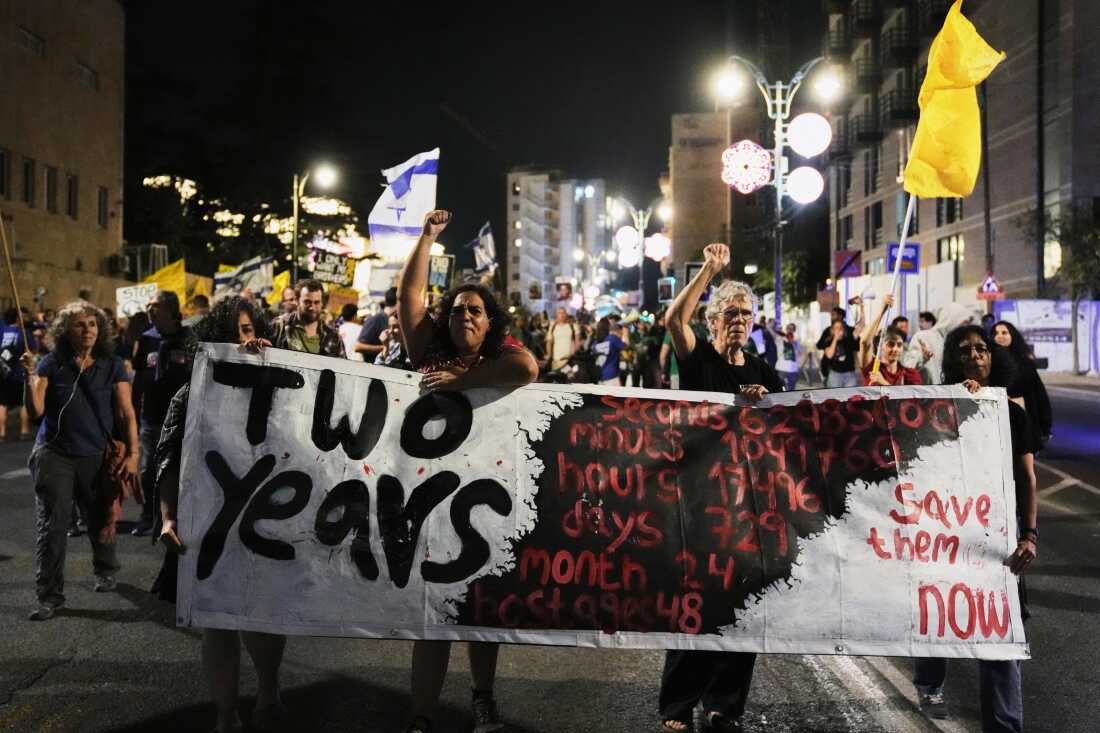
Jared Kushner’s reemergence in Gaza diplomacy is not just a personnel move. It is a signal that the Trump administration is trying to reframe one of the world’s hardest problems as a transactional deal where leverage, pressure, and regional brokers matter more than traditional process. That may sound familiar, but the stakes are higher now. Hamas remains dug in, Netanyahu is balancing coalition survival against military goals, Egypt is guarding its role as gatekeeper, and the civilian toll keeps raising the cost of delay. The latest round of talks underscores a brutal reality: any pathway forward depends on whether the parties can convert battlefield momentum into political concessions before the window closes again.
- Kushner’s return suggests a more aggressive, deal-first U.S. posture on Gaza talks.
- Egypt remains a critical intermediary because it controls access, messaging, and much of the diplomacy.
- Israel and Hamas are still negotiating from fundamentally incompatible goals, which keeps any ceasefire fragile.
- The real question is not whether talks happen, but whether they can produce enforceable leverage.
- Any breakthrough would likely be temporary unless it is paired with a credible postwar framework.
The Kushner factor in Gaza talks
Kushner is back in the conversation because he represents a style of diplomacy that the Trump orbit trusts: direct, high-pressure, and intensely outcome-driven. That matters because traditional mediation has repeatedly stalled when it runs into the core contradiction of the conflict. Hamas wants survival and political relevance. Netanyahu wants security and strategic control. Egypt wants stability without becoming the absorber of Gaza’s crisis. Those positions do not naturally align. A deal broker like Kushner can, at best, create a narrow lane where all sides see more risk in walking away than in signing on.
That is a tall order. But in a conflict this entrenched, process alone is not a strategy. The real value of an envoy like Kushner is not diplomacy in the abstract. It is the ability to compress timelines, gather concessions, and force decisions that slower multilateral forums often fail to produce.
When negotiations become trapped by symbolism, the only thing that moves them is leverage. In Gaza, leverage is scarce, fragile, and usually temporary.
Why Egypt still matters more than almost anyone else
Egypt is not just a neighboring state observing events from the sidelines. It is one of the few actors with both geographic and political influence over the flow of negotiations. Its border with Gaza gives it practical power. Its intelligence services give it channels to Hamas and to other regional actors. And its long-standing role as mediator gives it credibility that no outside capital can easily replicate.
That said, Egypt’s influence should not be overstated. Cairo is trying to avoid two outcomes at once: a permanent destabilization on its frontier and a scenario in which it becomes the default custodian of Gaza’s humanitarian burden. That means Egypt is often less interested in grand strategic visions than in stopping the worst-case scenario from materializing. In practical terms, that makes it indispensable and cautious at the same time.
Egypt’s incentives are defensive, not ambitious
The strongest misread of Egyptian diplomacy is to assume it wants to engineer a dramatic regional reset. It usually does not. Cairo wants containment, predictability, and enough coordination to keep pressure from spilling across the border. That makes Egypt an effective broker for narrow deals, but not necessarily a champion of durable political transformation.
For Washington, that creates a challenge. If the United States wants a broader settlement, it needs Egypt to stay engaged. If it wants a ceasefire, it needs Egypt to keep talking to everyone. Those goals overlap, but they are not the same thing.
Gaza talks are still a test of incompatible priorities
The problem with every major negotiation in this conflict is that the parties are rarely bargaining over the same end state. One side may view a ceasefire as a tactical pause. Another sees it as existential breathing room. One side wants hostages released. Another wants prisoner swaps or security guarantees. One side wants to preserve military freedom of action. Another wants a path to political legitimacy. Those are not simple misunderstandings. They are structural conflicts.
That is why the latest diplomatic push matters even if it does not immediately succeed. It reveals where each side is willing to bend and where it is not. And in a region where outcomes often hinge on tiny openings, those slivers matter.
- Hamas needs to avoid total political collapse.
- Israel needs to show that military pressure can produce results.
- Egypt needs stability without absorbing the consequences of failure.
- The United States wants a result it can frame as decisive.
That combination creates a negotiation environment where every concession is costly and every delay is dangerous. The talks are therefore not just about terms. They are about whether any actor believes time is still on its side.
What Kushner’s return says about U.S. strategy
Kushner’s involvement suggests that the administration sees value in a small-circle, high-trust approach rather than a broad diplomatic architecture. That makes sense politically. It is easier to move a limited set of players when the White House believes traditional channels have become too slow, too diffuse, or too constrained by precedent.
But there is a downside. Personalized diplomacy can travel fast, yet it can also collapse fast. If the process depends too heavily on one broker’s access, instincts, and political backing, then the entire effort becomes vulnerable to shifts in mood or leverage. The upside is speed. The risk is brittleness.
Personal diplomacy can unlock a stalled negotiation. It can also create the illusion of progress when the underlying terms have not changed at all.
The difference between a deal and durable peace
That distinction matters because short-term arrangements and long-term political settlements are not interchangeable. A ceasefire can pause violence. A hostage deal can reduce immediate pressure. Humanitarian access can save lives. But none of those alone answer the larger question of Gaza’s future governance, reconstruction, or security architecture.
Any real breakthrough will need at least four things: enforceable commitments, outside monitoring, a credible sequencing plan, and a political framework that prevents the agreement from unraveling the moment one side claims a violation. Without that, even a successful negotiation becomes a temporary patch.
Why this moment feels different
There is a reason this round of discussion is drawing attention. The war has worn down patience across capitals, and the human cost has made the status quo harder to justify. At the same time, regional actors are increasingly aware that indefinite conflict is not a static condition. It creates spillover risk, political pressure, and strategic fatigue. That combination can produce movement, but only if one side believes the other is approaching its limit.
This is the classic logic of crisis diplomacy: talks become more productive not when trust improves, but when the alternatives look worse. That may sound cynical. It is also how many of the few successful wartime negotiations actually happen.
Pro tip: watch the sequencing, not just the headlines
If you want to understand where these talks are really headed, do not focus only on whether officials say they are “constructive” or “serious.” Watch the sequence of concessions. Who moves first? Is there a phased release plan? Are humanitarian pauses tied to verifiable milestones? Is Egypt being asked to guarantee access or just relay messages? The order of these answers tells you more than the press release does.
In diplomatic negotiations, sequencing is everything. A deal that starts with the easiest concession can still fail if it leaves the hardest issue until the end. A deal that front-loads risk may never get off the ground. The art is in making each move look survivable to the party making it.
What happens if the talks stall again
If this push fails, the consequences are not just diplomatic embarrassment. Stalled negotiations can deepen mistrust, harden military calculations, and reduce the space for moderate intermediaries to operate. Hamas may conclude that talks only buy Israel time. Israel may conclude that pressure produces no sustainable result. Egypt may become more reluctant to keep spending political capital on a process that appears stuck. And the United States may be left with fewer credible tools than before.
That is why even partial progress matters. A limited exchange, a temporary halt, or a narrow humanitarian arrangement can preserve the possibility of a broader deal later. The opposite is also true: a collapsed round can poison the next one.
The bigger strategic picture
The deeper issue here is that Gaza has become a stress test for the credibility of regional diplomacy itself. If Washington can help drive movement, it reinforces the idea that U.S. influence still matters when applied with focus. If it cannot, that will strengthen the argument that the region is shifting toward a more fragmented balance of power, where outside mediation has diminishing returns.
For readers, the lesson is simple: this is not only about one envoy or one round of talks. It is about whether diplomacy can still shape outcomes in a conflict that has repeatedly resisted it. Kushner’s return may not change the fundamentals, but it does sharpen the question of whether the people around the table are negotiating toward an exit or merely managing the next crisis.
The answer will determine whether these Gaza talks become a turning point or just another pause before the next escalation.
The information provided in this article is for general informational purposes only. While we strive for accuracy, we make no guarantees about the completeness or reliability of the content. Always verify important information through official or multiple sources before making decisions.