Macron Tests France on Palestine Recognition
Macron Tests France on Palestine Recognition
France is edging toward one of the most politically charged diplomatic decisions in Europe: whether to formally recognize a Palestinian state. That possibility is not just symbolic. It lands at a moment when the war in Gaza has hardened global opinion, exposed fractures inside the European Union, and forced Western leaders to explain what a viable path to peace actually looks like. For President Emmanuel Macron, the calculus is especially risky. He is balancing France’s historic role in Middle East diplomacy, domestic political pressure, and the need to prove that calls for a two-state solution are more than a ritual talking point. The Palestine recognition debate is now a test of French credibility as much as foreign policy.
- France is considering Palestinian state recognition as pressure grows for concrete diplomatic action.
- Macron’s position matters because France is a major EU power with global diplomatic reach.
- The move would be largely symbolic immediately, but strategically significant for Europe and the Middle East.
- Domestic politics and international alliances will shape how far Paris is willing to go.
Why the Palestine recognition debate matters now
The timing is everything. Recognition of a Palestinian state has long been discussed by European governments, but often deferred in favor of process: negotiations first, recognition later. That sequencing is now under pressure. With Gaza devastated, peace talks effectively frozen, and Israeli politics moving further away from a negotiated settlement, many governments are being asked a blunt question: if the two-state solution is still official policy, when does that policy become action?
That is the heart of the Palestine recognition debate. For supporters, recognition would affirm that Palestinian statehood is not a prize to be granted only at the end of an indefinite process. It would also signal that Europe is willing to attach political meaning to its rhetoric. For critics, unilateral recognition risks hardening positions, alienating Israel, and substituting symbolism for diplomacy.
The strategic tension is simple: recognition may not create a state on the ground tomorrow, but refusing recognition indefinitely can make the idea of statehood look increasingly hollow.
France sits at the center of that tension because it is not a peripheral actor. It is a permanent member of the UN Security Council, a military power, and one of the few European states that still tries to project an independent diplomatic voice.
Macron’s balancing act inside and outside France
Macron rarely approaches foreign policy as pure idealism. His style is more transactional and strategic, often aimed at preserving room for French maneuver. On Palestine recognition, that instinct is colliding with a fast-changing political environment.
Domestic pressure is impossible to ignore
Inside France, the Israel-Palestine conflict carries enormous political and social weight. France has both Europe’s largest Jewish community and one of its largest Muslim populations. Public debate is intense, emotional, and deeply polarized. Any move on Palestine recognition will be interpreted not only as a diplomatic act, but as a statement to French voters about justice, security, and national identity.
That makes the decision unusually sensitive. A president cannot present recognition as a narrow administrative adjustment. It would reverberate through parliament, media, civil society, and local communities already strained by broader debates over secularism, immigration, antisemitism, and Islamophobia.
International alliances complicate the move
Macron also has to navigate France’s relationship with Israel, the United States, Arab partners, and European allies. Paris has tried to maintain a line that combines support for Israel’s security with criticism of the humanitarian cost of the war in Gaza. Recognition of Palestine would sharpen that posture into something harder to blur.
Washington remains the most important external variable. Even when France seeks strategic autonomy, it rarely wants a frontal break with the US on a major Middle East issue. At the same time, if more European states move toward recognition, France may calculate that joining the trend is less risky than resisting it.
What recognition would actually change
This is where the politics often outpace the mechanics. Palestinian state recognition would not instantly redraw borders, end the war, or produce functioning sovereignty. There would be no immediate transformation of checkpoints, settlements, governance fragmentation, or security arrangements. The hard realities on the ground would remain.
Still, dismissing recognition as meaningless misses the point. Diplomatic recognition changes the framework through which states talk about legitimacy, rights, and negotiations. It can affect multilateral forums, legal arguments, and the broader moral architecture of international debate.
Symbolism is not the same as insignificance
In geopolitics, symbolic acts often matter because they define what becomes normal. If a country like France recognizes Palestine, it helps normalize the view that Palestinian statehood is an international fact waiting for implementation, not a hypothetical concession pending Israeli approval.
That distinction matters in every future negotiation. It affects whether talks are framed around creating a state from scratch or ending the obstacles that prevent an already recognized state from functioning fully.
The limits are just as real
Recognition also has obvious constraints. France cannot solve the split between Palestinian factions. It cannot compel Israeli policy changes on its own. It cannot manufacture a peace process where neither side’s leadership appears politically capable of delivering one.
That is why this debate is so difficult: the move could be morally and diplomatically important while still being operationally limited in the short term.
Europe’s fragmented approach is becoming harder to sustain
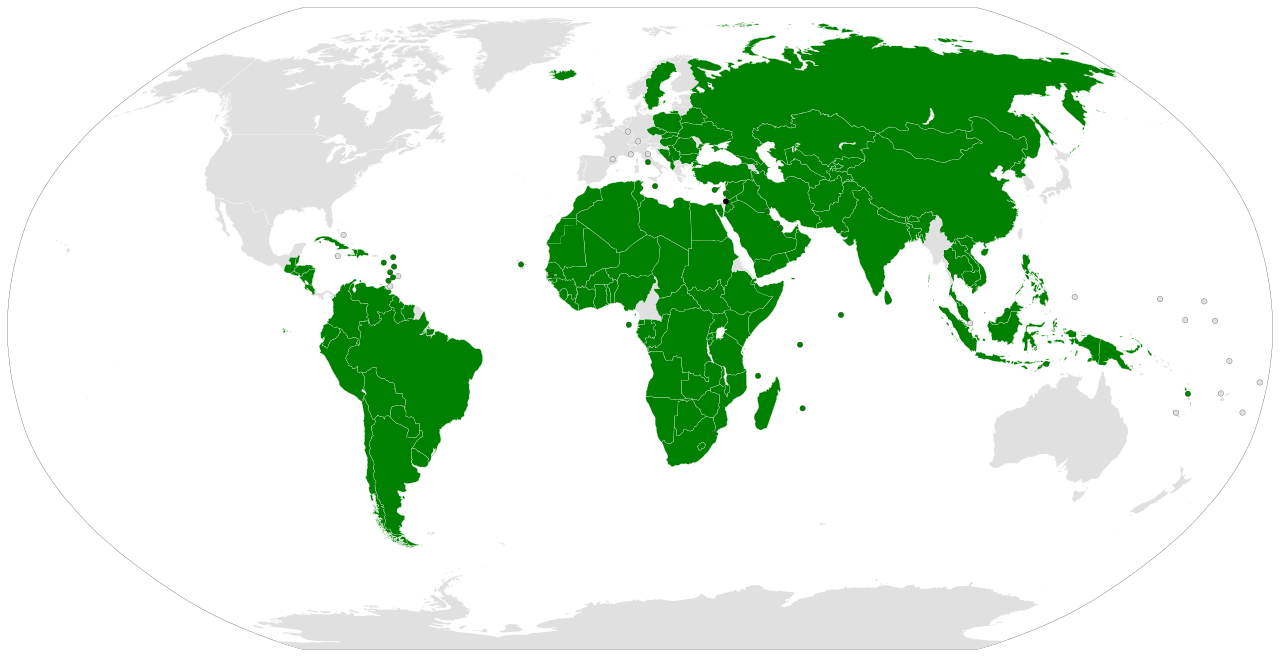
The European position on Palestine has long been a study in managed ambiguity. Many governments support a two-state solution. Fewer are willing to translate that into formal recognition. Some have already done so. Others insist recognition should come only at the end of a negotiated settlement. The result is a patchwork policy that looks increasingly disconnected from events.
If France moves, that patchwork changes. Paris is not just another European capital. It can give political cover to governments that want to act but fear isolation. It can also intensify pressure on those still clinging to procedural caution.
For Europe, this is bigger than one diplomatic gesture: it is a test of whether the bloc’s language on Palestinian self-determination still has strategic content.
There is also an institutional question here. The European Union often speaks the language of values but defaults to the language of process. On an issue as visible as Palestine recognition, that gap is becoming a liability. Citizens, activists, and international partners are increasingly demanding to know what Europe’s principles actually require.
The risks Macron is calculating
Macron’s government is likely assessing several layers of risk at once.
- Diplomatic risk: possible backlash from Israel and tension with allies who see recognition as premature.
- Domestic risk: accusations that the government is importing foreign conflict into already fragile social debates.
- Strategic risk: making a move that generates headlines but fails to produce leverage.
- Credibility risk: doing nothing and reinforcing the idea that European diplomacy has become performative.
That last point may be the most important. If leaders continue to invoke the two-state solution while avoiding any step that gives the concept political substance, they risk draining it of meaning. France understands that danger. The question is whether Macron believes the cost of action is now lower than the cost of drift.
Why this matters beyond France and Gaza
The Palestine recognition debate is also part of a larger shift in global politics. Western governments no longer control the moral narrative as easily as they once did. Countries across the Global South have watched the Gaza war and drawn conclusions about selective outrage, inconsistent legal standards, and the limits of Western credibility.
For France, this matters well beyond the Middle East. Paris wants influence in Africa, relevance in multilateral institutions, and a reputation for strategic independence. Its stance on Palestine will be read in all those arenas. Recognition would not erase accusations of inconsistency, but it could be presented as evidence that France is willing to move beyond scripted diplomacy.
There is also a generational factor. Younger audiences across Europe tend to be more skeptical of traditional diplomatic caution and more attentive to the humanitarian and rights-based dimensions of the conflict. Politicians can ignore that shift for a while, but not forever.
What to watch next in the Palestine recognition debate
If France is genuinely moving closer to recognition, a few signals will matter.
Language from the Elysee
Watch for changes in how Macron and senior ministers describe the sequencing. The key distinction is whether recognition is framed as the result of a future peace process or as a step designed to help create one. That rhetorical pivot is often the first real sign of policy movement.
Coordination with European partners
France may prefer to move in concert with other states rather than alone. Coordinated recognition would reduce the appearance of diplomatic improvisation and increase political weight.
UN and conference diplomacy
Any new international conference, Security Council language, or coordinated European initiative could become the vehicle for a recognition announcement. France typically prefers big diplomatic moments over isolated declarations.
Domestic messaging
If the government intensifies its explanation that recognition supports peace, security, and international law rather than one side against another, that will signal serious preparation for political blowback.
The bigger verdict
France is not deciding whether it cares about peace in the abstract. It is deciding whether the diplomatic vocabulary it has used for decades still means anything. That is why the Palestine recognition question matters so much. It exposes the distance between endorsing a principle and acting on it.
Macron’s instinct is usually to preserve flexibility. But there are moments when flexibility starts to look like evasion. This may be one of them. Recognizing a Palestinian state would not end the war, revive negotiations overnight, or resolve the brutal asymmetries on the ground. What it could do is force a clearer political reality into view: that Palestinian self-determination cannot remain permanently conditional while the facts on the ground move in only one direction.
If France acts, it will not solve the conflict. But it may expose which governments are still serious about a two-state future and which are simply repeating a line that history has already started to outgrow.
The information provided in this article is for general informational purposes only. While we strive for accuracy, we make no guarantees about the completeness or reliability of the content. Always verify important information through official or multiple sources before making decisions.