Pakistan Opens Iran Trade Lifeline
Pakistan Opens Iran Trade Lifeline
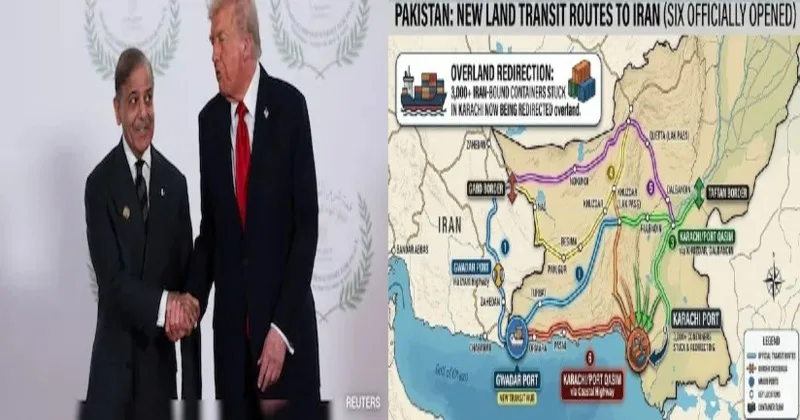
The Pakistan Iran trade routes decision is more than a border management update – it is a stress test for how South Asia and the Gulf respond when a maritime chokepoint starts choking global commerce. With the Strait of Hormuz under blockade pressure, every truck lane, customs gate, and fuel corridor suddenly matters. For businesses, that means supply risk. For governments, it means inflation, energy insecurity, and the possibility that regional logistics maps may need to be redrawn in real time. Pakistan’s move to open up road trade routes into Iran signals urgency, pragmatism, and a quiet admission that dependence on sea lanes can become a strategic liability overnight. What looks like a border trade story is really a geopolitical logistics story with consequences for fuel prices, food flows, and regional leverage.
- Pakistan Iran trade routes are becoming a critical fallback as maritime pressure disrupts normal Gulf shipping patterns.
- Opening road access into Iran could ease shortages, protect border economies, and give traders an alternative to vulnerable sea corridors.
- The move carries geopolitical risk, especially if sanctions exposure, customs friction, or security concerns intensify.
- Long term, this could accelerate interest in overland trade infrastructure across South Asia and the Middle East.
Why Pakistan Iran trade routes matter right now
When the Strait of Hormuz is disrupted, the effect is immediate because the waterway is not just another shipping lane. It is one of the most sensitive arteries in the global energy system. Oil, gas, refined products, and a wide range of goods move through that corridor. Once access becomes uncertain, nearby states do not have the luxury of waiting for markets to self-correct.
Pakistan’s decision to open road trade routes into Iran looks like a regional adaptation strategy. It creates a terrestrial workaround at a moment when maritime volatility can quickly cascade into shortages and price spikes. That matters especially for border provinces, importers dealing in fuel or food, and transport operators trying to maintain continuity while insurers, shipping firms, and port authorities reassess risk.
The core logic is simple: if sea lanes become less reliable, land routes become more valuable. But the execution is where things get complicated.
What this move actually changes on the ground
Opening trade routes is not the same as instantly creating a seamless supply corridor. It usually means loosening access restrictions, improving customs handling, allowing specific categories of goods to move, and coordinating security along the border. In practical terms, traders need several things to happen at once:
- Border crossings must remain open for commercial traffic.
- Customs systems need enough flexibility to process higher volumes.
- Security agencies must manage smuggling and militant threats without freezing legitimate trade.
- Transporters need fuel, escorts where necessary, and predictable clearance windows.
If even one of those elements breaks, the value of the corridor drops fast. Overland trade is resilient in one sense, but operationally fragile in another. A truck convoy delayed by paperwork, route closures, or local insecurity can erase the advantage that road access was supposed to provide.
In a regional crisis, logistics is policy. The state that can keep goods moving gains both economic breathing room and political leverage.
The strategic logic behind Pakistan’s decision
Pakistan is balancing several priorities at once. First, it needs to shield its own economy from shock. If maritime turmoil contributes to higher energy and commodity costs, domestic political pressure rises quickly. Second, it has an interest in stabilizing border commerce with Iran, especially in areas where informal trade has long filled gaps left by official channels. Third, it may be trying to create optionality: not replacing sea trade, but making sure it is not trapped by it.
That optionality matters. Modern trade systems are built on redundancy. Governments that rely on a single route, single supplier, or single mode of transport are far more vulnerable during crises. By opening Pakistan Iran trade routes, Islamabad appears to be investing in a backup plan that can absorb at least part of the disruption.
It is also a message to markets
Moves like this are often aimed not just at trucks and traders, but at sentiment. When governments announce alternative routes, they are signaling that contingency planning is underway. That can help calm panic buying, discourage speculative pricing, and show domestic audiences that officials are acting before shortages become visible.
Border economies stand to benefit first
Large geopolitical stories often obscure local reality. Border communities are usually the first to feel both the pain of disruption and the benefit of policy adaptation. More legal trade through formal checkpoints can create income for transport workers, warehouse operators, customs brokers, and small merchants. It can also reduce the pressure that pushes commerce into gray or illicit channels.
The biggest risks behind the trade corridor
Opening a road route in a volatile region is not a clean win. It comes with legal, financial, and security complications that could limit how effective the policy becomes.
Sanctions and payment friction
Any trade expansion involving Iran raises immediate questions about sanctions exposure, banking access, and settlement mechanisms. Even if goods are allowed under specific frameworks, the payment layer can become the bottleneck. If banks hesitate, insurers pull back, or traders fear secondary consequences, route access alone may not generate meaningful commercial volume.
In that environment, workarounds often emerge through barter structures, local currency arrangements, or narrowly defined border trade mechanisms. But each workaround has limits. None of them fully replace a stable, scalable financial channel.
Security and infrastructure constraints
Road trade is only as strong as the roads, checkpoints, and local security environment supporting it. Pakistan’s western border regions have long presented logistical and security challenges. Increased freight movement can attract criminal activity, strain local enforcement, and expose weak infrastructure. A route that works for emergency trade may not yet be built for sustained, high-volume commercial throughput.
Administrative bottlenecks
One of the least glamorous but most decisive factors is paperwork. Cross-border freight lives or dies on manifests, inspection standards, product classifications, and clearance times. If customs systems are outdated or agencies are poorly coordinated, delays can stack up quickly.
For traders, the hidden cost is uncertainty. A route with a higher sticker price but predictable transit can be better than a cheaper route with unpredictable delays.
Why this matters for energy and inflation
Any serious disruption around Hormuz hits energy markets first, but the second-order effects can be broader. Higher fuel costs push up transportation expenses. Transportation costs then show up in food prices, industrial inputs, and retail margins. That is why governments often react aggressively to anything that threatens fuel access or commodity flow.
If the overland corridor into Iran helps sustain trade in essential goods, Pakistan gains a partial inflation buffer. Not a perfect one, and not necessarily a large one, but enough to matter at the margin. In crisis economics, marginal relief can be politically significant.
Alternative routes do not need to replace a blocked corridor to be useful. They only need to reduce pressure enough to keep the system from seizing up.
How businesses will read the Pakistan Iran trade routes shift
For importers, exporters, freight planners, and commodity traders, the announcement changes the risk map. Companies operating in or near the region will likely reassess several variables at once:
- Transit times across western Pakistan and into Iran
- Insurance costs for road versus sea movement
- Availability of customs support and bonded logistics
- Exposure to regulatory or sanctions-related disruptions
- Inventory strategies for fuel, food, and critical inputs
The immediate business response is usually defensive. Firms increase buffer stock, diversify transport modes, and avoid overcommitting to any single route until the policy proves durable. Over time, if the corridor remains functional, private logistics investment may follow in the form of warehousing, fleet expansion, route optimization, and digital customs support.
The deeper geopolitical subtext
This is not just about commerce. It is about alignment without overcommitting. Pakistan has to navigate relations with Gulf partners, Iran, and larger powers that view regional trade through a strategic lens. Opening routes into Iran during a Hormuz crisis can be framed as practical necessity, but it still sends a signal: Islamabad is willing to act pragmatically when regional disruptions threaten domestic stability.
That pragmatism could become more common across the region. Countries that once treated certain corridors as secondary may begin to see them as essential strategic assets. The result could be a more multipolar logistics network, where road, rail, and port investments are judged less by peacetime efficiency alone and more by crisis survivability.
What to watch next
The success of this move will depend on what happens after the announcement. Several indicators will reveal whether the policy is symbolic or truly consequential:
- Whether border crossings maintain consistent operating hours
- What categories of goods are actually allowed through
- How quickly customs volumes scale up
- Whether financial channels can support legal trade
- How regional security conditions evolve along the route
If trade flows rise and remain stable, Pakistan could turn a short-term emergency measure into a longer-term strategic corridor. If not, the opening may still matter politically, but its economic effect will be limited.
The broader lesson from the Hormuz blockade
The larger takeaway is that supply chains are never just commercial systems. They are geopolitical systems disguised as efficiency machines. For years, many states and companies optimized for cost and speed. Crises like a Hormuz blockade force a different calculation: resilience, redundancy, and route diversity suddenly become worth paying for.
Pakistan’s border move underscores that shift. It may not solve the region’s exposure to maritime disruption, but it demonstrates the kind of adaptive behavior that becomes necessary when strategic chokepoints wobble. Governments that can improvise alternatives quickly are better positioned to contain price shocks, reassure markets, and preserve political stability.
Final verdict
Pakistan’s decision to open road trade routes into Iran is a tactical move with strategic weight. It reflects a region under pressure, an economy trying to buy flexibility, and a government responding to the brutal reality that when sea lanes tighten, land borders become lifelines. The policy will face friction – from sanctions complexity to infrastructure limitations – but dismissing it as a minor border adjustment would miss the bigger point.
Pakistan Iran trade routes are now part of a much larger conversation about energy security, supply chain resilience, and geopolitical adaptation. If the Hormuz blockade continues to rattle markets, this overland opening may be remembered as an early sign that the region is entering a new logistics era: messier, riskier, but far less willing to depend on a single chokepoint.
The information provided in this article is for general informational purposes only. While we strive for accuracy, we make no guarantees about the completeness or reliability of the content. Always verify important information through official or multiple sources before making decisions.