Rebuild Gaza Pressure Mounts on Netanyahu
Rebuild Gaza Pressure Mounts on Netanyahu
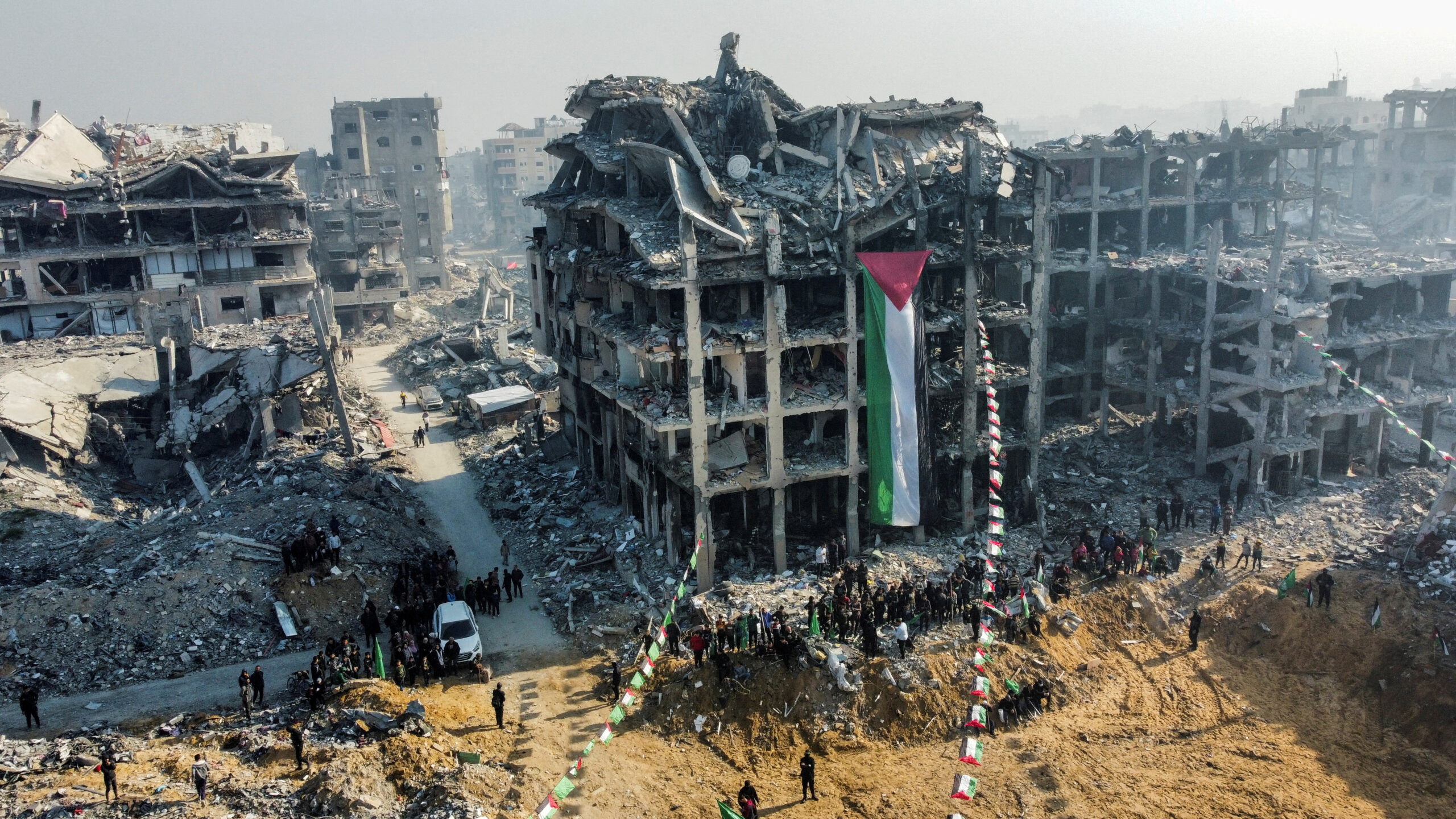
Gaza reconstruction is no longer a distant diplomatic talking point – it is rapidly becoming the test that could define Israel’s war endgame, Prime Minister Benjamin Netanyahu’s political future, and the credibility of every regional power claiming it has a plan for what comes next. The military phase can dominate headlines for only so long before a harder question takes over: who governs, who pays, who secures, and who rebuilds a shattered territory under constant political and security strain? That question is now pressing with unusual force. For Israel, Arab states, the US, and European partners, the challenge is not just humanitarian. It is strategic, explosive, and deeply unresolved. The longer the vacuum persists, the more dangerous the aftermath becomes – for civilians in Gaza, for Israeli security, and for an already unstable Middle East.
- Gaza reconstruction has become a central political and strategic pressure point for Netanyahu.
- Any rebuilding plan depends on unresolved questions around security, governance, aid access, and funding.
- Regional actors want influence over post-war Gaza, but few want responsibility without guarantees.
- The longer reconstruction stalls, the greater the humanitarian, diplomatic, and security fallout.
Why Gaza reconstruction is now the real battlefield
Wars often expose a brutal truth: winning militarily does not automatically produce a workable peace. That is exactly why Gaza reconstruction matters so much now. It sits at the intersection of humanitarian urgency and hard power politics. Homes, hospitals, roads, power systems, and water infrastructure cannot be rebuilt in a vacuum. Every brick raises a political question.
For Netanyahu, this creates a trap. If Israel allows reconstruction to move forward without a clear post-war framework, critics on the right may argue that Hamas or Hamas-linked networks could regain influence. If reconstruction is delayed or tightly constrained, international pressure intensifies and Israel risks deeper diplomatic isolation. Either choice carries political cost.
The reconstruction debate is not only about concrete and cranes. It is about who controls Gaza’s future and what kind of regional order emerges from the war.
This is why the issue keeps expanding beyond aid. It touches border management, demilitarization demands, hostage negotiations, the Palestinian political landscape, and the role of outside states such as Egypt, Qatar, Saudi Arabia, the United Arab Emirates, and the United States.
Netanyahu’s dilemma gets sharper by the week
Netanyahu has built much of his political identity around security maximalism and resistance to externally imposed political solutions. That posture may still resonate with parts of his coalition, but reconstruction introduces a new layer of complexity. It is one thing to define military objectives. It is another to present a credible day-after plan.
That is where pressure builds from multiple directions:
- Domestic pressure: Israeli voters want security, clarity on hostages, and a path that does not produce endless re-escalation.
- Coalition pressure: Hardline partners may reject arrangements that involve the Palestinian Authority or broad international oversight.
- International pressure: Allies increasingly want measurable humanitarian access and a reconstruction framework tied to stability.
- Regional pressure: Arab states want a role in shaping post-war Gaza but do not want to be seen as underwriting permanent occupation or chaos.
The result is political compression. Netanyahu cannot easily satisfy all constituencies at once, and every delay makes the contradictions more visible.
Security versus reconstruction is a false binary
One of the most persistent assumptions in this debate is that reconstruction and security are competing goals. In practice, they are linked. A devastated enclave with collapsed public services and no credible civilian administration is not a security solution. It is a blueprint for recurring instability.
That does not mean Israel’s security concerns are trivial. Quite the opposite. Construction materials, fuel flows, heavy equipment, telecommunications systems, and border logistics all have dual-use implications. But a policy defined only by restriction can produce the very disorder it claims to prevent.
Pro Tip: When evaluating any post-war proposal, watch for how it handles border inspection, aid verification, civil policing, and local governance. If those four elements are vague, the plan is probably political theater rather than an operational roadmap.
Who would actually run post-war Gaza?
This may be the most important unanswered question. Reconstruction requires more than donor conferences and pledges. It requires an authority capable of distributing aid, enforcing order, coordinating contractors, and maintaining public legitimacy. Right now, there is no obvious consensus model.
The Palestinian Authority option
Some international actors continue to view the Palestinian Authority as the least disruptive administrative vehicle. It has institutional experience and international recognition. But it also faces deep legitimacy problems among Palestinians, especially if it appears to enter Gaza under foreign sponsorship without a broader political reset.
The technocratic administration option
Another model is a temporary technocratic body backed by Arab states and international institutions. On paper, that looks practical. In reality, technocracy without political sovereignty often struggles in conflict zones. Bureaucrats cannot replace legitimacy forever.
The Israeli control option
Extended Israeli security control, whether direct or indirect, may appeal to those who prioritize immediate operational oversight. But it would likely bring major diplomatic backlash, high financial costs, and ongoing friction with a hostile civilian population. It also raises the question of whether occupation-by-another-name is being normalized.
Any administration that lacks legitimacy on the ground will struggle to turn reconstruction money into durable stability.
Why regional powers are cautious
Arab governments understand that post-war Gaza is a strategic opening and a political minefield. They want influence, but they also want insulation from blame. Funding reconstruction is easier than owning security failure.
Egypt does not want uncontrolled spillover on its border. Gulf states do not want to pour billions into a project that could be destroyed in another round of conflict. Jordan worries about broader regional destabilization. Saudi Arabia is thinking in bigger strategic terms: normalization, US ties, regional order, and the Palestinian question are all interconnected.
This caution matters because reconstruction cannot happen at scale without outside capital and regional buy-in. Yet donors increasingly want conditions, oversight, and proof that money will not disappear into corruption, factional struggle, or renewed war infrastructure.
What donors will likely demand
- Clear chains of authority for civilian administration
- Independent monitoring of aid and reconstruction spending
- Reliable entry channels for
food,medicine,fuel, andconstruction materials - Security guarantees around major infrastructure projects
- A political framework that reduces the risk of immediate relapse into conflict
Without those conditions, donor fatigue will set in fast.
The humanitarian clock is moving faster than diplomacy
There is a brutal mismatch between how quickly civilians need relief and how slowly governments negotiate post-war formulas. Families cannot wait for perfect governance blueprints before getting access to shelter, clean water, functioning clinics, and electricity. But emergency aid and long-term reconstruction are not the same thing.
Emergency relief can keep people alive. Reconstruction is what makes a society livable again. That requires procurement systems, contractor access, debris removal, utility restoration, financing vehicles, and security coordination. In technical terms, it is less a single project than a stack of interdependent systems.
Think of it like rebuilding a downed network. You cannot just restore the front-end interface and declare the system healthy. You need power, transport, supply chains, permissions, local operators, and maintenance. Gaza’s physical and political infrastructure are both damaged. Fixing one without the other will not hold.
Why this matters far beyond Gaza
The stakes here extend well beyond one territory. The handling of Gaza reconstruction will shape several wider trends at once.
It will test US influence
Washington wants to balance support for Israel with growing demands for humanitarian accountability and a viable post-war plan. If the US cannot help drive a framework that allies and regional partners can accept, its leverage will look diminished.
It will test Arab diplomacy
Regional governments have long argued they should help shape the political future of the conflict. Gaza is the proving ground. If they cannot coordinate around reconstruction and governance, that claim weakens.
It will test Israel’s long-term strategy
Military campaigns can degrade armed groups. They do not by themselves produce a stable civilian order. If Israel emerges without a workable political architecture for Gaza, it may find that tactical gains come with strategic drift.
It will test the credibility of international reconstruction itself
Donor-led rebuilding has a mixed history in conflict zones. Money can rebuild roads and hospitals, but if political incentives remain broken, infrastructure can become temporary repair rather than transformation.
Reconstruction is often treated as the final chapter after war. In reality, it is the chapter that reveals whether the war achieved anything sustainable.
What to watch next
The next phase will likely hinge on a few practical signals rather than grand speeches.
- Whether aid access improves in a sustained, measurable way
- Whether Israel’s leadership articulates a specific day-after framework
- Whether Arab states move from diplomatic language to operational commitments
- Whether a legitimate administrative mechanism for Gaza begins to take shape
- Whether reconstruction is tied to a broader political process rather than treated as a standalone emergency file
If those pieces start aligning, the region may move from reactive crisis management toward a fragile but structured recovery. If not, Gaza risks becoming trapped in the worst possible loop: temporary aid, ruined infrastructure, unresolved governance, periodic escalation, and mounting radicalization.
The bottom line
Netanyahu is under rising pressure because the hardest phase of the conflict was always going to begin after the bombing: defining what comes next. Gaza reconstruction is now the central test of seriousness for every actor involved. It forces governments to move past slogans and answer operational questions about power, responsibility, money, and legitimacy.
There is no easy formula here. Any path forward will be politically painful, financially expensive, and vulnerable to sabotage. But the alternative is not neutrality or stability. It is a prolonged vacuum with consequences that will spread across borders and over years.
That is why this moment matters. Reconstruction is not a side issue. It is the real strategic contest now.
The information provided in this article is for general informational purposes only. While we strive for accuracy, we make no guarantees about the completeness or reliability of the content. Always verify important information through official or multiple sources before making decisions.