Mamdani Courts Bankers
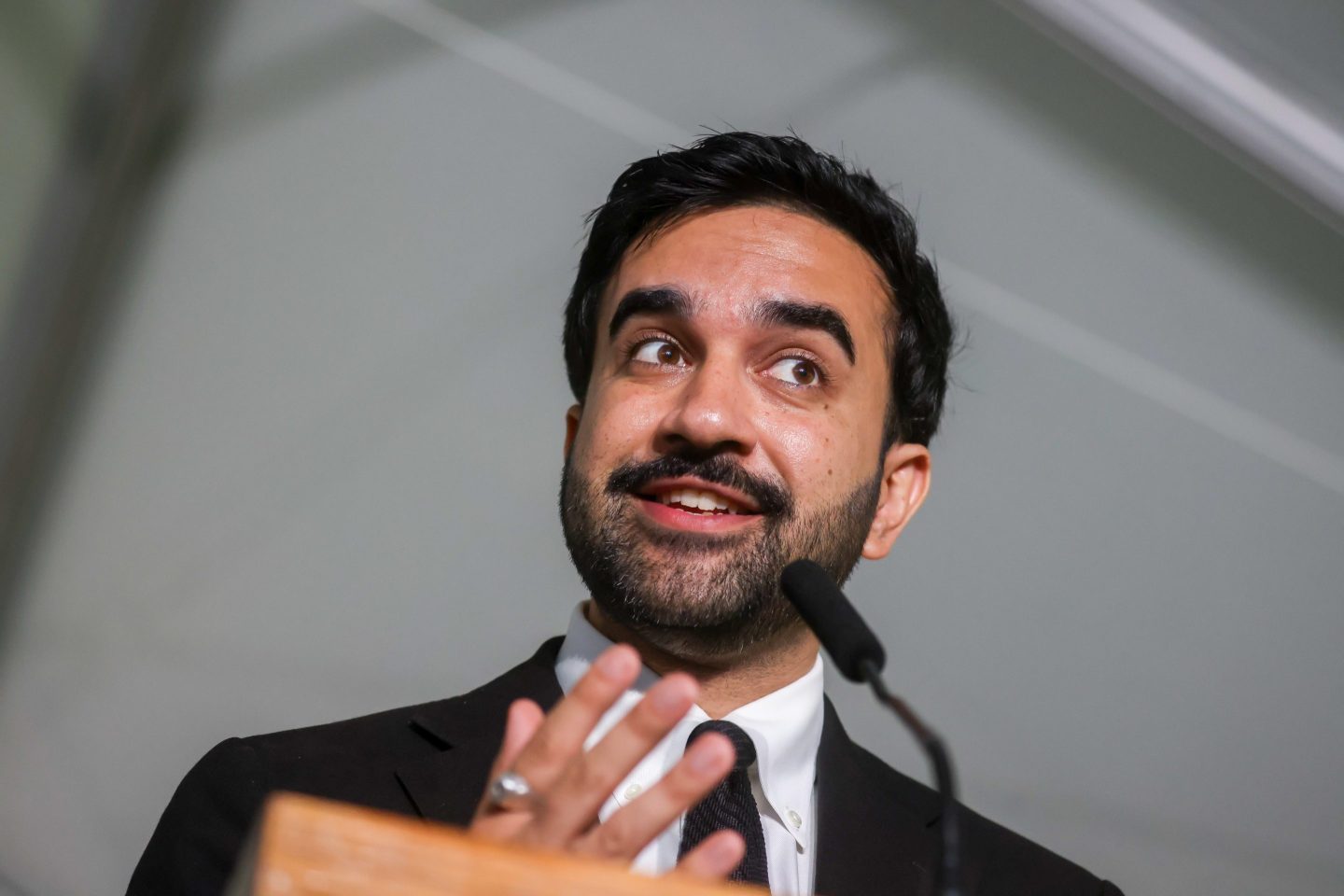
Mamdani Courts Bankers
Zohran Mamdani’s latest move suggests a campaign that understands a hard truth: no major city agenda survives on activist energy alone. If you want to govern New York, you have to convince the people who hire, lend, build, and move capital that your plans will not freeze the city in place. That is why the idea of forming a business panel with ex-Lazard and UBS bankers matters. It is not just a networking exercise. It is a signal. Mamdani appears to be trying to turn skepticism into structured dialogue, and that is often where serious political coalitions begin. For business leaders, the question is whether this is a genuine bridge-building effort or a polished way to soften a more aggressive policy agenda. For voters, it is a test of whether pragmatism can coexist with the kind of rhetoric that first made him a political force.
- Mamdani is signaling a more business-friendly posture by reaching out to former investment banking executives.
- A business panel could help him pressure-test policy ideas before they become political liabilities.
- The move may calm markets and donors, but it will not erase deeper concerns about regulation and taxes.
- This is as much about narrative control as it is about governance.
- If it works, it could become a model for how left-leaning candidates engage Wall Street without surrendering their core brand.
Why the Mamdani business panel matters
The phrase business panel sounds almost mundane, but in New York politics it is anything but. A mayoral hopeful who openly seeks counsel from ex-Lazard and UBS bankers is trying to reposition himself inside a city where financial power still shapes the terms of debate. That matters because the next mayor will inherit not just a sprawling municipal budget but also a fragile post-pandemic urban economy, persistent affordability pressure, and a business community that can either accelerate recovery or slow it down with capital flight, hiring freezes, and public criticism.
For Mamdani, the potential upside is obvious. A structured advisory group gives him a way to show competence, gather real-world feedback, and blunt the most predictable attack line against progressive candidates: that they are good at protest politics but weak on execution. It also gives him a venue to ask hard questions about what actually keeps businesses in the city, from transit reliability to permitting delays to public safety perception.
“A candidate does not have to become pro-Wall Street to understand that City Hall and capital markets ignore each other at their peril.”
That is the strategic bet here. Mamdani may not be trying to become the business community’s favorite politician. He may be trying to become the one they can live with.
What ex-Lazard and UBS bankers bring to the table
The detail about former Lazard and UBS bankers is not accidental. Those backgrounds carry a specific kind of credibility in New York. These are not neighborhood boosters or ideological validators. They are people who have spent careers interpreting risk, advising executives, and understanding how institutions behave when the numbers get ugly. If Mamdani can get even a handful of them to participate seriously, it suggests a willingness to hear uncomfortable feedback from people who are usually allergic to campaign theater.
They can pressure-test policy
A campaign platform often looks very different once it is forced through the lens of implementation. What sounds like a clean promise on affordable housing or commercial regulation may become a tangle of legal, fiscal, and operational tradeoffs. Former bankers are useful because they tend to ask where the bottlenecks are, what the second-order effects might be, and how a proposal affects lending behavior, leasing decisions, and capital allocation.
They can decode business anxiety
Business leaders rarely respond only to headline tax rates. They respond to uncertainty. Will regulations shift midstream? Will city leadership coordinate with developers, unions, and transit agencies? Will there be predictable enforcement or political improvisation? A panel staffed by people who know how corporate decision-makers think could help Mamdani understand the less visible but highly influential sources of concern.
They can widen the political tent
There is also a symbolic element. A campaign that invites veteran financial professionals into the room is making a public claim that expertise matters, even when that expertise comes from sectors that progressives often criticize. That can broaden appeal among independents and moderate Democrats who want change but do not want chaos.
The political calculus behind the outreach
Politics is never just about policy. It is about framing. And the framing here is smart. Mamdani does not need to become a corporate candidate. He needs to look governable. Those are not the same thing, and the distinction is crucial.
Progressive campaigns often face a credibility trap. They energize base voters with bold promises, then hit a wall when business leaders, bond markets, and editorial boards start asking for specifics. Forming a business panel gives Mamdani a way to show that he is not hiding from those questions. He is inviting them in.
That does not eliminate tension. It may even sharpen it. But tension can be useful if it forces a campaign to clarify priorities. If the panel is real, it can help Mamdani distinguish between reforms that are politically satisfying and reforms that are actually durable. City leaders who do not understand the balance between labor goals, revenue needs, and investment incentives usually end up with plans that look bold and land badly.
“The real test is not whether a candidate can meet with finance executives. It is whether they can absorb criticism without turning consultation into capture.”
That distinction will define how this move is judged. If the panel becomes a photo op, it will be dismissed as election-season smoothing. If it becomes a standing mechanism for feedback, it could alter how Mamdani governs and how the business community engages with him.
What business leaders want to hear
From the corporate side, the wish list is familiar but urgent. New York businesses want predictability, speed, and competence. They want a city that is easier to navigate, faster to permit, safer to operate in, and less likely to surprise them with policy shifts that arrive before the paperwork is dry.
That means Mamdani’s panel cannot be vague. It has to grapple with concrete issues:
- Commercial vitality: How does the city keep office space, retail corridors, and neighborhood business districts viable?
- Public safety: How does City Hall improve the on-the-ground feel of safety without defaulting to slogans?
- Housing and development: How can the city add supply without creating approval paralysis?
- Tax burden: What level of taxation can the city sustain before it loses firms, jobs, and talent?
- Regulatory friction: Which rules protect workers and residents, and which ones mainly slow investment?
None of these questions can be answered honestly with campaign slogans. They require tradeoffs. That is why the panel matters. It creates a place where those tradeoffs can be discussed before they become headline crises.
Risks Mamdani cannot ignore
Of course, there is a downside to this kind of outreach. Some supporters may see the business panel as a retreat from the campaign’s earlier edge. That is a real political risk. If your coalition believes you were elected to challenge entrenched interests, then inviting former bankers into the tent can look like compromise at the exact moment your supporters want confrontation.
There is also a deeper challenge: not every business leader wants dialogue. Some want assurances. Others want influence. A panel can become a mechanism for setting expectations, but it can also become a pressure point where participants push for policy dilution. Mamdani will need discipline to prevent consultation from becoming veto power.
The other risk is credibility. Voters are increasingly fluent in political theater. They can spot token outreach quickly. If this panel does not have real authority, a clear mission, or visible outcomes, it will be read as image management. And in a city as media-saturated as New York, image management tends to age badly.
Why this could shape the next phase of the campaign
The most interesting part of this development is not the panel itself. It is what it suggests about Mamdani’s governing theory. He may be trying to build a politics that is more confrontational in rhetoric but more institutional in method. That would be a notable evolution. It would acknowledge that modern urban governance is too complex for ideological purity alone.
If Mamdani can show he is willing to listen to business leaders without surrendering his political identity, he may unlock a broader coalition than expected. That coalition would not be built on trust alone. It would be built on a shared recognition that New York cannot afford permanent deadlock between City Hall and the private sector.
The upside is substantial. A candidate who can speak to tenants, workers, activists, and executives without sounding incoherent has a shot at governing the city with more leverage than either side expects. The downside is equally clear. If the outreach feels performative, he risks pleasing no one and confirming the most cynical assumptions about campaign politics.
The bigger lesson for city politics
There is a reason this story resonates beyond one campaign. Across the country, urban politics is entering a new phase where ideological branding alone is no longer enough. Cities need housing, transit, safety, investment, and fiscal discipline all at once. That means the old habit of sorting actors into heroes and villains is less useful than it used to be.
Mamdani’s business panel, if done seriously, could be a small but meaningful sign of that shift. It suggests that progressive politicians may finally be internalizing a reality business leaders have long understood: governance is a systems problem. You can win applause with a speech. You can only sustain a city with feedback loops, messy negotiations, and a tolerance for inconvenient expertise.
That is why this move deserves attention. It is not just about bankers advising a candidate. It is about whether New York’s next chapter can be written by someone willing to sit across from the people who usually get cast as the opposition, then ask them what actually works.
If Mamdani gets this right, he will not just be reaching out to Wall Street. He will be redefining what political seriousness looks like in a city that has little patience left for slogans and even less room for failure.
The information provided in this article is for general informational purposes only. While we strive for accuracy, we make no guarantees about the completeness or reliability of the content. Always verify important information through official or multiple sources before making decisions.