Mamdani Faces October 7 Backlash
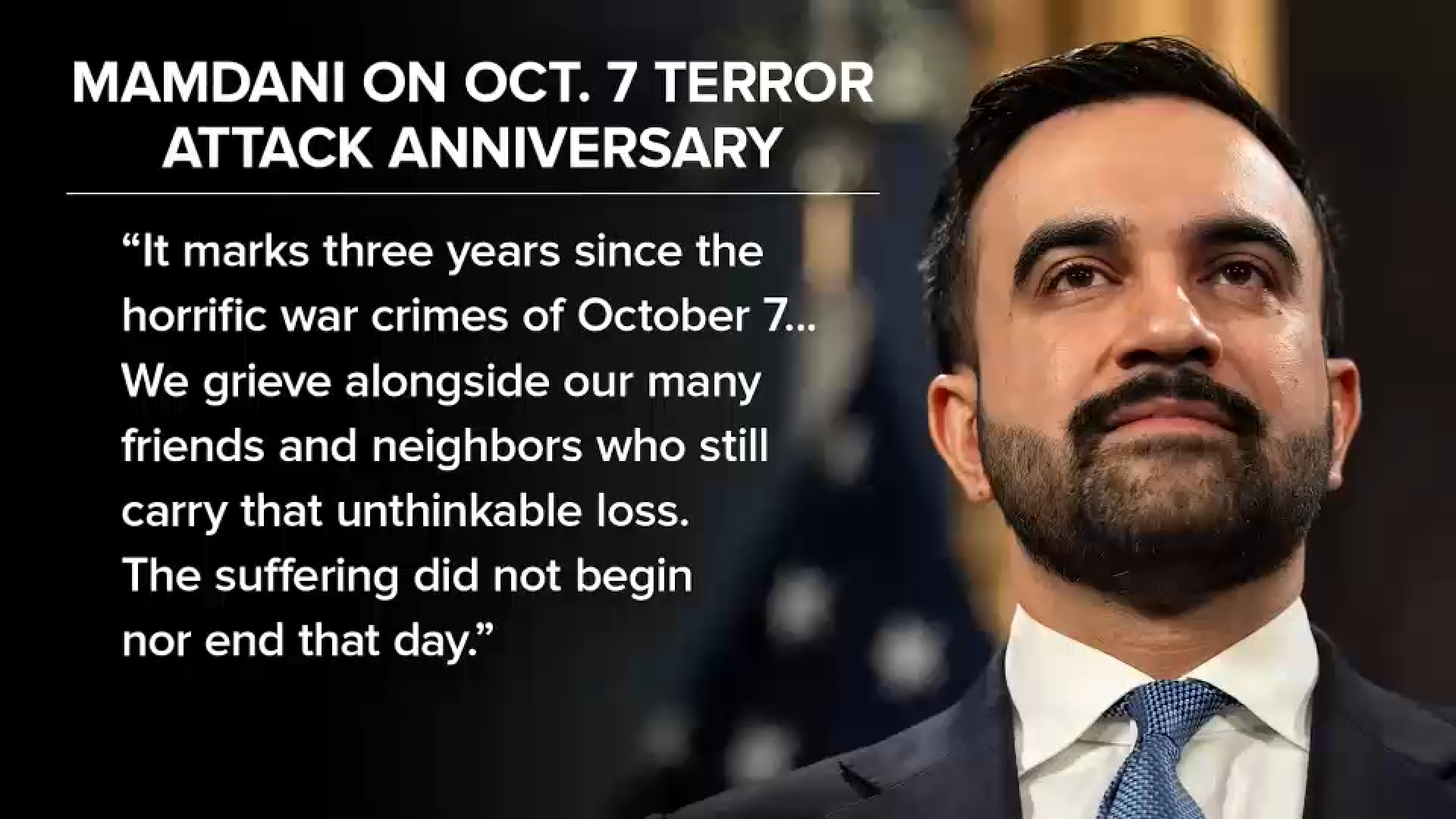
Mamdani Faces October 7 Backlash
New York politics is rarely gentle, but the latest fight around New York Mayor Mamdani shows how quickly public mourning can become a political stress test. His attendance at an October 7 vigil has drawn criticism from opponents and scrutiny from communities already carrying grief, fear, and anger from the Israel-Gaza war. For city leaders, the question is no longer just where they stand. It is how they show up, who they are seen standing beside, and whether their gestures can survive the brutal compression of social media outrage.
This controversy lands at the intersection of civic leadership, diaspora politics, public safety, and symbolic speech. In a city as diverse and divided as New York, even a vigil is not just a vigil. It becomes a message, a signal, and, for some, a provocation.
- New York Mayor Mamdani is facing criticism for attending an October 7 vigil.
- The backlash reflects broader tensions over Israel, Gaza, antisemitism, Islamophobia, and political symbolism.
- City leaders are increasingly judged not only on policy, but on presence and optics.
- The episode could shape how politicians approach interfaith events, memorials, and protest-adjacent spaces.
New York Mayor Mamdani Enters a Symbolic Minefield
The controversy around New York Mayor Mamdani is not happening in a vacuum. October 7 remains one of the most emotionally charged dates in recent global politics, marking the Hamas-led attacks on Israel and the beginning of a devastating war in Gaza. For Jewish communities, it is a day of trauma and remembrance. For Palestinian, Arab, and Muslim communities, it is also inseparable from the enormous civilian toll and humanitarian catastrophe that followed.
That dual reality is exactly why a mayor’s presence at any October 7 event carries such weight. Attendance can be read as solidarity, omission, endorsement, discomfort, or political maneuvering. The same physical appearance can mean profoundly different things to different constituencies.
Key insight: In polarized moments, political communication is no longer limited to speeches and statements. Presence itself becomes policy language.
Critics of Mamdani’s attendance appear to be challenging the meaning of his participation, the framing of the vigil, or the broader political implications of who was included and excluded. Supporters are likely to argue that public officials should attend spaces of mourning, especially when communities feel abandoned or demonized.
Why October 7 Vigils Are Politically Volatile
A vigil is typically understood as a solemn gathering, but the politics around October 7 have made memorial events unusually contested. The language used at these gatherings matters. So do the speakers, signs, chants, guest lists, and even the absence of certain condemnations.
For elected officials, the risk is acute. A mayor is expected to represent an entire city, not just a political base. In New York, that means Jewish residents mourning family and community losses, Palestinian residents mourning devastation in Gaza, Muslim residents facing suspicion and threats, and many others anxious about rising hate crimes and public disorder.
The Optics Problem
Modern political backlash often begins with a clip, a photograph, or a short post stripped of context. A leader may attend an event to listen, console, or reduce tensions, but the public interpretation can harden before any explanation is issued. In the case of October 7, the symbolic stakes are exceptionally high because communities are not simply debating foreign policy. They are processing grief and survival.
This is where the mayoral role becomes uniquely difficult. National politicians can make ideological arguments from a distance. A mayor must manage the immediate consequences: protests outside synagogues or mosques, school tensions, neighborhood fear, police deployments, and public ceremonies that can become flashpoints.
The Coalition Problem
Mamdani’s critics and defenders are also fighting over coalition politics. New York’s progressive ecosystem includes pro-Palestinian activists, labor organizers, left-wing Jewish groups, Muslim community organizations, immigrant advocates, and civil liberties groups. But the city’s broader electorate includes many voters who view October 7 primarily through the lens of Israeli victims, Jewish safety, and the threat of antisemitism.
Any perceived imbalance can become a political liability. If Mamdani is seen as too close to activists who use inflammatory rhetoric, opponents will weaponize that. If he distances himself too far, he risks alienating parts of his base that expect him to speak forcefully on Palestinian rights.
New York Mayor Mamdani and the Burden of Representing Everyone
The central challenge for New York Mayor Mamdani is not simply defending one appearance. It is proving that his leadership can hold multiple truths at once. The city needs a mayor who can condemn antisemitism without qualification, oppose Islamophobia without hesitation, recognize Israeli grief, and acknowledge Palestinian suffering without treating either community as a political prop.
That sounds obvious. In practice, it is one of the hardest assignments in American urban politics.
Editorial view: The public should demand moral clarity from leaders, but moral clarity is not the same as performative certainty. Cities need officials capable of de-escalation, not just viral declarations.
The mayor’s team will likely need to clarify intent quickly and carefully. A defensive response could deepen suspicion. A vague statement could satisfy no one. The strongest path is usually specific: name the victims, name the fears, condemn hate, affirm the right to mourn, and explain why attendance was consistent with representing the whole city.
What This Backlash Reveals About Urban Politics
This episode is part of a larger shift in how city leaders are evaluated. Municipal politics used to be defined by schools, housing, policing, sanitation, transit, and budgets. Those issues still dominate everyday life, but global conflicts now arrive instantly inside local politics through diaspora communities, campus protests, religious institutions, and algorithmic media.
New York is especially exposed to this dynamic. It is a global city with deep Jewish, Muslim, Arab, South Asian, and immigrant communities. International crises are local events here. A war thousands of miles away can affect subway safety, school attendance, interfaith relations, and mayoral approval ratings.
Pro Tip for Public Officials
- Audit the event context: Know the hosts, speakers, messaging, and prior controversies before attending.
- Prepare a values statement: Explain the purpose of attendance before the backlash defines it.
- Engage multiple communities: Pair symbolic appearances with direct outreach to affected groups.
- Avoid selective empathy: Public mourning should not imply silence about other civilian suffering.
These are not just communications tactics. They are governance tools. When communities feel unseen, they retreat into distrust. When leaders appear careless, rumors fill the gap.
The Social Media Trial Comes Before the Facts
One reason the Mamdani controversy escalates so quickly is the current media environment. Short-form clips reward outrage. Posts on X, TikTok, Instagram, and messaging apps can turn a local appearance into a national loyalty test within hours.
That creates a distorted public square. People may react before seeing the full remarks, understanding the nature of the vigil, or hearing from attendees. Political rivals know this. Advocacy groups know this. Newsrooms know this. The result is a permanent state of reputational acceleration, where the first frame often becomes the dominant narrative.
For Mamdani, the communications challenge is not only to respond, but to slow the story down. That means providing context without sounding evasive. It also means recognizing that for many people, the issue is not procedural. It is emotional and deeply personal.
Why This Matters Beyond One Vigil
The fight over Mamdani’s attendance matters because it previews the future of urban leadership in divided democracies. Mayors will increasingly face conflicts where silence looks like cowardice, attendance looks like endorsement, and nuance looks like betrayal. The job now requires not just administrative competence, but emotional intelligence under hostile conditions.
There is also a free speech dimension. Public officials should not be bullied out of attending community events simply because those events are controversial. But they also cannot pretend that symbolism is neutral. The public has a right to question judgment, associations, and messaging, especially when the subject involves mass violence and communal trauma.
The best leaders understand that accountability and bridge-building are not opposites. They can explain why they attended, listen to those who were hurt, and adjust future engagement without turning every criticism into an attack.
What Comes Next for Mamdani
The political fallout will depend on three things: how Mamdani explains his attendance, whether critics can tie the vigil to broader concerns about his judgment, and whether community leaders accept his outreach as sincere. If the mayor responds with discipline, the controversy may become a bruising but manageable episode. If the response is muddled, it could harden into a narrative about values and trust.
Expect opponents to keep the issue alive, especially if there are future protests, security incidents, or divisive public statements from groups linked to the event. Expect supporters to frame the backlash as bad-faith policing of empathy or an attempt to silence certain communities. Both dynamics can be true in parts, which is why the story is so politically combustible.
For New Yorkers, the larger test is whether their city can make room for mourning without turning every memorial into a partisan tribunal. For Mamdani, the test is sharper: lead a city that wants moral conviction, practical calm, and proof that no community’s pain will be treated as disposable.
The information provided in this article is for general informational purposes only. While we strive for accuracy, we make no guarantees about the completeness or reliability of the content. Always verify important information through official or multiple sources before making decisions.