MI5 Forces Universities to Face China Funding Risk
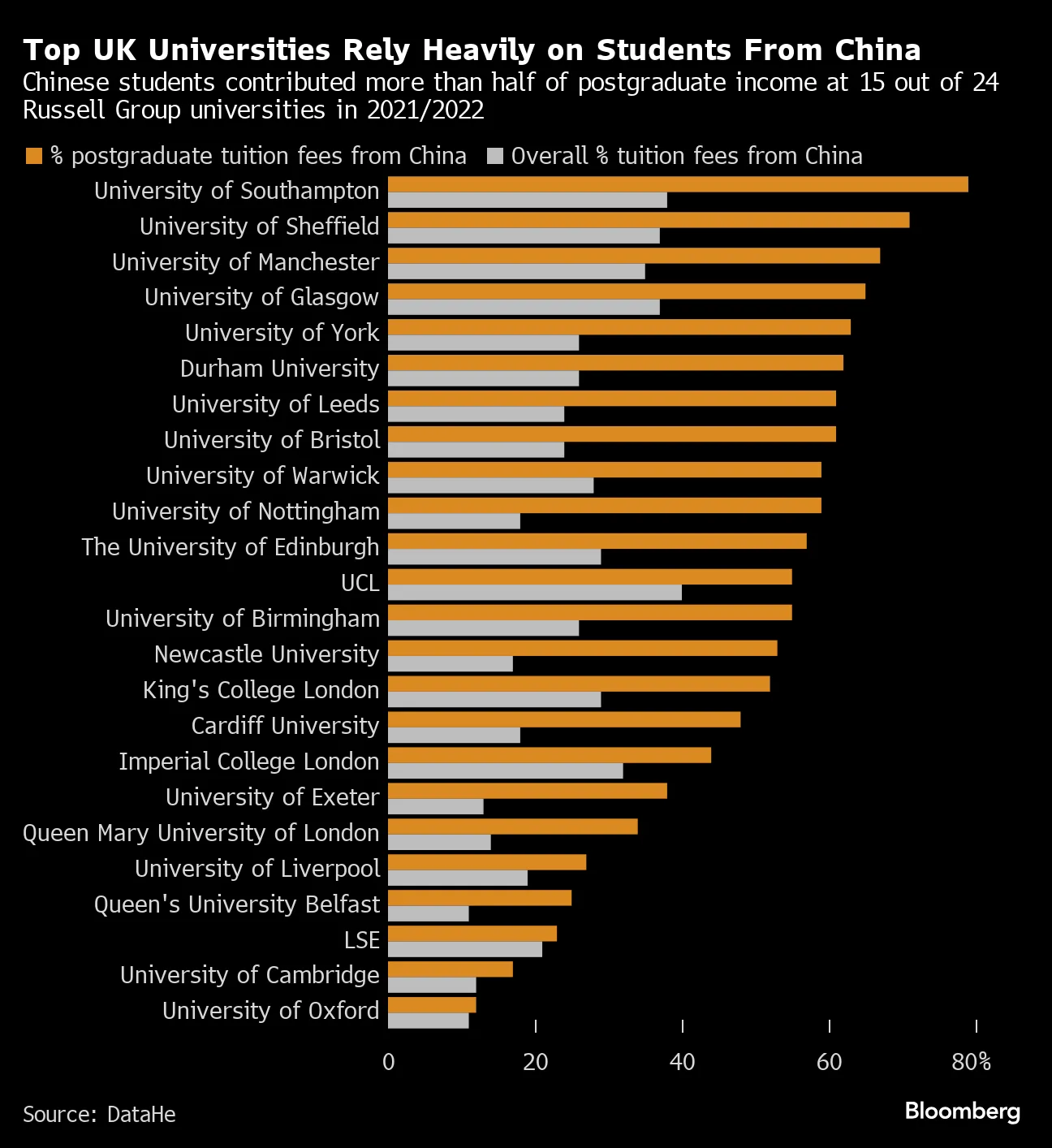
Britain’s universities have spent years balancing prestige, global collaboration, and financial survival. Now China funding UK universities has moved from a campus governance issue to a national security flashpoint. MI5’s warning to the higher education sector signals a sharper reality: research partnerships, overseas donations, and international student income are no longer just balance-sheet items. They are strategic vulnerabilities. For vice-chancellors, this is a brutal squeeze. The same global openness that made UK universities world-class can also expose sensitive research, intellectual property, and institutional decision-making to foreign influence. The question is no longer whether universities should work with China. It is whether they can prove that every partnership is transparent, defensible, and resilient under scrutiny.
- MI5’s alert raises the pressure on universities to examine links with Chinese state-connected funding, research, and partnerships.
- The biggest risk is not just espionage but dependency: financial, academic, and reputational.
- Research security is becoming a board-level issue for universities, not a niche compliance function.
- China funding UK universities will likely face tougher disclosure rules, stronger vetting, and more political oversight.
China Funding UK Universities Is Now a Security Test
The UK higher education model has a structural weakness: it is internationally admired, but domestically underfunded. Universities rely heavily on overseas students, philanthropic donations, joint ventures, and commercial research partnerships to fill financial gaps. China has been a major part of that ecosystem for more than a decade.
That dependency was once framed as a success story. British campuses attracted global talent. Chinese students gained access to elite education. Researchers built links across borders. Universities expanded their international footprint and softened the financial blow of frozen tuition fees and volatile public funding.
MI5’s intervention changes the tone. The security service is effectively telling universities that the old assumption – collaboration first, risk management later – is no longer acceptable. The concern is not that every Chinese student, scholar, donor, or institution is a threat. That would be both wrong and destructive. The concern is that the Chinese state has a well-documented strategic interest in advanced research, influence operations, and access to sensitive technologies.
Academic openness is a strength, but openness without safeguards becomes an attack surface.
This is where universities face a particularly difficult challenge. They are built to share knowledge. Security agencies are built to restrict risk. The collision between those missions is now landing in university council meetings, research offices, and departmental budgets.
Why MI5 Is Worried About China Funding UK Universities
The risk landscape is broader than the spy-thriller version of university espionage. The real issue is often quieter and more complicated: a research grant here, a visiting scholar programme there, a joint laboratory, a donor relationship, a data-sharing agreement, or a commercialisation deal that seems harmless until the full network around it is examined.
1. Sensitive research can have military value
Much of the most valuable university research is dual-use. That means it can support civilian progress and military capability at the same time. Work in artificial intelligence, quantum computing, robotics, advanced materials, semiconductors, cybersecurity, and biotechnology can move quickly from the laboratory to strategic advantage.
A university may believe it is pursuing open scientific progress. A foreign state may see the same project as a shortcut to technological capability. That mismatch is what makes this so difficult. The threat is not always illegal theft. Sometimes it is entirely legal access to knowledge that, once transferred, cannot be pulled back.
2. Money can shape institutional priorities
Foreign funding does not need to buy direct control to create influence. It can shape incentives. If a university becomes dependent on a stream of international tuition fees, sponsored research, or donor support, leaders may become reluctant to offend the source of that income.
This is the soft-power dimension of the problem. It may affect which events are hosted, which speakers are invited, which research topics are encouraged, or how strongly a university defends academic freedom when controversy appears. The pressure does not have to be explicit. Financial exposure can create its own silence.
3. Partnerships can obscure the real counterparty
Universities often work through layers: companies, institutes, foundations, intermediaries, alumni networks, and research centres. The immediate partner may appear low-risk, but the deeper ownership, funding, or state affiliation may tell a different story.
That is why due diligence is becoming more demanding. A basic check of a partner’s website is no longer enough. Universities need to understand beneficial ownership, government links, military affiliations, sanctions exposure, data access, and whether a project could contribute to strategic capabilities outside the UK.
The Universities’ Dilemma Is Financial as Much as Political
It is easy to tell universities to “just say no” to risky money. It is much harder to run a research-intensive institution while costs rise, domestic tuition income remains constrained, and global competition intensifies. Many universities are already cutting courses, freezing hiring, or restructuring departments. International funding has become a pressure valve.
That does not excuse weak governance. But it explains why the debate is so tense. If government wants universities to reduce exposure to high-risk overseas funding, it must confront the funding model that made that exposure rational in the first place.
You cannot demand strategic independence from universities while leaving them financially dependent on geopolitically sensitive income.
This is the uncomfortable policy gap. Ministers can warn about security risks. Intelligence agencies can issue alerts. Regulators can demand better disclosure. But unless the UK builds a more sustainable university funding settlement, institutions will keep being pulled toward overseas money because the alternative is contraction.
What Universities Should Do Next
The smart response is not panic or blanket disengagement. The UK should not sever academic exchange with China, and universities should resist crude suspicion aimed at Chinese students or researchers. The better answer is a harder, more transparent operating model for international collaboration.
- Create a central risk register: Universities should map overseas donations, research grants, joint ventures, visiting appointments, data-sharing deals, and intellectual property arrangements in one place.
- Escalate sensitive partnerships: Projects involving
dual-usetechnologies should receive senior review before contracts are signed, not after concerns emerge. - Strengthen donor transparency: Institutions should know who is giving money, where the money ultimately comes from, and whether conditions are attached.
- Protect academic freedom: Contracts should explicitly prevent funders or partners from controlling publication, staffing, curriculum, or speaker decisions.
- Train researchers: Security cannot sit only with administrators. Academics working in high-risk fields need practical guidance on data, travel, recruitment, and collaboration.
Pro Tip for University Leaders
Do not treat research security as a box-ticking exercise owned by the legal department. The highest-risk decisions often happen before legal review, when academics are scoping projects, building relationships, or seeking funding. Embed security advice early, make it usable, and avoid creating a culture where researchers hide partnerships because the process feels hostile or slow.
What Government Needs to Get Right
The state also has responsibilities here. Universities cannot be expected to decode every geopolitical risk alone. If MI5 and government departments want institutions to make better decisions, they need to provide clear, timely, and practical intelligence that can be acted on without paralysing legitimate research.
Overclassification is a problem. If warnings are too vague, universities cannot operationalise them. If the rules are too broad, they chill collaboration and damage the UK’s appeal as a research hub. If enforcement is inconsistent, institutions will struggle to know where the real red lines are.
The UK needs a model that combines national security with academic competitiveness. That means clearer thresholds for mandatory reporting, better support for smaller institutions, and faster advice on high-risk sectors. It also means funding alternatives for critical research areas where universities might otherwise seek overseas partners because domestic support is insufficient.
The Future of China Funding UK Universities
The direction of travel is clear. Foreign funding in higher education is going to become more visible, more regulated, and more politically contested. Universities should expect tougher questions from Parliament, regulators, journalists, staff, students, and security agencies. The era of informal international dealmaking is fading.
That shift will have consequences. Some partnerships will be cancelled. Some research projects will be redesigned. Some donors will walk away rather than accept transparency. Some academics will complain, fairly, that bureaucracy is slowing discovery. But the institutions that adapt early will be stronger than those that wait for a scandal.
The bigger story is that universities are now part of the strategic infrastructure of the state. Their laboratories, datasets, patents, and talent pipelines are central to economic power and national security. That makes them targets. It also makes them essential.
Why This Matters Beyond Campus
This debate is not just about China, and it is not just about universities. It is about how open societies protect themselves without becoming closed. The UK wants global science, international students, and world-leading research. It also wants to prevent sensitive knowledge from being exploited by authoritarian states.
That balance is hard, but pretending there is no trade-off is worse. MI5’s warning forces a necessary reckoning: universities cannot rely on old assumptions about benign globalisation. Funding sources now carry strategic meaning. Research partnerships can have geopolitical consequences. Academic freedom needs active defence, not polite statements in annual reports.
The best universities will not respond by retreating from the world. They will respond by becoming more disciplined, more transparent, and more confident about where they draw the line. China funding UK universities is not automatically illegitimate. But from now on, it will need to survive a much tougher question: does this partnership strengthen the university without weakening the country?
The information provided in this article is for general informational purposes only. While we strive for accuracy, we make no guarantees about the completeness or reliability of the content. Always verify important information through official or multiple sources before making decisions.