Microsoft Rewires AI Security
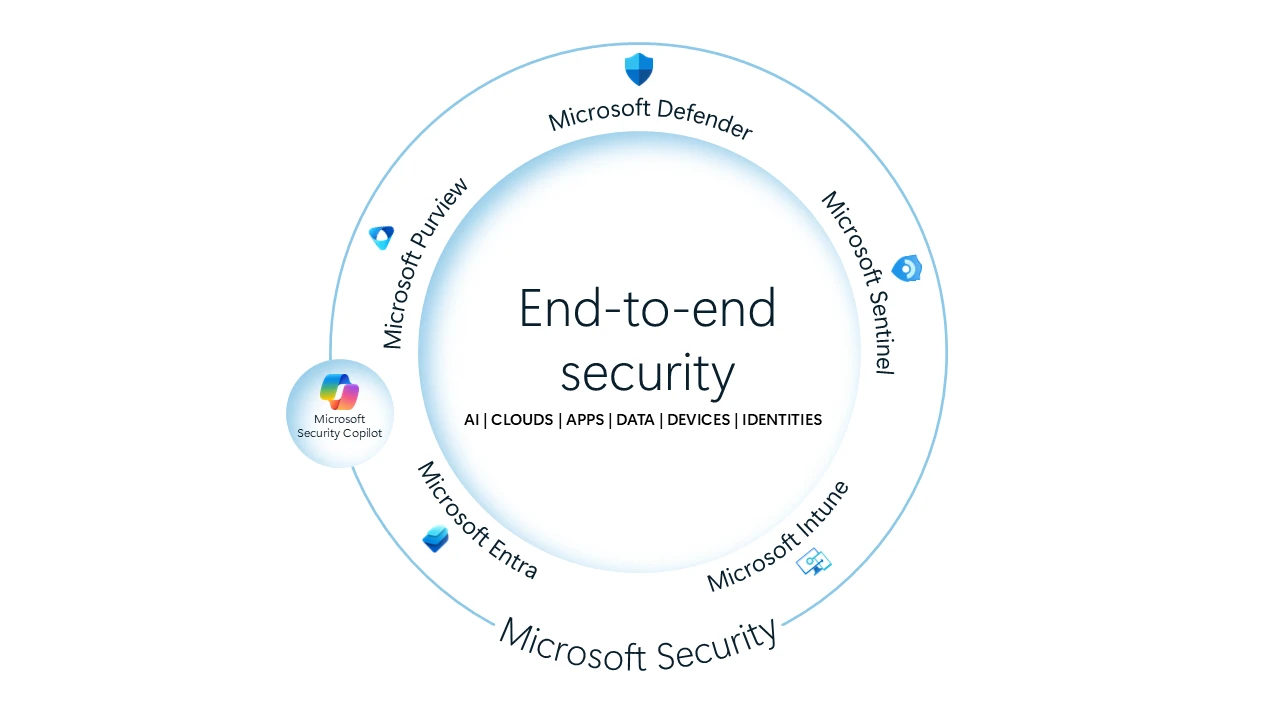
AI security has officially left the lab phase. The real fight now is happening inside products, cloud stacks, and enterprise workflows where one weak control can turn a smart assistant into a compliance nightmare. Microsoft AI security matters because the company sits at the center of corporate computing: Windows, Azure, Microsoft 365, developer tools, and increasingly the AI layer wrapped around all of them. When Microsoft changes its security posture, the ripple effect reaches boards, CISOs, software teams, and millions of workers who may never think about model abuse until it lands in their inbox or workflow. That is why this latest move is worth more than a headline skim. It signals a bigger industry reset: AI is no longer being judged only by how impressive it sounds, but by how safely it behaves under pressure.
- Microsoft AI security is becoming a frontline enterprise issue, not a niche technical concern.
- The company is signaling that AI products must be governed like core infrastructure, with safeguards built in from the start.
- Security, trust, and compliance are now competitive differentiators in the AI platform race.
- Businesses using AI copilots and cloud models should revisit access controls, data exposure, and human oversight.
Why Microsoft AI security suddenly feels urgent
Microsoft has spent the past two years racing to embed generative AI across its stack. That speed created opportunity, but it also created risk. Every AI assistant connected to email, files, source code, or customer data expands the attack surface. Prompt injection, data leakage, model misuse, identity abuse, and over-permissioned agents are no longer speculative concerns. They are the natural consequence of connecting probabilistic systems to valuable enterprise assets.
For Microsoft, the pressure is higher than for a smaller AI startup. Enterprises expect the company to provide not only innovation but also operational discipline. If AI is becoming part of day-to-day productivity, then customers need assurance that the surrounding controls are as serious as those protecting Active Directory, endpoint fleets, or cloud workloads.
The key shift is simple: AI is being treated less like a novelty feature and more like critical enterprise infrastructure.
That is the lens leaders should use here. This is not just about one company tightening a few settings. It is a sign that the market is maturing fast, and that enterprises are no longer willing to accept magical demos without clear security boundaries.
What this says about the next phase of enterprise AI
The first phase of generative AI was defined by capability: bigger models, better chat interfaces, more integrations, and the wow factor of instant outputs. The second phase is about control. Can the system be governed? Can it respect data boundaries? Can admins audit what happened? Can teams trust it in regulated or high-stakes environments?
Microsoft AI security is now part of a broader platform contest between major cloud and software vendors. The winner will not simply be the one with the flashiest model. It will be the one that gives companies a believable path to scale AI safely across legal, compliance, IT, and operations.
Security is now a product feature
That sounds obvious, but the AI boom initially obscured it. In classic software, security was already expected. In AI, many buyers temporarily tolerated ambiguity because the productivity gains seemed too large to ignore. That grace period is ending.
Enterprise buyers now want guardrails such as:
- Role-based access to AI tools and data connectors
- Clear data residency and retention policies
- Monitoring for suspicious prompts and model interactions
- Human review for sensitive or high-impact outputs
- Administrative controls that can disable risky behaviors quickly
If Microsoft is leaning harder into these areas, it is because the company understands a difficult truth: AI adoption stalls when trust breaks.
Attackers only need one opening
Traditional security incidents are already costly. AI adds a new category of failure where the application may appear to function normally while quietly exposing data or acting on manipulated instructions. A malicious prompt hidden in a document, webpage, or message can alter an AI agent’s behavior. A badly scoped connector can surface confidential records. An employee can over-trust a generated answer and push bad decisions downstream.
Those are not fringe scenarios. They are exactly the kinds of edge cases security teams worry about because they scale quickly in large organizations.
How enterprises should respond right now
The practical lesson is not to panic. It is to stop treating AI rollout like a marketing milestone and start treating it like a governed systems deployment. Microsoft AI security should push organizations to ask harder questions about the tools already being piloted internally.
1. Audit what your AI tools can actually reach
Many organizations have enabled copilots, assistants, or model-backed search without fully mapping permissions. That is a problem. If an AI layer can access email, chat, files, tickets, customer records, or code repositories, then its effective privilege may be much broader than leadership realizes.
Pro tip: review the connectors, data sources, and identity scopes attached to each AI workflow. If you cannot explain what the system can see, you cannot meaningfully secure it.
2. Tighten identity and access controls
AI often inherits the messiness of existing enterprise identity systems. That means old service accounts, excessive group memberships, weak conditional access rules, and inconsistent logging become AI risks too. The smartest model in the world cannot compensate for sloppy permissions.
Security teams should be reviewing controls such as least privilege, multi-factor authentication, privileged access approvals, and session monitoring. AI amplifies the impact of identity mistakes because it can query, summarize, and act at machine speed.
3. Create a policy for high-risk prompts and outputs
Not every AI interaction deserves the same level of scrutiny. Asking for a meeting summary is different from generating legal language, analyzing sensitive HR data, or drafting code that touches production systems. Organizations need tiers of use.
A simple governance model might separate:
- Low-risk tasks like formatting, summarization, and brainstorming
- Medium-risk tasks involving internal business data
- High-risk tasks involving customer records, financial decisions, regulated content, or code execution
High-risk workflows should include mandatory review steps, logging, and clear ownership.
4. Train employees to challenge confident AI output
One of the more dangerous traits of generative systems is not that they fail, but that they often fail persuasively. This is why AI literacy now belongs in security awareness training. Employees should know how prompt manipulation works, how hallucinations show up, and when to escalate suspicious outputs.
AI safety inside enterprises is not just a tooling issue. It is a behavior issue.
Why Microsoft has more to lose and more to gain
Microsoft is in a unique position. It is not merely selling access to models. It is embedding AI into the software many organizations already depend on for daily operations. That gives the company extraordinary distribution, but it also raises the stakes. A security misstep in a deeply integrated AI product hits differently than one in a standalone chatbot.
At the same time, this also creates an opportunity. If Microsoft can convincingly package AI with administrative visibility, policy controls, secure defaults, and enterprise-grade assurances, it strengthens its grip on the business market. In plain terms, Microsoft AI security can become a revenue story as much as a risk story.
Security could become the deciding factor in AI vendor selection
For many businesses, the question is no longer “Which model writes the prettiest paragraph?” It is “Which platform can we defend in front of our compliance team and our board?” That shifts the buying criteria in Microsoft’s favor if it can deliver consistency across cloud, productivity, and developer environments.
This is especially relevant for sectors like finance, healthcare, government, and large multinational firms where data governance is not optional. In those environments, trust architecture often beats raw model novelty.
What to watch next
The real test is not the messaging. It is the implementation. Strong AI security means little if the controls are too complex, too fragmented, or too easy for users to bypass. Enterprises should watch for several signals in the months ahead.
More default safeguards
The industry is moving toward secure-by-default AI deployments. That means customers should expect stricter out-of-the-box policies, clearer admin dashboards, and more transparent monitoring. The easier Microsoft makes safe deployment, the faster businesses can scale responsibly.
Better incident visibility
Security teams need logs and telemetry that explain what an AI system accessed, how it reasoned through tool use, and where a problematic output originated. AI observability is still immature across the industry. Whoever improves it fastest will earn disproportionate trust.
Stronger boundaries between public models and private data
One of the biggest enterprise concerns is preventing sensitive information from leaking through prompts, training pathways, or integrations. Businesses will be looking for hard assurances around isolation, retention, and usage controls. Language that sounds reassuring is no longer enough. Buyers want concrete technical and contractual boundaries.
Why this matters beyond Microsoft
Even if your company does not use Microsoft’s AI stack heavily, this moment matters because it reflects a broader correction in the market. The hype cycle rewarded speed. The next cycle will reward resilience. Every vendor now has to prove that AI can be deployed without becoming a new class of invisible insider risk.
That is healthy. It forces the industry to move past stage demos and into operational reality. It also gives buyers more leverage. Companies can now demand better governance, better transparency, and safer defaults because the market has finally acknowledged that capability without control is not enterprise readiness.
There is also a cultural shift underway. Boards are becoming more aware of AI-related exposure. Regulators are paying attention. Employees are using these tools whether policy teams are ready or not. In that environment, Microsoft AI security is not a niche story for engineers. It is a preview of how every major platform company will have to evolve.
The bottom line on Microsoft AI security
Microsoft’s latest security posture around AI is best understood as a sign of maturity, not retreat. The company is acknowledging what the industry can no longer ignore: when AI becomes embedded in work, its risks become embedded too. That means governance, access discipline, monitoring, and human oversight have to move from optional add-ons to core design principles.
For enterprises, the takeaway is immediate. Review your AI permissions. Classify your use cases. Train your people. Demand better visibility from your vendors. And assume that every productivity gain from AI must be matched by a security control that keeps it from going sideways.
The era of carefree AI deployment is over. The era of defended AI has begun – and Microsoft wants to lead it.
The information provided in this article is for general informational purposes only. While we strive for accuracy, we make no guarantees about the completeness or reliability of the content. Always verify important information through official or multiple sources before making decisions.