Mumbai Student Protests Signal a Gen Z Power Shift
Mumbai Student Protests Signal a Gen Z Power Shift
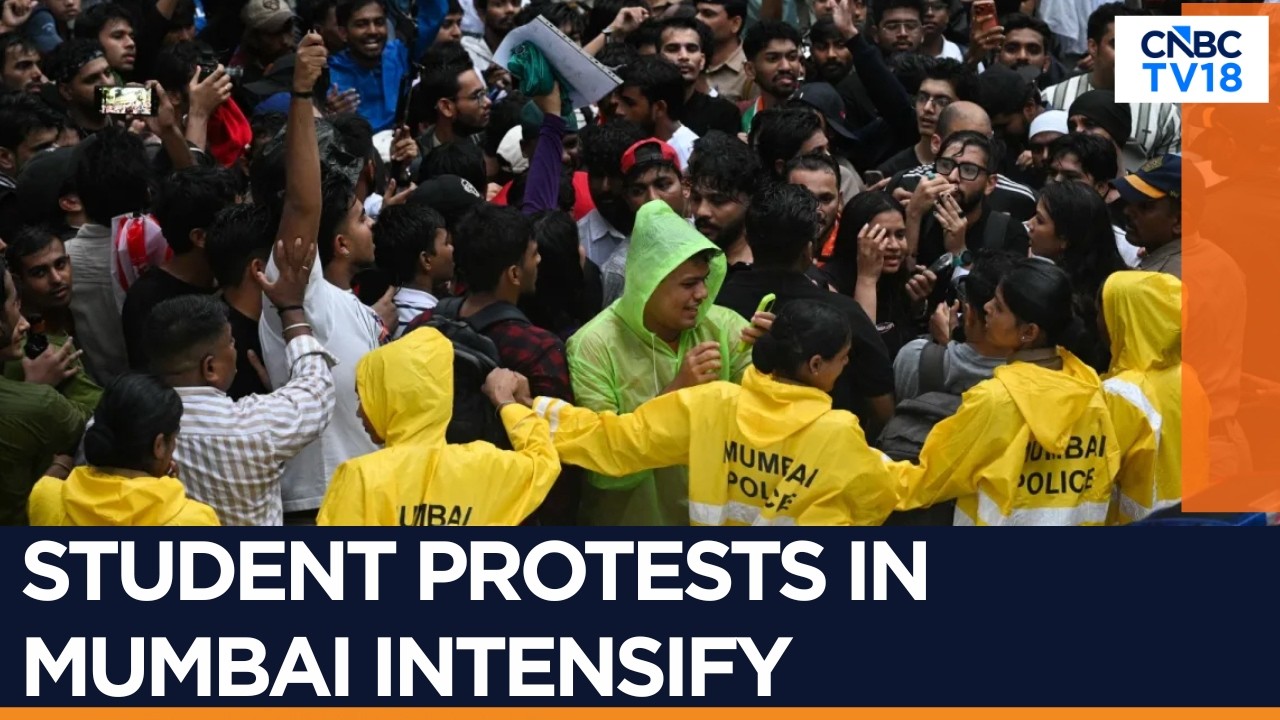
Mumbai’s student protests are not just another campus flashpoint. They are a warning shot for anyone still treating Gen Z as a demographic headline instead of a political force. In India’s most wired, aspirational city, young people are translating frustration into public action faster than institutions can contain it. That matters because student movements have always been more than noise: they are early signals of where culture, politics, and legitimacy are heading next. The Mumbai protests linked to Rhiya Ahir’s generation show a familiar pattern with a new edge: phones as megaphones, campuses as organizing hubs, and a public that can no longer assume young citizens will stay passive. If you want to understand where India’s civic mood is heading, start here.
- Gen Z activism is becoming faster, more networked, and harder to dismiss.
- Mumbai’s student protests reflect wider frustration with representation, opportunity, and institutional trust.
- Campus movements now spread through
social mediaand peer networks before traditional leaders can respond. - The real story is not just the protest itself, but the political confidence it signals.
- Universities, policymakers, and brands should read this as a shift in influence, not a temporary flare-up.
Why Mumbai Student Protests Matter Now
The surge in Mumbai student protests lands at a moment when young Indians are being asked to believe in systems that often feel slow, opaque, and unequal. That tension is not new, but the method of resistance is. Today’s students do not need formal party structures, student unions with old hierarchies, or even a single campus to mobilize. They can build momentum in hours, coordinate messaging in minutes, and turn a local grievance into a national conversation before officials have finished drafting a response.
That is what makes the protests significant. They are about more than one issue or one campus. They reveal a generation that expects participation, accountability, and visibility. For institutions, that is a problem. For democracy, it can be a pressure valve. For everyone else, it is a preview of how power is changing.
When student movements become digitally native, the old playbook of delay, denial, and dismissal starts to fail fast.
The New Shape of Gen Z Activism
What sets Gen Z apart is not simply age. It is operating style. Earlier student movements relied on long organizing cycles, physical leaflets, and centralized leadership. The current wave is flatter, faster, and more adaptive. A protest can begin with a single grievance, scale through WhatsApp and Instagram, and pick up national attention if the visuals are strong enough.
That speed comes with tradeoffs. The movement can be more fragmented, more reactive, and more vulnerable to misinformation. But it also makes suppression harder. There is no single switch to flip, no obvious leader to neutralize, and no guarantee that clearing one campus will end the discussion. The protest can simply reappear somewhere else, under a different label, with a new set of participants and a more pointed message.
From campus issue to public test
Student protests in India often begin with localized demands: academic conditions, administrative decisions, safety, fees, or representation. But in cities like Mumbai, those complaints quickly widen into a test of whether young people feel the system sees them at all. That shift matters because it changes the stakes. The protest becomes less about a policy fix and more about recognition.
This is where the symbolism of Gen Z activism becomes powerful. Young protesters are not merely objecting. They are asking a deeper question: who gets heard first, and who gets ignored until pressure becomes unavoidable?
What Makes Mumbai a Different Stage
Mumbai is not just any Indian city. It is dense, ambitious, media-saturated, and economically unforgiving. That combination gives student protests a sharper edge. In a city where status moves quickly and inequality is visible at street level, a campus issue can feel like a larger social contradiction playing out in real time.
The city’s media ecosystem also amplifies conflict. A protest in Mumbai can become a narrative within hours because journalists, influencers, and political actors all watch the same pressure points. That makes the city ideal for visibility and risky for organizers. If the goal is attention, Mumbai delivers. If the goal is control, Mumbai is much harder to manage.
Mumbai is where student anger becomes legible to the country because the city compresses class pressure, ambition, and media visibility into one frame.
Why Institutions Keep Misreading Gen Z
A recurring mistake among universities, political leaders, and even employers is assuming Gen Z wants only symbolism. They do not. They want outcomes, but they also want process. They are unusually alert to hypocrisy, especially when institutions speak the language of inclusion while behaving defensively behind closed doors.
This generation grew up watching crises unfold publicly in real time. They are fluent in live streams, screenshots, and receipts. That means official statements are no longer enough. If the response feels evasive, it can backfire instantly. If the response feels sincere but empty, that backfires too. The bar is not perfection. The bar is proof that someone is listening and moving.
That is why student unrest today can escalate so quickly. It is not because young people are inherently more combustible. It is because institutional trust is thinner, and the audience for every decision is now wider.
How Student Protests Are Evolving in the Digital Age
The mechanics of protest have changed more in the last decade than in the previous thirty years. The basics still matter – gathering, chanting, negotiating, and sustaining attention. But the infrastructure around them is radically different.
Digital coordination changes the tempo
- Rapid mobilization through encrypted and public messaging apps allows organizers to move quickly.
- Visual storytelling makes a protest more shareable when signs, slogans, and crowd shots are concise and legible.
- Distributed leadership reduces dependency on a single figurehead.
- Counter-messaging spreads just as fast, forcing organizers to manage narrative as carefully as turnout.
This is why campus protest strategy increasingly resembles digital operations as much as street politics. Organizers think in terms of message discipline, timing, and amplification. Authorities think in terms of containment, optics, and escalation management. Both sides know that the first version of the story often becomes the lasting one.
Pro tip for observers
If you want to understand whether a student protest has staying power, look beyond attendance. Watch for repetition across platforms, cross-campus solidarity, and whether the message has moved from grievance to demand. That transition is usually the difference between a burst of anger and a movement.
Why This Matters for India’s Political Future
The political significance of the Mumbai student protests reaches far beyond one city or one campus. Gen Z is entering adulthood in a period shaped by competition, digital fluency, and limited patience for gatekeeping. That creates a generation less willing to wait for permission and more willing to challenge systems that do not reflect their reality.
For political parties, this is both an opportunity and a threat. Young voters can be energized, but they are not easy to own. They are less loyal to inherited identities and more responsive to competence, authenticity, and visible action. That means old outreach strategies – stadium rallies, scripted youth appeals, top-down symbolism – may not deliver the same returns.
For universities, the lesson is more immediate. Students do not merely want grievance channels. They want institutions that can absorb dissent without treating it as disloyalty. When that fails, protest becomes the alternative governance mechanism.
The Economic and Social Stakes
It is tempting to frame student protest as a political sidebar, but there is an economic subtext too. Young people in urban India are under pressure to convert education into security, and that promise is getting harder to believe. Rising costs, uncertain job pathways, and a widening gap between aspiration and opportunity all feed into the same emotional economy.
That is why student movements can resonate beyond campuses. Parents worry about opportunity. Employers worry about adaptability. Governments worry about instability. Everyone is responding to the same signal: this generation will not quietly absorb disappointment forever.
The deeper issue is trust. If students feel that merit no longer guarantees mobility, protests stop being exceptional and start becoming predictable.
What Comes Next
Expect more of this pattern, not less. As Gen Z gets older and more politically literate, student activism will likely become more sophisticated, more issue-specific, and more difficult to isolate. It may not always look like a march. It may look like coordinated online pressure, sit-ins, targeted boycotts, or rapid-response solidarity across institutions.
That evolution will force a choice on leaders. They can treat student unrest as a communication failure to be managed, or as a legitimacy problem to be solved. The second option is harder, slower, and more honest.
The biggest mistake institutions can make is assuming that a protest is the event. Often, it is the symptom.
For Mumbai, and for India, the protests are a reminder that young people are not waiting for a seat at the table. They are building their own table, and they are doing it in public. That is not a passing mood. It is a structural change in how power gets challenged, narrated, and eventually redistributed.
The information provided in this article is for general informational purposes only. While we strive for accuracy, we make no guarantees about the completeness or reliability of the content. Always verify important information through official or multiple sources before making decisions.