Nepal Flash Floods Expose Britons Missing Crisis
Nepal Flash Floods Expose Britons Missing Crisis
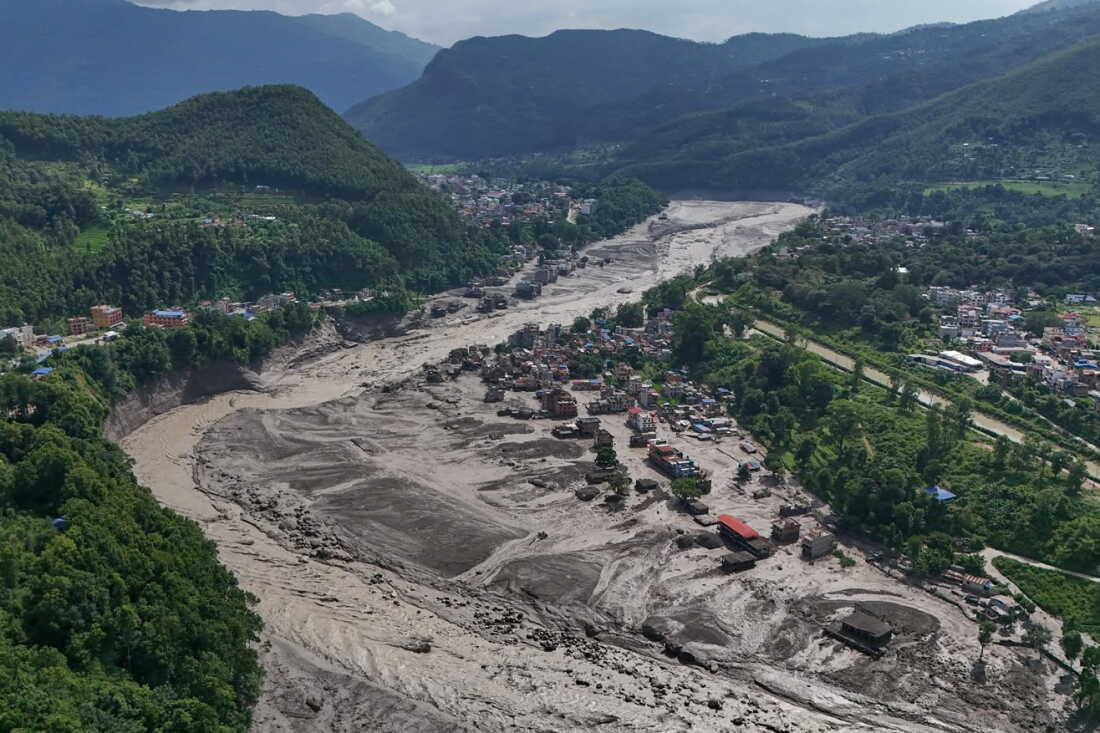
Nepal flash floods have turned a travel nightmare into a full-blown family emergency. As reports of missing Britons spread, the story is no longer just about severe weather – it is about the brittle machinery that is supposed to locate people when disaster strikes far from home. For families waiting in the UK, every unanswered call deepens the fear that a holiday, trek, or work trip has become a race against time. For governments, it is a reminder that climate-driven disasters are arriving faster, hitting harder, and overwhelming the systems built to respond. And for travelers, it is another blunt warning: the world’s most beautiful destinations can become the least forgiving when infrastructure fails.
- Families of missing Britons are now facing the worst part of any disaster: uncertainty.
- Nepal flash floods show how quickly weather events can outpace rescue and communication systems.
- Travelers need stronger contingency planning, offline contact options, and local emergency awareness.
- The crisis underscores a bigger trend: climate volatility is becoming a travel, safety, and policy problem at once.
Why the Nepal flash floods matter beyond one tragedy
The immediate human cost is obvious, but the larger lesson is harder to ignore. Nepal flash floods are not just a local disaster story. They sit at the intersection of climate risk, cross-border consular response, and the increasingly fragile assumption that modern travel is fully trackable. It is not. Once roads wash out, power drops, and mobile networks falter, the digital tools people depend on can vanish in minutes.
That matters because missing persons cases move on a different clock than news cycles. Families need verification, not vague assurances. Authorities need names, locations, and routes. Aid workers need access. And when a region is hit by fast-moving floods, even the best-intentioned response can be slowed by geography, weather, and basic lack of visibility.
When a disaster unfolds in a remote area, the first failure is often not rescue. It is information.
How Nepal flash floods complicate the search for missing Britons
In a case like this, the challenge is rarely one thing. It is a stack of failures. A remote trekking area may have limited cell coverage. Roads may be blocked by landslides. River levels can change so fast that rescue windows shrink by the hour. Local officials may be stretched thin, while foreign families are left trying to piece together fragments from social media, hotels, tour operators, and other travelers.
That is why the search for missing Britons becomes so difficult. In practical terms, a missing person report needs coordination across police, mountain rescue, consular teams, and local contacts. But if any one link is weak – poor route records, delayed check-ins, no GPS trail, no emergency contact details – the process slows dramatically.
The communication gap is the real bottleneck
Most travelers assume they can always be reached. That assumption collapses in disasters. Phones die. Roaming fails. Apps require data. Even location-sharing tools are only useful if they were active before the emergency. This is where the system tends to break: not in the moment of disaster, but in the moment of uncertainty afterward.
For families, the absence of hard information can be devastating. For responders, it can be operationally paralyzing. And for journalists and public officials, it creates a dangerous vacuum where rumor can travel faster than facts.
What this says about modern travel risk
There is a temptation to treat disasters like Nepal flash floods as rare exceptions. They are not. Extreme weather is becoming more frequent, more intense, and more disruptive to mobility. That changes what travel safety should mean. It is no longer enough to book the right hotel or carry travel insurance. Travelers need route awareness, evacuation planning, and a realistic sense of how quickly conditions can deteriorate.
That does not mean people should stop traveling. It means the travel industry, insurers, and governments need to stop pretending that old assumptions still hold. Remote tourism has expanded. So has demand for adventure travel. But rescue infrastructure has not scaled evenly, and climate volatility is making the gap more obvious with every season.
Adventure travel has always carried risk. Climate change is making that risk less predictable and less negotiable.
Why the missing Britons story resonates so strongly in the UK
When Britons go missing abroad, the story hits a nerve at home because it combines distance, helplessness, and bureaucracy. Families are often left navigating fragmented updates from consular officials while trying to understand whether silence means danger, delay, or simply bad connectivity. That emotional limbo is part of what makes these incidents so painful.
There is also a political dimension. Citizens expect their government to help, but consular support has limits. Officials can pressure local authorities, share information, and support relatives, yet they cannot dispatch a miracle team into blocked mountain roads. That gap between public expectation and operational reality is where frustration grows.
For ministers and emergency planners, incidents like this are a test of preparedness. Can the system quickly identify who is missing? Can embassies coordinate with local responders? Can families get timely, reliable updates? The answer is often uneven, and that is precisely the problem.
What travelers should learn from the Nepal flash floods
The harshest lesson here is also the simplest: if you travel in flood-prone, landslide-prone, or remote terrain, you need a plan that assumes normal communication may disappear. That sounds obvious until it is not. Many people still rely on a single phone, a single messaging app, and a vague promise to “check in later.” That is not a safety plan. It is a hope.
- Share a full itinerary with someone at home, including accommodation, transport, and expected return dates.
- Use multiple contact methods: phone, email, messaging apps, and a scheduled check-in window.
- Keep offline copies of passports, insurance, emergency numbers, and local addresses.
- Know the terrain: floodplains, river crossings, and valley routes can become dangerous very quickly.
- Register with your embassy if available, especially for extended or high-risk travel.
Those steps will not guarantee safety. But they can reduce the time it takes for authorities and relatives to understand what happened if something goes wrong.
The broader climate reality is now impossible to ignore
Disasters like Nepal flash floods are part of a larger pattern. Climate-driven extremes are forcing a rethink of how we build, insure, travel, and respond. The old model assumed that severe events were unusual enough to be treated as temporary disruptions. That model is breaking down. Now, floods can arrive with little warning, overwhelm drainage and transport infrastructure, and leave entire regions cut off before formal rescue plans fully activate.
That shift has consequences well beyond one country. It affects airline disruptions, trekking safety, tourism economies, and foreign policy capacity. It also raises uncomfortable questions about whether enough is being done to support local emergency systems in regions that carry a heavy tourism burden but limited resilience infrastructure.
Pro tip for the industry
Tour operators and hotels should stop treating emergency readiness as a back-office issue. Guest manifests, route tracking, evacuation contacts, and offline communication protocols should be standard, not optional. If an operator cannot account for its travelers after a flash flood, it has a business continuity problem and a reputational one.
What happens next
The next phase of this story will likely depend on three things: whether missing Britons are located, how quickly local and international teams can verify movements, and whether roads and communications can be restored enough to produce reliable information. In crises like this, updates often come slowly, then all at once. That is why patience is necessary, but passivity is not.
The bigger question is whether this incident will prompt any real change. Families need faster consular coordination. Travelers need better risk education. Operators need stronger emergency protocols. And governments need to accept that climate disasters are now a standing operational challenge, not an occasional exception.
If Nepal flash floods feel like one more distant headline, that is exactly the problem. The cost of ignoring these warnings is paid in hours of fear, days of confusion, and sometimes much worse. The missing Britons story is painful because it is personal. It is also a preview of what climate volatility does when it collides with global mobility. We are not just traveling more. We are traveling into systems that may not be ready for what happens when the weather turns violent.
The information provided in this article is for general informational purposes only. While we strive for accuracy, we make no guarantees about the completeness or reliability of the content. Always verify important information through official or multiple sources before making decisions.