New Caledonia Votes Back Into the Spotlight
New Caledonia Votes Back Into the Spotlight
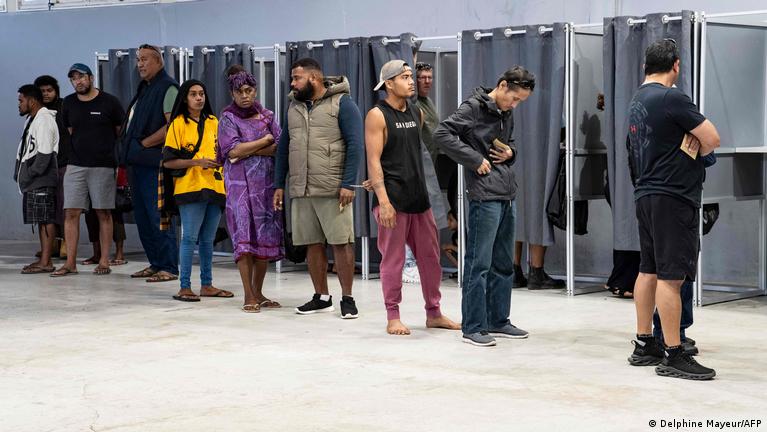
New Caledonia is back at a political crossroads, and this vote matters far beyond a single Pacific archipelago. After years of boycotts, unrest, and stalled legitimacy, the territory’s first local election since 2019 is being watched as a stress test for France’s colonial-era relationship with one of its most strategically sensitive territories. The stakes are not abstract. This is about who gets to govern, who feels represented, and whether the institutions that hold the territory together still command enough trust to survive another crisis. For Paris, the vote is a credibility test. For pro-independence groups, it is a chance to prove that political leverage still exists. For residents, it is a question of whether democracy can still function when the ground beneath it has been shaken this hard.
- The first local vote since 2019 is a legitimacy test for New Caledonia’s institutions.
- Paris faces pressure to show it can manage the territory without deepening mistrust.
- Pro-independence factions see an opening to regain political momentum.
- The result could influence security, negotiations, and the territory’s long-term status.
- New Caledonia remains a strategic flashpoint in France’s Pacific presence.
Why this New Caledonia local vote matters now
Any election can be a routine administrative event. This one is not. The New Caledonia local vote arrives after a period in which voting itself has become politically loaded, with turnout, participation, and representation all carrying symbolic weight. In a territory where the pro-independence and pro-France blocs have spent decades contesting not just policy but sovereignty, the mechanics of democracy are inseparable from the politics of identity.
The immediate question is simple: can local institutions still produce a result that people accept? The larger question is harsher: if they cannot, what comes next? That is why this ballot is being treated less like a municipal checkpoint and more like a referendum on the credibility of the post-crisis order.
Key insight: In New Caledonia, an election is never just about seats. It is about whether the political system itself is still seen as legitimate.
What changed after 2019
The gap since the last local vote has not been politically neutral. Years without a comparable ballot have hardened mistrust between communities and between local actors and the French state. When elections stop feeling like shared democratic rituals and start feeling like tactical battles, every step – registration, campaigning, turnout, validation – becomes contested terrain.
That matters because New Caledonia has long been governed through a delicate balance of power. The territory’s institutions were designed to create space for reconciliation, power-sharing, and gradual political resolution. But when participation fractures, those arrangements begin to look less like compromise and more like stalemate. The result is a legitimacy gap, and legitimacy gaps tend to widen during periods of economic anxiety and political uncertainty.
The legitimacy problem
Legitimacy is not a legal abstraction. It is the social permission that makes laws, budgets, and public services work. Without it, officials can still govern on paper, but they govern in a climate of suspicion. That is especially dangerous in a territory where political identity overlaps with questions of land, history, citizenship, and control over resources.
New Caledonia’s voting reboot therefore functions as a diagnostic tool. If turnout is meaningful and the result broadly accepted, it may help restore confidence. If not, it risks becoming another argument for why the system no longer reflects the people it claims to serve.
The New Caledonia local vote and France’s Pacific problem
France’s interest in New Caledonia is not just sentimental or constitutional. It is strategic. The territory sits in a region where geopolitical competition is intensifying, especially as major powers expand their diplomatic, economic, and security reach across the Pacific. For Paris, keeping New Caledonia stable is tied to retaining influence in a part of the world where presence matters.
That creates a difficult balancing act. The French government must avoid appearing heavy-handed, because that fuels accusations of colonial control. But it also cannot afford an outcome that suggests the territory is sliding out of governance. The ballot therefore operates as a message to multiple audiences: local voters, regional neighbors, and rival powers watching for signs of French weakness.
France has learned that managing overseas territory politics by force of procedure alone is risky. Elections can calm tensions, but they can also expose them. That is the trap here. A vote meant to normalize politics could instead surface the depth of the divide.
Why Paris is paying attention
Three things likely matter most to French officials:
- Whether participation is broad enough to confer legitimacy.
- Whether the result preserves a governable local balance.
- Whether the vote reduces, rather than reignites, the independence dispute.
If any of those fail, the aftermath could push Paris back into damage-control mode, with renewed pressure to reopen political talks under less favorable conditions.
What pro-independence groups are watching
For pro-independence forces, this election is about leverage. Even when outright victory is unlikely, strong performance can reshape bargaining power. That is especially true in systems where coalition politics and institutional legitimacy matter more than simple majorities. A credible showing can keep independence on the agenda and prevent the issue from being treated as settled by administrative inertia.
But there is a strategic downside too. If participation is uneven or the vote is fragmented, pro-independence groups risk looking divided or isolated. In a territory where optics matter as much as arithmetic, a poor showing can weaken the argument that the independence cause still represents a broad national movement rather than a durable but shrinking bloc.
Strategic reality: In contested territories, political momentum is often more important than raw vote share. Momentum can shape the next negotiation long before it changes the constitution.
How the vote could reshape the next phase
This election will not settle New Caledonia’s constitutional future on its own. But it could narrow the menu of viable next steps. A stable, widely recognized result could create room for incremental negotiations over autonomy, governance, and institutional reform. A contested result could do the opposite, hardening positions and making dialogue more difficult.
The territory has already seen how quickly political deadlock can spill into unrest. That is why this vote carries an unusually high consequence-to-event ratio. It is a local ballot with national implications, but also a symbolic rehearsal for whether the territory can still handle disagreement without collapse.
Possible outcomes and what they signal
There are several plausible readouts from the ballot:
- High turnout and broad acceptance: A sign that institutions still command enough trust to function.
- Low turnout: A warning that parts of the electorate no longer believe participation matters.
- Disputed results: A likely trigger for renewed political tension and calls for intervention.
- Fragmented mandates: A signal that coalition bargaining, not decisive settlement, remains the path forward.
None of these outcomes fully resolves the territory’s status question. But each one changes the negotiation climate in a meaningful way.
The security and economic backdrop
Politics in New Caledonia does not unfold in isolation. The territory’s economic dependence, especially around public spending, local employment, and strategic industries, means political instability quickly becomes a practical problem. When confidence drops, business investment slows, public administration becomes more defensive, and everyday life feels the pressure.
That is why the ballot matters for more than constitutional theorists. It matters for workers, local officials, investors, and families who need predictable governance. Even a small shift in political temperature can affect logistics, policing, tourism, and the broader sense of social order.
For a territory already burdened by distrust, the cost of a failed democratic moment can be high. Restoring confidence after unrest is always harder than preserving it before a crisis starts.
What to watch after the votes are counted
The most important part of this story may begin after election day. The real test is not only who wins, but how quickly the losers accept the result, how local institutions communicate the outcome, and whether the French state responds with restraint rather than triumphalism.
Watch for these indicators:
- Statements from both pro-independence and pro-France leaders about the result’s legitimacy.
- Any signs of turnout disputes or registration complaints.
- Whether Paris frames the vote as a democratic reset or a mandate for control.
- Whether future talks on the territory’s status are scheduled or delayed.
If the response is calm and procedural, the vote could become a reset point. If the response is combative, it may become evidence that the underlying conflict remains unresolved.
Why this matters beyond New Caledonia
New Caledonia is a local story with global lessons. It shows how colonial legacies linger inside modern democratic systems, how fragile legitimacy can become after prolonged political disputes, and how elections can both stabilize and expose a society. It also illustrates a broader truth that governments often miss: when people stop believing institutions are neutral, procedural fixes stop working.
That lesson travels. From overseas territories to contested borders, the mechanics of voting cannot substitute for political trust. Elections still matter, but only if enough people believe the outcome will be respected.
For now, New Caledonia’s first local vote since 2019 is a chance to see whether that trust can be rebuilt. The answer will shape not just one territory’s next chapter, but France’s ability to manage one of its most sensitive political relationships without losing control of the narrative – or the ground beneath it.
The information provided in this article is for general informational purposes only. While we strive for accuracy, we make no guarantees about the completeness or reliability of the content. Always verify important information through official or multiple sources before making decisions.