New Zealand and Cook Islands Forge a Defensive Future
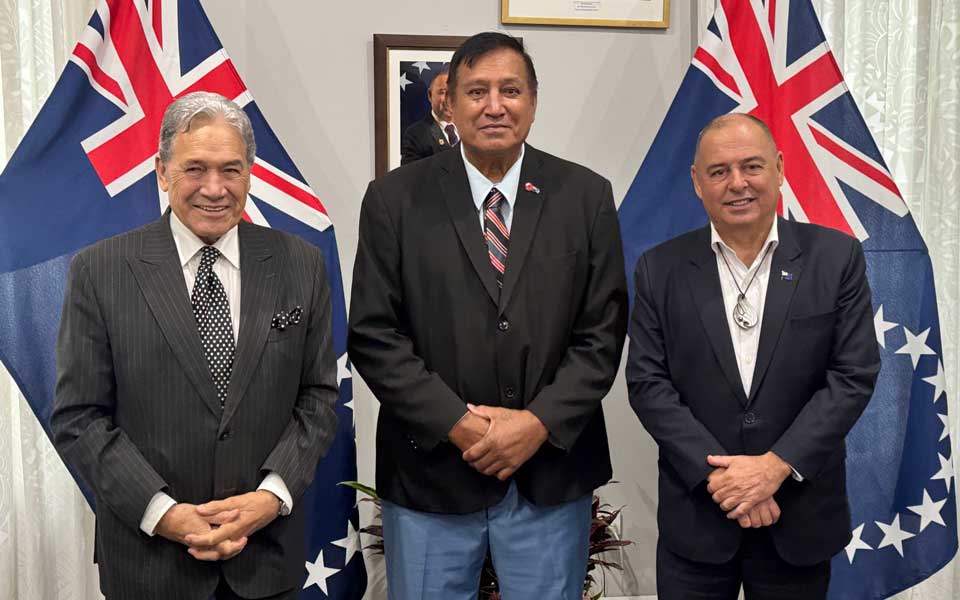
Pacific security just rewrote its own script. The New Zealand Cook Islands defense pact slips past headline noise, but it is a seismic shift: a compact that binds two partners to shared surveillance, climate resilience, and maritime vigilance at a time when the Pacific is becoming the hottest geopolitical theater on the planet. For island nations balancing tourism economies with blue-water risks, this deal signals a new model of sovereignty support that sidesteps great-power theatrics while sharpening the region’s own agency. The stakes: contested sea lanes, climate-driven displacement, and an urgent need to harden infrastructure before the next cyclone season turns strategic blind spots into national emergencies.
- New Zealand backs Cook Islands sovereignty through joint defense planning and maritime domain awareness.
- Expanded cooperation aims at climate resilience, cyber readiness, and disaster response.
- Deal positions Pacific partners to manage great-power competition on their own terms.
- Tourism-led economies get security assurances without sacrificing neutrality.
Why the New Zealand Cook Islands defense pact matters now
The compact arrives as Pacific nations juggle overlapping pressures: rising seas, fishing disputes, and the tug-of-war between larger powers. By integrating maritime domain awareness tools with local decision-making, Wellington and Rarotonga are betting that shared data can keep illegal fishing, grey-zone incursions, and disaster logistics under tighter control. This is not a headline-grabbing mutual defense treaty; it is a calibrated framework that strengthens maritime policing, crisis coordination, and infrastructure hardening without dragging the Cook Islands into alliance politics.
“If you can see your waters, you can secure your future. This pact is about turning visibility into sovereignty,” noted a regional security analyst.
Crucially, the pact reframes assistance. Rather than a donor-recipient dynamic, it aligns procurement, training, and exercises so that Cook Islands forces keep ownership of operational decisions. That subtle shift answers long-standing concerns about dependency and external influence.
Deep Dive: Capabilities, leverage, and regional impact
Maritime domain awareness is the fulcrum
Expect rapid scaling of coastal radars, satellite feeds, and AIS tracking. The pact likely funds shared operations centers where Cook Islands officers can fuse data from New Zealand assets with local reports. Better situational awareness raises the cost for illegal fishing fleets and deters unannounced transits by foreign survey vessels. With climate models predicting more severe cyclones, the same networks double as early-warning systems, turning defense dollars into resilience dividends.
Logistics and disaster response become dual-use strengths
Joint exercises will blend humanitarian assistance with security drills. Hardened airstrips, pre-positioned fuel, and interoperable communications are classic military enablers that also keep tourism lifelines open after storms. The compact incentivizes dual-use investments so that every dollar spent on runway reinforcement or satellite comms reduces both strategic and economic downtime.
Cyber readiness for small states
Tourism-reliant economies are prime ransomware targets. Embedding cyber hygiene, incident response playbooks, and shared threat intel transforms the pact into a digital shield. Standardizing zero-trust principles and backup protocols helps protect everything from customs systems to hospital networks, minimizing the domino effect a single breach can trigger across small populations.
Diplomatic signaling without over-commitment
By avoiding explicit mutual defense clauses, the agreement keeps the Cook Islands clear of hard alliance blocs. Yet it still telegraphs resolve to any actor testing Pacific norms. This calibrated ambiguity lets both partners cooperate with multiple players – from climate financiers to fisheries partners – while keeping decision authority local. It also frees New Zealand to act as a facilitator for broader Pacific security dialogues without overshadowing smaller states.
How sovereignty and economy intersect
The pact recognizes that sovereignty is not only a matter of territorial integrity but of economic continuity. Illegal fishing drains revenues; disrupted undersea cables paralyze commerce; closed ports stall tourism. By integrating port security training with financial continuity plans, the partners safeguard GDP alongside territorial waters. A resilient Cook Islands market benefits Wellington too, anchoring stable trade routes and trusted refueling points across the Pacific.
Pro tip: Design for interoperability, not dependency
Small forces should prioritize systems that can plug into multiple partners without locking into single-vendor ecosystems. Using open standards for data links and satellite imagery consumption keeps procurement agile and budgets under control. This approach also ensures that if geopolitical winds shift, the Cook Islands can still access critical situational awareness through alternative providers.
Risks, guardrails, and what to watch
Any defense pact in the Pacific carries risk. Over-militarization could spook tourists or be framed as escalation by larger powers. To counter that narrative, both governments must emphasize transparency: publish clear mission sets, maintain civilian oversight, and separate constabulary tasks from warfighting optics. Another risk is capability creep – sophisticated platforms can outpace local training pipelines. Building a phased roadmap for maintenance cycles, simulator access, and multilingual documentation will keep tools usable and safe.
“Capability without sustainment is a mirage. Invest in training and logistics before the next platform purchase,” advised a former naval planner.
Finally, climate shocks are the wild card. If severe weather accelerates, the pact will be stress-tested on airlift capacity, medical evacuation speed, and the resilience of coastal command hubs. Measuring performance in real disasters will reveal whether the compact is truly fit for purpose.
Future implications for the Pacific neighborhood
This agreement could become a template for other microstates seeking tailored security without surrendering autonomy. Expect interest from Tuvalu, Niue, and other partners watching how the New Zealand Cook Islands defense pact balances sovereignty with support. If successful, regional forums could standardize shared search-and-rescue corridors, pooled fuel reserves, and cyber incident reporting, creating a Pacific-first security lattice that reduces reliance on distant powers.
Economically, stabilized maritime zones attract sustainable investment in renewable energy and subsea connectivity. Politically, the pact may nudge larger actors to engage with more respect for local agency, avoiding zero-sum narratives. The Cook Islands now holds a stronger hand in negotiating fisheries limits, data cable routes, and climate finance because it can point to concrete capacity on the ground and at sea.
Bottom line
The pact is not a silver bullet, but it is a smart calibration of ambition and practicality. It knits together surveillance, cyber hygiene, and disaster readiness in a way that respects Cook Islands decision-making while giving New Zealand a more secure Pacific frontier. As great-power competition intensifies, deals like this show that small states can shape their own security pathways, turning proximity into partnership rather than vulnerability.
For readers tracking Pacific strategy, watch three indicators: joint exercise tempo, transparency of mission scopes, and sustained investment in training. If those stay healthy, this compact could become the most consequential – yet quietly executed – security upgrade in the South Pacific this decade.
The information provided in this article is for general informational purposes only. While we strive for accuracy, we make no guarantees about the completeness or reliability of the content. Always verify important information through official or multiple sources before making decisions.