Nvidia Rewrites Its China Chip Playbook
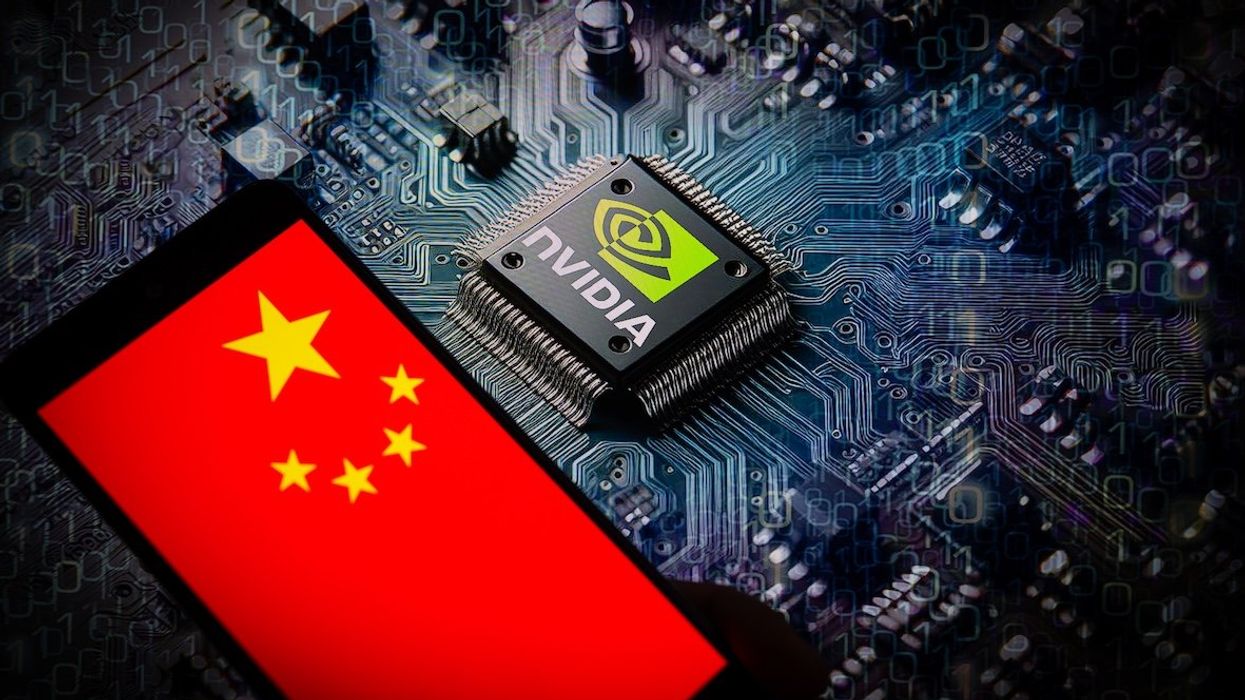
Nvidia China chips are no longer just a product story. They are a stress test for the entire AI economy. Every new export rule, every redesigned accelerator, and every policy signal from Washington or Beijing now lands directly on one of the most valuable companies in tech. For customers, investors, and rivals, the message is clear: the age of shipping the same top-tier silicon everywhere is over.
That matters because Nvidia sits at the center of the AI stack. When its path into China narrows, the shock hits cloud providers, model builders, supply chains, and governments trying to shape the next computing era. This is not a niche regulatory dispute. It is a preview of how global tech power will be divided: through product limits, licensing fights, and carefully engineered workarounds that try to preserve revenue without crossing political red lines.
- Nvidia China chips now sit at the intersection of AI demand and export control policy.
- The company is being pushed to design region-specific products with constrained performance.
- China remains too large a market to ignore, even as compliance risk rises.
- U.S. restrictions are reshaping competition, pricing, and the future of global chip supply.
- The bigger story is strategic: AI hardware is becoming a geopolitical instrument.
Why Nvidia China chips suddenly matter more than ever
Nvidia has spent years doing what dominant platform companies do best: turning technical leadership into an ecosystem advantage. Its GPUs became the default engine for AI training and increasingly for inference. But dominance looks different when governments begin treating advanced chips as strategic assets rather than normal commercial goods.
That is the core tension behind the latest Nvidia-China chapter. China is one of the largest technology markets on the planet, with hyperscalers, research labs, startups, and state-backed initiatives all hungry for AI compute. At the same time, the United States has become more aggressive about limiting China’s access to cutting-edge semiconductors that could accelerate military or strategic capabilities.
The result is a strange and revealing compromise. Nvidia cannot simply sell its most powerful products into China if they trip regulatory thresholds. So it has had to adjust. That means building chips that fit within export rules, altering performance characteristics, and managing a moving target where compliance today does not guarantee approval tomorrow.
The new semiconductor battlefield is not just about who can make the best chip. It is about who can still legally sell it, where, and in what form.
Nvidia China chips show how product design is becoming policy design
There was a time when chip roadmaps were driven mostly by performance, power efficiency, packaging, and manufacturing yield. Those factors still matter, but geopolitics has inserted a new design constraint into the process. For Nvidia, access to China may now depend on how precisely it can tune bandwidth, interconnect capability, and throughput to remain inside regulatory boundaries.
That shift is bigger than one company. It suggests a future where global technology products are no longer universal. Instead, they may exist in multiple politically acceptable variants: one for unrestricted markets, one for tightly regulated destinations, and perhaps others tailored to local industrial policy.
Performance ceilings are now a business variable
For Nvidia, this creates a difficult balancing act. A China-compliant chip must be powerful enough to attract buyers but constrained enough to satisfy regulators. That sounds simple until you remember how AI customers actually buy infrastructure. They care about cluster efficiency, software compatibility, networking, scalability, and total cost of ownership, not just a neat spec sheet.
If a restricted chip loses too much capability, customers may accept lower productivity, redesign workloads, or look elsewhere. If it is too close to unrestricted performance, it risks triggering new government scrutiny. Nvidia is effectively optimizing around a variable that used to belong to diplomats, not engineers.
Ecosystem lock-in still gives Nvidia leverage
Even with reduced-performance products, Nvidia enters China with major advantages. Its CUDA software ecosystem, developer familiarity, tooling maturity, and broad support across AI frameworks remain powerful. Customers do not switch hardware stacks lightly, especially when model training and deployment are already built around Nvidia workflows.
That means a China-specific chip does not need to be perfect to be commercially viable. It needs to be good enough to keep customers inside the Nvidia orbit. In practical terms, that can preserve market share while buying time against domestic Chinese challengers that are still scaling software ecosystems of their own.
The business risk is obvious and the strategic risk is even bigger
On paper, the near-term issue is revenue. China is too significant a market for Nvidia to abandon voluntarily. Any restriction that blocks shipments of high-demand products can affect sales, inventory planning, channel relationships, and investor expectations. Even if the company successfully launches compliant replacements, there is often friction: delays, uncertainty, and customer hesitation.
But the long-term strategic threat may be more severe. Every barrier that keeps top-tier Nvidia hardware out of China creates an incentive for China to accelerate domestic alternatives. That does not mean Nvidia loses overnight. The company still benefits from years of technical and software leadership. Still, policy pressure can do what ordinary market competition often cannot: force a parallel ecosystem into existence.
This is the classic unintended consequence problem. Restrictions can slow access to elite foreign chips, but they can also channel funding, urgency, and national resolve into local substitutes. Over time, that can produce a more resilient competitor base than the market would have created on its own.
Investors should watch the replacement cycle carefully
One underappreciated angle is timing. AI infrastructure buyers do not make decisions in a vacuum. If they believe current Nvidia China chips could be superseded by a new compliant model, they may delay purchases. If they fear future rules could tighten again, they may front-load orders. This creates a distorted buying pattern that can make demand signals noisy.
For Nvidia, that means execution matters as much as policy. The company must reassure customers that its China strategy is durable enough to support long-term deployments. Without that confidence, even technically acceptable products can struggle to gain momentum.
Why this matters far beyond Nvidia
The semiconductor industry has become the clearest example of how global trade is fragmenting without fully breaking apart. Companies still want access to large markets. Governments still want domestic strength and strategic control. Those two goals increasingly collide at the level of product architecture.
Nvidia’s position makes the contradiction impossible to ignore. It is both a private company chasing growth and a critical supplier in a market now shaped by national security logic. That dual role means its decisions carry implications for:
- Cloud providers: They must plan AI capacity around hardware availability and regulatory uncertainty.
- Startups: They may face higher costs or weaker infrastructure in markets with tighter controls.
- Enterprise buyers: They need confidence that their AI hardware roadmap will not be disrupted by policy shifts.
- Rival chipmakers: They gain openings where Nvidia faces shipping constraints.
- Governments: They see how deeply AI leadership now depends on access to advanced compute.
AI competition is starting to look less like a software race and more like an industrial capacity contest wrapped in export law.
What Nvidia China chips tell us about the next phase of the AI race
The first phase of the AI boom was defined by raw acceleration: bigger models, larger clusters, faster procurement, and extraordinary demand for GPUs. The next phase is going to be more political. Access, compliance, geography, and supply-chain resilience will shape winners almost as much as model quality.
Nvidia remains exceptionally well positioned because it still sets the pace in high-performance AI hardware. But the company is no longer operating in a purely commercial arena. Every regional product decision now doubles as a strategic signal. Can it preserve growth in China without provoking further restrictions? Can it maintain premium positioning if region-specific products become the norm? Can it keep software leadership intact even if hardware segmentation deepens?
Those are not hypothetical questions. They are becoming operating realities for the whole sector.
Pro tip for enterprise tech leaders
If your AI roadmap depends on a single hardware vendor or a single geography, this is the moment to reassess. Build around portability where possible. Keep an eye on support for multiple back ends, model optimization layers, and procurement flexibility. In practical terms, that means asking harder questions about compatibility, deployment targets, and vendor risk.
At the infrastructure level, teams should think in terms of contingency planning:
- Validate whether critical workloads can be tuned for more than one accelerator class.
- Track software dependencies tied to
CUDAor vendor-specific libraries. - Model procurement scenarios where lead times or export rules suddenly change.
- Document which workloads require top-end training hardware versus lower-tier inference hardware.
The likely endgame is not decoupling but controlled separation
Despite the rhetoric, a total break is unlikely in the near term. The more realistic scenario is controlled separation: selective restrictions on the highest-end capabilities, continued trade in compliant products, and ongoing pressure for localized supply chains. Nvidia China chips fit that pattern almost perfectly. They are evidence that the market still wants connection, but only inside tighter strategic boundaries.
That has consequences for everyone. It means more specialized SKUs, more policy forecasting, more legal review inside engineering cycles, and more regional asymmetry in AI capabilities. It also means the old assumption that the best technology naturally spreads everywhere is no longer safe.
For Nvidia, this is survivable, and perhaps even manageable, as long as it can keep designing products that preserve enough value for customers while satisfying regulators. But there is no easy equilibrium here. The rules can change. Competitors can close gaps. Political tolerance can narrow quickly if AI becomes even more central to military and economic competition.
The smartest reading of the moment is not that Nvidia is losing China or beating the restrictions. It is that the company is being forced to invent a third path: compliant enough for policy, compelling enough for customers, and flexible enough to withstand another turn of the geopolitical screw.
That is a hard playbook to run. It may also become the default playbook for global tech.
The information provided in this article is for general informational purposes only. While we strive for accuracy, we make no guarantees about the completeness or reliability of the content. Always verify important information through official or multiple sources before making decisions.