Pakistan and China Pitch a Five Part Peace Play for the Middle East
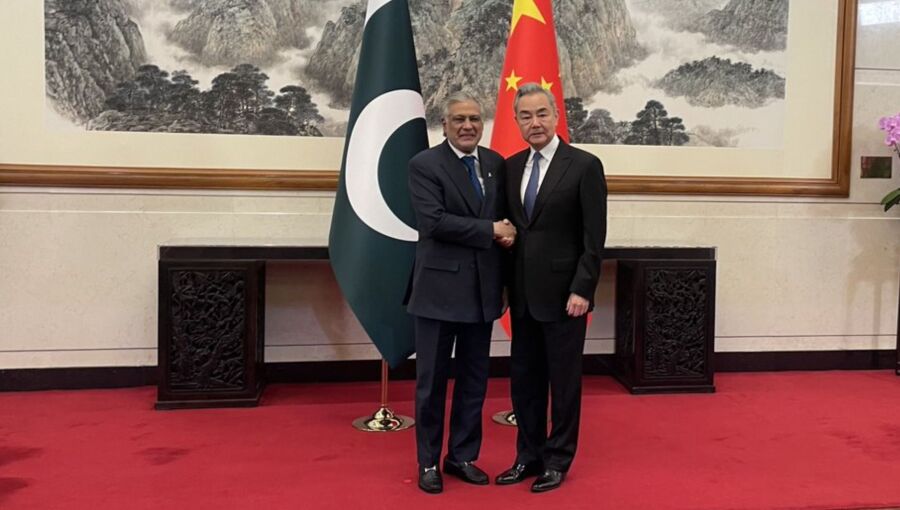
Pakistan and China Pitch a Five Part Peace Play for the Middle East
The Pakistan China five-part peace plan lands like a shot across the bow of traditional power brokers: a bid to rewrite the rules of Middle East peacemaking and prove that Beijing and Islamabad can shepherd stability where Washington has long dominated. The timing is deliberate, arriving as energy routes remain fragile, Gaza reconstruction stalls, and Gulf capitals hedge between great powers. For readers tracking the global shift from unipolar to multipolar influence, this proposal is less about lofty diplomacy and more about testing whether alternative alignments can deliver results in a region where every promise comes with a price.
- Five-pronged roadmap mixes ceasefire, aid, and security guarantees to court regional buy-in.
- Beijing and Islamabad frame themselves as pragmatic problem-solvers rather than ideologues.
- Plan challenges Western mediation patterns while courting Gulf economic interests.
- Success hinges on verifiable enforcement mechanisms and balanced incentives.
Why the Pakistan China Five Part Peace Plan Matters Now
The Middle East remains the nerve center of global energy logistics, critical minerals transit, and maritime chokepoints. A plan co-authored by Islamabad and Beijing signals two things: first, that China is ready to operationalize its Global Security Initiative beyond rhetoric; second, that Pakistan is betting its diplomatic capital to climb out of economic dependency by acting as a regional broker. Both nations sense a vacuum created by Western fatigue and regional distrust toward single-sponsor deals. The five-part design promises to stitch together ceasefire enforcement, reconstruction financing, maritime security, political dialogue, and refugee relief into one package, aiming to reduce the fragmentation that doomed previous accords.
Key insight: The proposal is as much a stress test of multipolar diplomacy as it is a humanitarian lifeline.
Multipolar Momentum and Strategic Signaling
Beijing has already brokered surprise rapprochements, such as the Saudi-Iran thaw, which recalibrated expectations for who gets to convene peace. By co-branding this initiative with Islamabad, China gains a regional translator familiar with Gulf security anxieties and South Asian threat perceptions. Islamabad, meanwhile, leverages its military-to-military relationships with Gulf states and its credibility with both Western and Eastern partners to position itself as a necessary intermediary. The plan’s success would validate a new playbook where coalitions outside the traditional quartet can set agendas.
Energy Corridors and Supply Chain Stakes
The CPEC and Belt and Road arteries intersect with Middle Eastern ports and pipelines. A stable corridor from the Gulf to the Arabian Sea would reduce insurance premiums on shipping, harden supply chains against Red Sea disruptions, and accelerate green-transition investments in hydrogen hubs. Pakistan’s role as a coastal gateway and China’s appetite for diversified energy routes make peace not just a moral imperative but a logistical necessity. If the plan locks in maritime guarantees and deconflicts contested lanes, expect freight costs to tighten and capital expenditure to flow faster into port upgrades.
Breaking Down the Five Pillars
The Pakistan China five-part peace plan is packaged as a single roadmap but operates like modular layers. Each pillar attempts to solve a discrete friction point that historically derailed negotiations.
Pillar 1: Verified Ceasefire and Monitoring Grid
The first pillar calls for an immediate ceasefire backed by a hybrid monitoring regime combining satellite ISR, neutral observers, and on-the-ground liaisons. Instead of relying solely on UN peacekeepers, the proposal hints at a pooled mechanism where Gulf states fund sensors while neutral Asian states supply personnel. Enforcement depends on transparent data-sharing protocols and public incident dashboards to deter violations.
Test to watch: Will parties accept machine-verified evidence as binding, or demand human adjudication?
Pillar 2: Humanitarian Surge with Conditionality
Reconstruction and aid corridors are framed as performance-linked: compliance with ceasefire terms unlocks phased disbursements. China’s development banks could underwrite infrastructure tranches, while Pakistan shepherds delivery logistics through its relief command experience. The plan suggests ring-fencing funds in escrow, released via smart contracts to reduce diversion risks.
Pillar 3: Maritime and Critical Infrastructure Security
To stabilize the Red Sea and Eastern Med lanes, the plan proposes a joint maritime security task force with defined rules of engagement and shared AIS transparency. Fiber backbones, power grids, and desalination plants are earmarked as protected assets. The goal is to shield trade flows from spillover attacks and piracy spikes that typically shadow ground conflicts.
Pillar 4: Political Dialogue with Regional Guarantors
Rather than a single summit, the fourth pillar outlines rotating dialogues hosted by neutral capitals, possibly Doha, Muscat, or Islamabad. Regional guarantors – potentially including Turkey, Egypt, and Gulf states – would co-sign interim agreements. The design minimizes single-point failure by distributing responsibility across multiple sponsors. It also gives stakeholders skin in the game to pressure proxies and keep channels open.
Pillar 5: Refugee Relief, Returns, and Economic Reintegration
The final pillar targets displacement cycles that destabilize neighbors. It proposes an integrated registry for refugees, joint vetting for returns, and economic reintegration credits funded by a multilateral pool. Pakistan’s own experience managing Afghan refugee flows informs the framework, while China’s industrial zones could absorb labor through special employment visas tied to reconstruction projects.
Strengths: Where the Plan Hits Different
Unlike Western-centric roadmaps that front-load political solutions and back-load funding, this plan sequences money and security alongside politics from day one. The emphasis on verifiable monitoring, escrow-backed aid, and distributed guarantors addresses three recurring failure points: trust deficits, corruption leaks, and sponsor fatigue. Moreover, Beijing’s financial muscle combined with Islamabad’s security networks creates a complementary toolkit – one writes checks, the other operates checkpoints.
Editorial stance: This is less a peace plan and more a systems architecture pitch, betting that better instrumentation and incentives can outrun mistrust.
Tech-Led Transparency
Embedding open telemetry for ceasefire verification could normalize real-time compliance data. If dashboards are accessible to media and civil society, it raises the political cost of violations and pressures commanders to adhere. The plan’s technology-forward posture signals a move away from opaque backroom monitoring toward observable, auditable processes.
Economic Hooks and Conditional Aid
By tying disbursements to measurable milestones – verified calm, corridor uptime, school and clinic reopenings – the plan uses money as leverage for peace rather than a post-conflict reward. This approach could attract Gulf sovereign funds seeking both stability and returns, making peace a co-investment rather than a charity expense.
Weaknesses: Friction Points and Red Flags
No plan survives first contact with political reality. Three vulnerabilities stand out.
Enforcement Without Teeth
Monitoring does not equal enforcement. The proposal is light on punitive measures if parties violate terms. Without a credible threat of sanctions, airspace denials, or asset freezes, violators may treat dashboards as mere PR. The plan needs a graduated response matrix to deter backsliding.
Trust in Sponsors
Parties may question whether China and Pakistan are neutral. Beijing’s close ties with Iran and growing influence with Gulf states could create perceptions of bias. Islamabad’s own security entanglements and domestic pressures may erode its mediator credentials. Perception management – public transparency on funding flows and decision-making – will be critical.
Coordination Overload
Distributed guarantors reduce single-point failure but risk bureaucratic gridlock. The plan must specify decision timelines, quorum rules, and escalation paths. Without that, fast-moving crises could outrun slow consensus.
Why This Matters for Regional Players
For Gulf states, the plan offers a hedge: a pathway to de-escalation that does not depend on Washington’s bandwidth. For Israel and Palestinian factions, it introduces a new arbiter offering infrastructure carrots alongside security asks. For Iran, participation could legitimize its role while securing assurances against maritime threats. For the United States and Europe, it is a wake-up call that alternative mediation channels are maturing, potentially diluting Western leverage over sanctions relief and arms flows.
Impact on Energy and Logistics
Stabilizing trade corridors could shave insurance premiums, accelerate LNG shipments, and reopen underused ports. Investors eyeing green hydrogen projects in the Gulf and North Africa would benefit from predictable security. Conversely, a failed plan could widen risk spreads and drive capital to safer corridors, benefiting competitors like Mediterranean transshipment hubs.
Scenario Analysis: Best Case vs Worst Case
Best case: Ceasefire holds under verifiable monitoring, escrow funds unlock phased reconstruction, maritime incidents decline, and political dialogues produce incremental concessions. China and Pakistan gain diplomatic prestige, proving multipolar mediation can deliver. Worst case: Monitoring data is disputed, aid stalls, maritime tensions spike, and sponsors retreat. The reputational damage would chill future non-Western interventions and reinforce skepticism about tech-led oversight.
Pro Tips for Policymakers
- Demand a public
response matrixfor violations to ensure monitoring has bite. - Insist on third-party auditing of escrow releases to prevent politicized funding freezes.
- Co-locate humanitarian logistics hubs with
maritime domain awarenesscenters to speed crisis response. - Use rotating chairs for dialogue forums to prevent venue fatigue and perceived bias.
What Success Would Signal for Multipolar Diplomacy
If this plan gains traction, it will validate a model where non-Western coalitions use financial leverage, security know-how, and tech transparency to broker peace. It could inspire similar frameworks in the Horn of Africa or Central Asia, where China and regional partners have stakes in corridor security. It would also pressure Western institutions to modernize their own playbooks with better instrumentation and conditional aid models.
Future cue: Expect more peace bids that look like product roadmaps: modular, data-rich, and tied to capital flows.
Bottom Line
The Pakistan China five-part peace plan is an audacious attempt to fuse ceasefire mechanics, funding, and logistics into a single operating system for the Middle East. Its promise lies in verifiable monitoring and aligned incentives; its peril sits in enforcement gaps and trust deficits. Whether it sticks will determine not just the region’s near-term stability but the credibility of multipolar diplomacy as a viable alternative to legacy mediation.
The information provided in this article is for general informational purposes only. While we strive for accuracy, we make no guarantees about the completeness or reliability of the content. Always verify important information through official or multiple sources before making decisions.