Philippines School Shooting Exposes a Security Crisis
Philippines School Shooting Exposes a Security Crisis
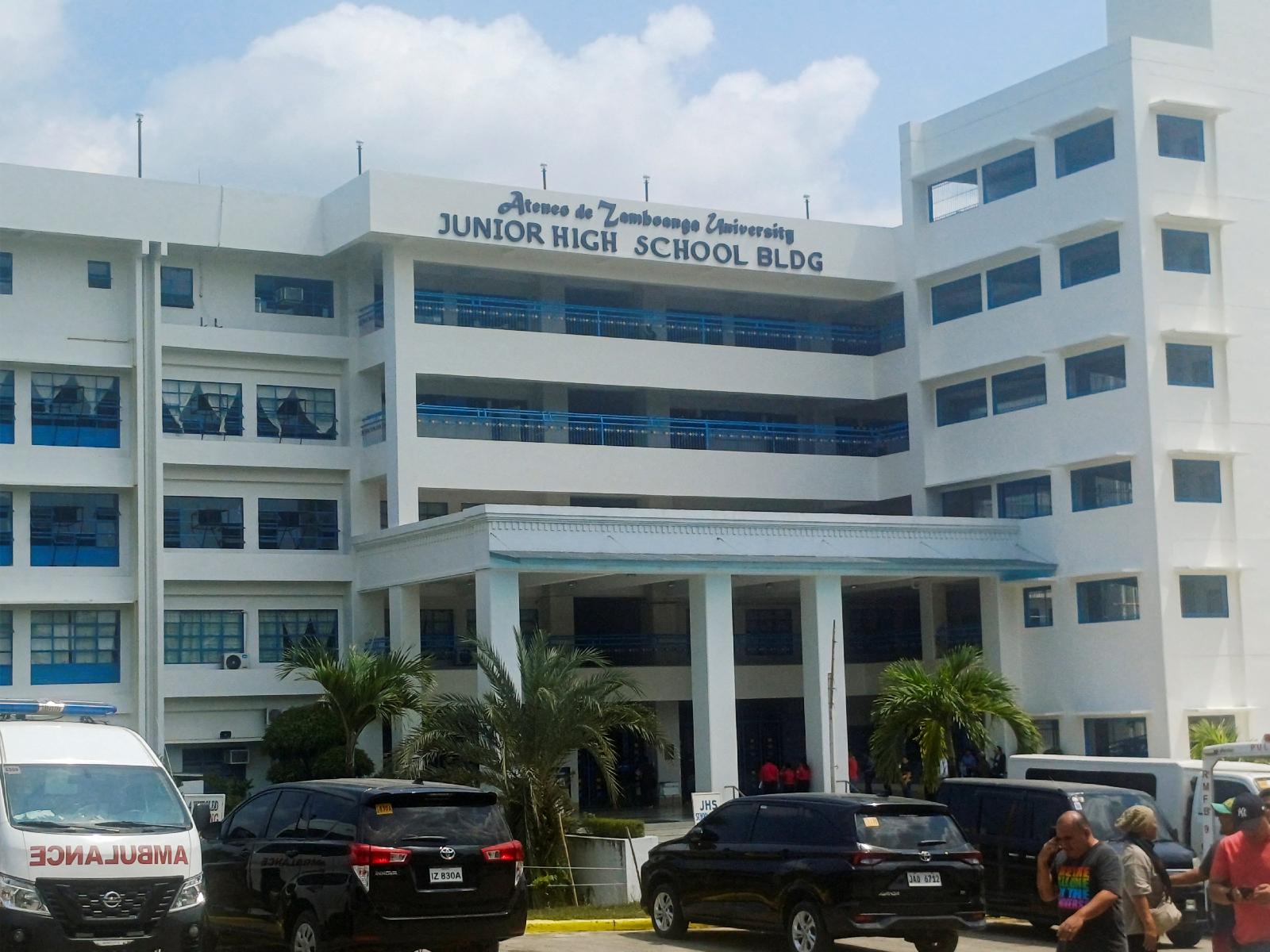
A school should be the one place where panic has nowhere to hide. Instead, the Philippines school shooting in Zamboanga has forced a brutal conversation about how fragile campus safety can be when weapons, weak perimeter controls, and institutional blind spots collide. Two people dead is not just a headline. It is a failure signal. It tells families that the systems meant to protect students, teachers, and staff are being outpaced by real-world threats. And in a country already wrestling with urban crime, political volatility, and uneven public security, this tragedy lands as more than an isolated shock. It raises the kind of questions no education system wants to answer: Who got in? Why was there no stopgap? And what has to change before another school becomes the next site of grief?
- Two fatalities in Zamboanga have turned a local tragedy into a national security warning.
- The Philippines school shooting raises hard questions about perimeter security, access control, and emergency readiness.
- School safety is no longer just an education issue – it is a public policy and governance problem.
- Prevention now depends on layered defenses, faster reporting, and tighter coordination between schools and law enforcement.
- The political pressure from this case could accelerate reforms that have been delayed for years.
Why the Philippines school shooting matters now
This is not simply about one campus in one city. The Philippines school shooting matters because it exposes how quickly a local incident can reveal national vulnerabilities. Schools are supposed to be low-risk environments, but that assumption collapses when access control is inconsistent and threat detection is reactive instead of preventive. Zamboanga, a city with its own long history of security challenges, is now the latest reminder that institutions can be caught flat-footed even when the warning signs are obvious in retrospect.
The bigger issue is that schools are often designed around openness, not resilience. That works fine until it does not. Once violence reaches a campus, every weak link becomes visible: gates that are easy to bypass, guards who are undertrained, delayed communication, and response plans that look good on paper but fail in the first five minutes. The cost of those gaps is measured in lives, not policy memos.
What the incident reveals about campus vulnerability
Security at the perimeter still decides too much
In many schools, security is still treated like a box-ticking exercise rather than a layered system. A perimeter gate, a sign-in sheet, maybe one guard near the entrance – these are not enough when intent turns violent. The Philippines school shooting underlines a basic truth: if access points are predictable and screening is weak, a campus is exposed long before anyone hears gunfire.
That is why modern school security depends on multiple layers working together. Physical barriers matter, but so do visitor protocols, surveillance coverage, emergency radios, and clear communication channels. The problem is not that schools lack ideas. The problem is execution, funding, and consistency. Too many institutions rely on the hope that nothing bad will happen today.
Expert insight: The best school security systems do not try to make violence impossible. They try to make intrusion slower, more visible, and easier to interrupt.
Emergency response is only as strong as the first minute
When violence breaks out on a campus, the first minute matters more than almost anything else. Staff need to know whether to lock down, evacuate, or shelter in place. Students need clear instructions. Local responders need accurate information fast. If any one of those links breaks, the risk multiplies. A delayed call or a confused announcement can turn a controllable crisis into a catastrophic one.
That is why drills are not bureaucratic theater. Done properly, they build muscle memory. They help staff recognize the difference between noise and danger, and they reduce the chance of improvisation under pressure. Yet many schools still treat emergency planning as seasonal paperwork instead of operational readiness. The Philippines school shooting should end that habit.
Security lessons schools can use right away
The hard part is that schools cannot wait for a sweeping national fix before making practical changes. There are immediate steps that can reduce risk without turning campuses into fortresses. The goal is balance: keep schools open, but make them harder to exploit.
- Lock down access points: Limit entry to a single monitored gate where possible, and keep all other doors secured during school hours.
- Upgrade visitor controls: Require visible identification, pre-registration, and staff escort policies for non-students.
- Train for fast decisions: Give teachers and administrators clear protocols for lockdowns, evacuations, and communication.
- Test communication tools: Use reliable
SMS, loudspeakers, radios, and parent alert systems that can function during panic. - Review incident logs: Treat suspicious behavior reports as data, not anecdotes, and look for repeat patterns.
These measures are not glamorous, but they are effective because they reduce ambiguity. In a crisis, ambiguity is deadly. Schools that practice procedures, maintain equipment, and refine response plans are simply better prepared than those that assume goodwill will do the job.
Philippines school shooting and the gun access question
No serious discussion of the Philippines school shooting can avoid the subject of access to firearms. Whenever a school shooting occurs, the conversation quickly moves from the scene itself to the pipeline that made the attack possible. How did the weapon enter the picture? Was it legally owned, stolen, or trafficked? Were there warning signs before the attack? Those answers matter because they determine whether a tragedy is a singular criminal act or part of a broader systemic failure.
The Philippines has long faced the complicated mix that plagues many countries: uneven enforcement, black-market circulation, and the challenge of keeping weapons out of the wrong hands without creating loopholes that are easy to exploit. Any meaningful response has to go beyond outrage. It needs tighter tracking, better enforcement, and a serious look at how guns move between private ownership, criminal networks, and everyday environments like schools.
Key point: Security reforms that ignore gun access are incomplete. Measures that ignore campus protection are equally incomplete. The threat sits at the intersection of both.
Why this matters beyond Zamboanga
Events like the Philippines school shooting have a way of reshaping national expectations. Parents begin asking harder questions about school safety. Teachers start requesting clearer protocols. Administrators face pressure to justify security budgets they may have delayed for years. And policymakers, if they are paying attention, recognize that public trust in schools depends on more than test scores and classroom capacity.
This is also a governance story. When an attack happens in a school, the public wants to know whether warnings were ignored, whether officials were prepared, and whether the response was coordinated. If the answer is no, the fallout does not stay local. It spreads through the education system and into politics. That is how one shooting becomes a referendum on competence.
There is also a psychological layer that is easy to overlook. Students who witness or hear about school violence do not simply resume normal routines the next day. Anxiety lingers. Attendance can dip. Teachers carry the emotional burden too. Trauma is not an abstract externality – it becomes part of the learning environment.
The policy response needs to be broader than punishment
After tragedies like this, officials often default to two instinctive responses: promise tougher law enforcement and call for harsher penalties. Both may be necessary, but neither is sufficient. Prevention requires a broader model that includes threat assessment, mental health support, controlled access, and credible reporting channels for students and staff.
A stronger approach would include:
- School-based threat assessment teams that can flag escalating behavior early.
- Stronger coordination between education departments and local police.
- Funding for cameras, lighting, and controlled access infrastructure.
- Anonymous reporting systems that students trust and actually use.
- Training for principals and teachers on crisis communication and de-escalation.
None of this eliminates risk entirely. But it lowers the odds that warning signs go unnoticed until it is too late. The Philippines school shooting makes clear that reactive policy is a losing strategy. Security built after the fact is always more expensive than security built in advance.
The likely fallout and what to watch next
Expect three things to happen next. First, public pressure will build for a transparent account of how the attack unfolded. Second, schools across the Philippines will likely face renewed scrutiny over their own safety practices. Third, lawmakers may use the case to push changes in weapon regulation, campus security funding, or emergency preparedness standards.
The real test, though, will be follow-through. Tragedies often trigger intense short-term attention and weak long-term reform. Once the cameras leave, institutions revert to old habits unless there is sustained accountability. If this case leads only to condolences and symbolic gestures, the system will remain just as vulnerable.
The better outcome would be uncomfortable but useful: a national reckoning that treats school safety as essential infrastructure. Not optional. Not seasonal. Not a luxury for wealthy districts. Essential.
How schools can prepare without becoming prisons
One of the most common fears around school security reform is overcorrection. Nobody wants students to feel like they are entering a checkpoint instead of a classroom. That concern is valid. Over-securitization can damage trust, create fear, and make schools feel hostile.
But that is not an argument against safety. It is an argument for smart design. The goal is to make violence harder to execute without making daily life miserable. That means using visible but not oppressive safeguards, training staff well, and keeping students informed without alarming them.
Schools that get this right usually share a few traits: clear rules, consistent enforcement, good communication, and a willingness to update procedures based on real-world risks. They understand that prevention is not a single tool. It is a culture.
Final take
The Philippines school shooting in Zamboanga is a grim reminder that schools are only as safe as the systems surrounding them. When those systems fail, the consequences are immediate and irreversible. The lesson here is not that schools should close themselves off from the world. It is that openness without preparation is a liability. If the tragedy leads to smarter campus security, stronger coordination, and more serious gun-control enforcement, some good may still emerge from the damage. If not, this will be remembered as another warning that was heard too late.
The information provided in this article is for general informational purposes only. While we strive for accuracy, we make no guarantees about the completeness or reliability of the content. Always verify important information through official or multiple sources before making decisions.