Rafah offensive reshapes Gaza ceasefire calculus
Rafah offensive reshapes Gaza ceasefire calculus
The Rafah offensive has become the hinge on which Gaza’s fate swings. As Israeli armor pushes deeper into the enclave’s southern edge, the operation is sold as the final blow against Hamas, yet it simultaneously torpedoes the fragile ceasefire choreography Washington has spent months engineering. Civilians are boxed into ever smaller patches of land, aid trucks crawl through a single gate, and regional capitals scramble to contain spillover. The stakes are stark: whether the war ends with a negotiated release of hostages and a pathway to reconstruction, or spirals into open-ended occupation and a humanitarian collapse that hardens every actor’s position.
- Israeli advances in
Rafahrisk collapsing ceasefire talks even as they aim to uproot Hamas battalions. - Humanitarian corridors remain constricted, leaving relief agencies warning of systemic famine and disease.
- US pressure intensifies, but leverage is limited while weapons shipments continue.
- Regional players fear escalation that could drag Lebanon, Egypt, and the Gulf into a wider crisis.
Rafah offensive: the battlefield math
Israel frames the Rafah offensive as the necessary endgame to destroy remaining Hamas brigades and degrade the group’s tunnel network. Tanks and bulldozers inch through dense neighborhoods where militants embed among civilians, raising the probability of mass casualties. Military analysts note the IDF is relying on precision airstrikes paired with incremental ground pushes to minimize losses, but in a city packed with displaced families that tactic still shreds apartment blocks and schools. Each strike reverberates through the diplomatic track: images of flattened shelters push mediators to demand pauses, while Israeli leaders argue that momentum cannot be ceded to a group they deem irredeemably violent.
Key insight: Every kilometer taken in Rafah narrows the negotiation space, because Hamas interprets territorial loss as proof that time is not on its side, while Israel reads it as validation that force works faster than diplomacy.
Strategically, seizing Rafah also grants Israel control of the Philadelphi Corridor, the narrow strip along Egypt that has long served as a smuggling artery. Cutting that pipeline weakens Hamas financially and militarily, but it also hands Israel a quasi-permanent lever over Gaza’s borders, complicating any future handover to Palestinian authorities or an international force. That is the core contradiction: a military success that could make a political settlement harder.
Humanitarian choke points and the cost to civilians
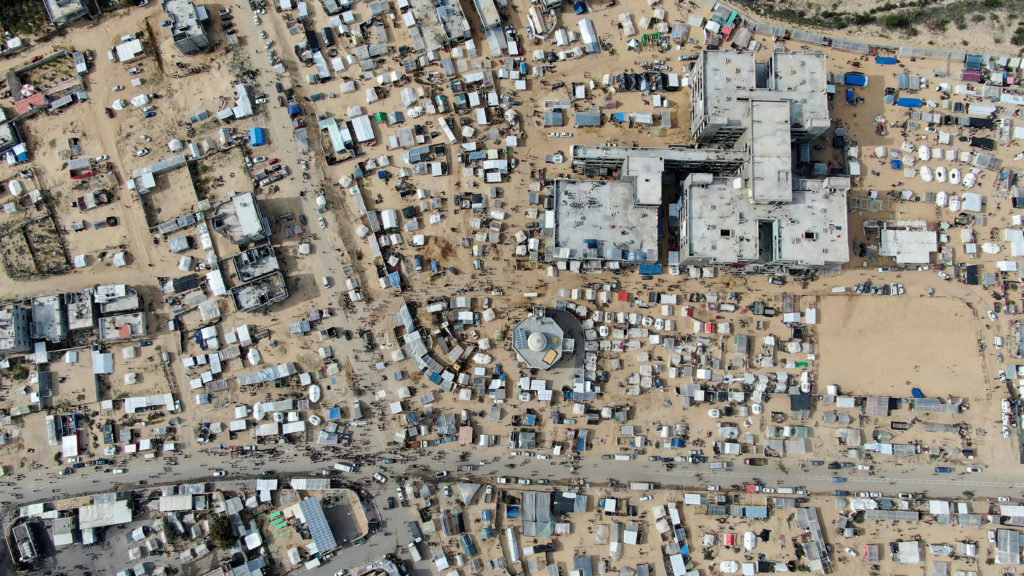
Rafah was once the last relative refuge for more than a million displaced Gazans. The current operation has pushed families northward into makeshift camps lacking sanitation, water, and medical care. Relief agencies warn that cholera and other waterborne diseases could spiral as summer heat intensifies. The Kerem Shalom crossing, intermittently opened, cannot replace the capacity of the Rafah gate, leaving aid convoys queued on the Egyptian side while fuel shortages cripple hospital generators. When fuel runs low, incubators fail, desalination plants shut down, and food distribution grinds to a halt.
The humanitarian calculus also shapes political outcomes. A worsening crisis amplifies international calls for arms embargoes and legal scrutiny at The Hague. Israel risks being cast not just as a military actor but as a custodian of an occupied population it struggles to supply. Hamas, conversely, leverages the suffering as proof that only resistance can extract concessions. Civilians pay twice: first in the blast radius, and again as bargaining chips.
Ceasefire diplomacy caught in crossfire
Negotiators juggling prisoner swaps, phased withdrawals, and guarantees for Gaza’s governance now operate with shrinking room. The Rafah offensive changes incentives: Hamas is less likely to release hostages without ironclad guarantees that troops will pull back, while Israel will not ease pressure without concrete timelines for disarmament. Mediators from Egypt, Qatar, and the US float sequenced proposals – partial pauses, staggered releases, monitored corridors – but each draft is overtaken by battlefield developments.
Editorial stance: The war logic and the negotiation logic are colliding, and leaders on both sides are failing to choose a lane. The result is maximalist rhetoric paired with incremental tragedy.
In Washington, the White House balances two incompatible messages: unwavering support for Israeli self-defense and urgent demands to protect civilians. Congressional pressure grows as images from Rafah dominate headlines. Arms deliveries continue, yet specific munitions are now under review. That subtle shift signals the limits of American patience without crossing the threshold of an embargo. Whether that is enough leverage to compel restraint is unclear.
Regional ripple effects
Egypt watches Rafah with acute anxiety. A mass breach of the border would dump chaos into the Sinai, a region Cairo has spent years stabilizing. It has fortified the frontier and warned that any forced displacement would be considered a red line. Jordan and Saudi Arabia worry about street anger destabilizing their own domestic balance. Hezbollah continues calibrated exchanges on Israel’s northern border, testing deterrence without triggering all-out war. Each actor calculates that a protracted Rafah offensive heightens the chance of miscalculation.
Economically, shipping lanes in the Red Sea remain under threat from Houthi attacks tied rhetorically to Gaza. Insurers have raised premiums, rerouting vessels around the Cape and adding weeks to delivery schedules. For a global economy grappling with inflation, these maritime disruptions are not abstract – they translate into higher prices for consumers from Rotterdam to Mumbai.
What comes after the last battalion?
Israel presents the operation as the final major ground push, but victory on paper leaves open the question of governance. Who polices Rafah when the smoke clears? Tel Aviv resists re-installing Hamas, distrusts the Palestinian Authority, and is skeptical of a multinational force without robust rules of engagement. That vacuum risks creating a security gray zone where splinter factions thrive. Reconstruction funding, already tepid, will not flow unless donors see a credible plan to prevent materials from fueling another war. The Rafah offensive thus forces clarity on day-after politics, yet none of the stakeholders appear aligned.
For Hamas, survival itself is framed as victory. Even if territorial control shrinks, the group can claim it outlasted months of assault and forced Israel into costly urban battles. Its ability to hold hostages gives it continued leverage. The longer the war drags, the more the Palestinian political center erodes, leaving extremism as the organizing principle.
Why this matters beyond Gaza
The trajectory of the Rafah offensive will set precedents for urban warfare under intense global scrutiny. It tests how democracies justify civilian harm in counterinsurgency operations and how international law adapts to combat in densely populated areas. It also challenges the credibility of multilateral institutions that have struggled to enforce resolutions or deliver aid at scale. For the US, the operation is a stress test of influence in an era where partners hedge between Washington and emerging blocs.
At a human level, every day of fighting in Rafah increases trauma that will shape politics for generations. Children raised under bombardment rarely emerge as advocates for compromise. The window to pivot from war-making to state-building narrows with each demolished hospital and disrupted school year.
Pro tips for policymakers
- Separate military goals from political endgames. If the
Rafah offensiveaims to dismantle Hamas command, pair every operational phase with a governance roadmap. - Scale humanitarian capacity in tandem with advances. Pre-position fuel and medical kits so aid flows the moment a neighborhood is secured.
- Use conditionality smartly. Calibrate weapons deliveries to measurable civilian protections rather than broad threats that lack teeth.
- Keep regional channels hot. Secure Egyptian and Jordanian buy-in for border management to avoid unilateral surprises.
Forecast: best and worst case
Best case: intense but brief fighting degrades Hamas enough to push it toward a hostage-for-ceasefire deal, with Israel agreeing to a monitored withdrawal and a technocratic administration stepping in to oversee aid and reconstruction. Regional players underwrite the transition, and maritime security improves as Red Sea tensions ease.
Worst case: the Rafah offensive stalls amid high civilian casualties, sparking a border breach into Egypt, igniting a wider conflict with Hezbollah, and triggering Western arms freezes. Gaza collapses into humanitarian freefall, radical factions proliferate, and diplomatic channels atrophy.
Bottom line: The battle for Rafah is not just about defeating a militia – it is about whether force can coexist with a sustainable political vision. Right now, that balance is badly off-kilter.
The coming weeks will determine whether Rafah becomes the capstone that closes this war or the spark that ignites a broader regional reckoning. Leaders have a narrowing window to align military ambition with moral responsibility. Without that, the offensive will be remembered less as a turning point than as a cautionary tale.
The information provided in this article is for general informational purposes only. While we strive for accuracy, we make no guarantees about the completeness or reliability of the content. Always verify important information through official or multiple sources before making decisions.