Republicans Rewire the Midterms
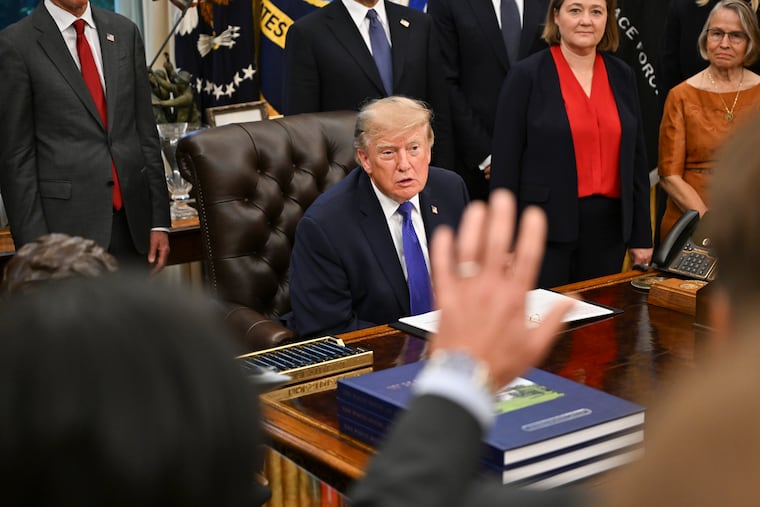
The Republican midterm strategy is no longer just about rallies, fundraising emails, or the candidate who lands the sharpest television hit. The real contest is now structural: which party can shape the battlefield before most voters are paying attention. North Carolina and Kansas show how the 2026 fight for Congress is being built through state-level power, legal pressure, district maps, candidate recruitment, and turnout machinery. For Democrats, that is a warning flare. For Republicans, it is a playbook. The pain point for voters is obvious: elections increasingly feel decided by systems they cannot see, long before a ballot reaches the kitchen table.
- Republicans are focusing on structural advantages in states where district lines, turnout rules, and candidate quality can decide control of Congress.
- North Carolina is emerging as a high-impact battleground because small changes can carry national consequences.
- Kansas matters because suburban movement and candidate selection can scramble old assumptions.
- The 2026 midterms may reward parties that master mechanics, not just messaging.
Republican midterm strategy enters its hardball era
The modern midterm election is less a national referendum than a distributed systems test. Each state has its own rules, maps, political culture, media market, and turnout behavior. Parties that understand those mechanics can turn a modest national environment into a governing majority.
That is why Republican attention to North Carolina and Kansas deserves scrutiny. These are not identical political ecosystems. North Carolina is fast-growing, polarized, racially diverse, and relentlessly competitive. Kansas is redder at the presidential level, but it has shown an independent streak in statewide races and ballot fights. Together, they reveal the GOP’s broader calculation: control the House not by winning everywhere, but by squeezing margins where geography, law, and voter behavior offer leverage.
The strategic shift is simple: stop treating the midterms as one big national argument and start treating them as 435 local engineering problems.
This approach is unsentimental. It prizes redistricting, litigation readiness, turnout targeting, and recruitment discipline. It also assumes that the era of broad persuasion is shrinking. When partisanship is hardened, campaigns spend less time converting voters and more time identifying, mobilizing, and legally defending their side’s most efficient path to victory.
Why North Carolina sits at the center of Republican midterm strategy
North Carolina is one of the most consequential states in American politics because it combines rapid population growth with razor-thin margins. It is not just a presidential battleground. It is a congressional battlefield, a governor’s race laboratory, and a test of how much state-level power can shape federal outcomes.
The Republican advantage in North Carolina has often come from organization and geography. Democrats can run up votes in urban counties, especially around Charlotte, Raleigh, Durham, and Greensboro. Republicans can counter with strength in rural areas, exurbs, and smaller cities. The decisive terrain is the fast-changing suburban ring, where college-educated voters, new arrivals, and cost-of-living concerns collide.
That makes congressional map design enormously important. A small adjustment in how a suburban county is split or grouped can change whether a district is genuinely competitive or functionally locked down. For national Republicans, North Carolina is not just a place to campaign. It is a place where the architecture of representation can alter the national balance of power.
The North Carolina map fight is bigger than one cycle
Every cycle brings a fresh round of arguments over fairness, compactness, community representation, and partisan advantage. But the deeper issue is durability. Republicans want maps and candidate pipelines that can survive not just a good year, but a neutral or slightly hostile national environment. Democrats want to prevent a state that is politically close from producing a heavily skewed congressional delegation.
That tension makes North Carolina a case study in the national fight over gerrymandering. The state is competitive enough that neither side can ignore it, but polarized enough that every procedural decision becomes existential.
Pro Tip for readers watching 2026: do not wait for polls. Track filing deadlines, court rulings, primary fields, and district-level fundraising. Those signals often reveal the true state of the race before public surveys catch up.
Republican midterm strategy also runs through Kansas
Kansas might look like safer Republican territory, but that is exactly why it is strategically interesting. Parties lose when they confuse partisan history with present-day security. Kansas has produced Republican landslides, but it has also delivered surprises when voters perceive overreach or when Democrats nominate candidates who fit the state’s temperament.
The Kansas lesson is about candidate calibration. A Republican can win comfortably in much of the state while still facing real pressure in suburban and college-adjacent areas. A Democrat can remain an underdog statewide while making a House race expensive, unpredictable, and nationally relevant.
For Republicans, the goal is to avoid self-inflicted damage. That means nominating candidates who can hold the base without alienating persuadable suburban voters. It means turning culture-war energy into turnout without making the race a referendum on extremism. It also means investing early enough that Democrats cannot quietly turn one district into a national money magnet.
Kansas shows the cost of assuming the map will do all the work
Maps matter, but candidates still matter. Fundraising still matters. Local credibility still matters. Kansas is a reminder that a party can enjoy structural advantage and still lose if it nominates poorly, ignores local issues, or underestimates the electorate’s tolerance for ideological drama.
The strongest Republican midterm strategy in Kansas will likely pair national messaging with local restraint. Voters may care about inflation, border policy, taxes, schools, and Washington dysfunction. But they also want representatives who understand farm economies, small business pressure, health care access, and the practical realities of rural infrastructure.
In a state like Kansas, the danger for Republicans is not that voters suddenly become liberal. It is that enough voters decide the party has stopped sounding practical.
The mechanics now matter as much as the message
Campaign coverage still loves the shiny objects: viral clips, debate moments, celebrity endorsements, and explosive ad buys. But the hidden layer is more important. The 2026 battlefield will be shaped by voter file quality, absentee rules, ballot access, litigation budgets, precinct-level organizing, and the timing of early spending.
Republicans have grown more sophisticated about this layer. After years of internal fights over mail voting and early vote strategy, the party has increasingly recognized that skepticism does not count ballots. If Democrats bank votes early and Republicans wait for Election Day, weather, illness, long lines, and turnout friction can become partisan liabilities.
That is why the next Republican push is likely to include more disciplined voter contact programs, stronger legal teams, and a louder insistence that supporters use every available voting method. The party that treats rules as infrastructure will usually outperform the party that treats them as background noise.
Why this matters for voters
There is a civic downside to all this optimization. When campaigns become too focused on map math and turnout engineering, voters can feel less like citizens and more like data points. Districts become products. Voter groups become segments. Policy becomes a conversion tool.
But there is also a clarifying upside. The mechanics expose what parties truly value. If a party invests in broader access and persuasion, that says one thing. If it relies mainly on district design and base turnout, that says another. Neither side is operating in a vacuum, and neither side is innocent of hardball. The difference is how openly they justify it.
The future of the House may be decided before the campaign peaks
The biggest misconception about midterms is that they begin after Labor Day. By then, many of the most important decisions are already locked in. District lines are set. Candidates are nominated. Donor confidence is formed. Outside groups have chosen targets. Opposition research is ready. Field programs are either real or performative.
North Carolina and Kansas underline that reality. The visible campaign is only the front end. The back end is a long process of rule-setting, recruitment, and resource allocation. That is where national parties are increasingly spending their strategic energy.
For Republicans, the opportunity is obvious: build enough advantages across enough states that even a mixed national environment can still produce a House majority. For Democrats, the challenge is equally clear: contest the structure, not just the slogan. That means legal readiness, local candidate development, and year-round organizing in places that are too often treated as afterthoughts.
The verdict on Republican midterm strategy
The emerging Republican approach is effective, aggressive, and politically rational. It is also a sign of how brutally optimized American elections have become. North Carolina offers the high-stakes map fight. Kansas offers the candidate-quality test. Together, they show a party trying to win the midterms before the average voter has even tuned in.
That does not mean the outcome is predetermined. National mood still matters. Economic conditions still matter. Candidate mistakes still matter. Court decisions, scandals, turnout shocks, and local backlash can disrupt even the cleanest plan. But the direction of travel is unmistakable.
The 2026 midterms will not be won only by the party with the better message. They will be won by the party that best understands the system underneath the message. Republicans are betting that structure is destiny. Democrats are betting that backlash can overcome structure. Voters are left to decide whether this is smart politics, democratic erosion, or some uncomfortable mix of both.
The information provided in this article is for general informational purposes only. While we strive for accuracy, we make no guarantees about the completeness or reliability of the content. Always verify important information through official or multiple sources before making decisions.