Rescuers Face Venezuela’s Earthquake Crisis
Rescuers Face Venezuela’s Earthquake Crisis
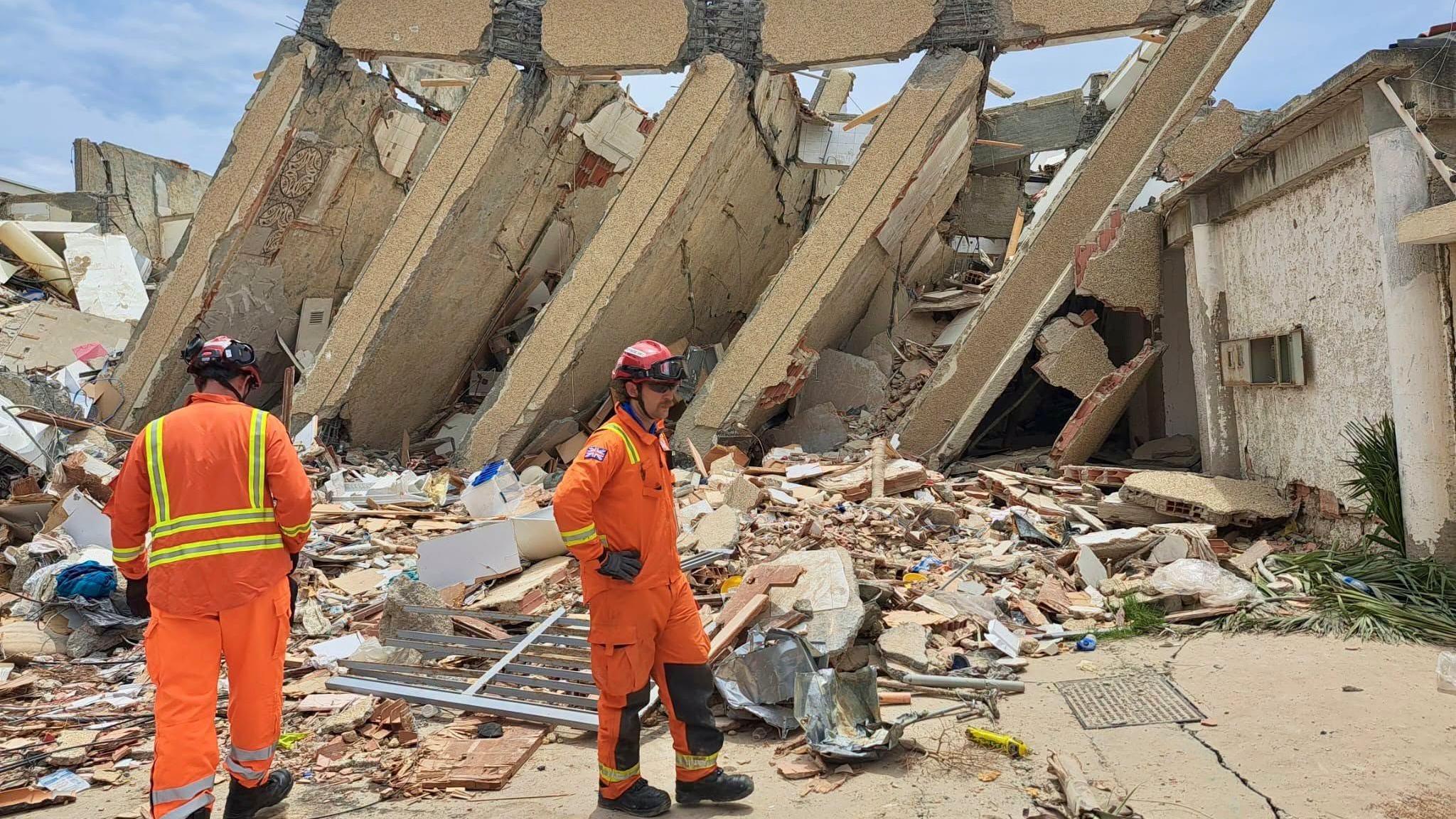
Venezuela’s earthquake disaster is doing more than collapsing buildings. It is stress-testing the entire machinery of modern rescue, from field communications to debris clearance to cross-border coordination. When a major quake hits a politically strained, infrastructure-battered country, the first hours are a race against time, and the second challenge is whether help can actually move fast enough to matter. That is the uncomfortable reality behind the Venezuela earthquake rescue effort: the difference between saving lives and documenting losses often comes down to logistics, access, and trust. International teams are not just battling rubble. They are fighting damaged roads, uncertain supply chains, patchy power, and a humanitarian system that may already be overloaded before the tremors even stop.
- International rescue teams are facing a disaster response shaped by weak infrastructure and difficult access.
- The biggest bottlenecks are not only technical, but logistical and political.
- Search and rescue success depends on speed, coordination, and reliable field communications.
- The Venezuela earthquake crisis is a warning about how fragile disaster preparedness really is.
- What happens next will influence future humanitarian deployments across the region.
Why the Venezuela earthquake rescue effort is so difficult
The Venezuela earthquake rescue effort is not a standard disaster response. It is a collision of extreme urgency and structural weakness. Earthquakes punish everything at once: roads buckle, bridges become risky, hospitals overload, and communications fail. In a country where public infrastructure may already be under strain, those problems multiply. Rescue teams need access to collapsed sites, secure supply routes, fuel, medical triage capacity, and a command structure that can keep all of it moving.
That sounds straightforward on paper. It never is in practice. When responders arrive, they are often forced to improvise around blocked highways, intermittent internet, and limited heavy equipment. Every delay compounds the casualty risk. Every missing generator or satellite terminal creates another blind spot. This is why disaster response is as much about systems engineering as it is about bravery.
When the ground stops moving, the real test begins: can responders reach survivors before the clock, the heat, and the rubble do the rest?
The anatomy of a modern rescue operation
Search and rescue after a major earthquake usually follows a familiar sequence. Teams establish an incident command, prioritize the highest-probability survival zones, and deploy specialists trained to listen for signs of life, stabilize structures, and extract trapped victims. But the Venezuela earthquake rescue effort has to operate under harsher assumptions. There may be no reliable grid power, no intact hospital overflow plan, and no easy way to shuttle equipment between sites.
That shifts the entire playbook. Instead of clean, synchronized operations, rescuers often work in fragmented clusters: one team clearing debris, another running triage, another trying to restore comms. The best deployments bring portable field kits, including generators, lighting, handheld radios, and imaging tools. Even then, the bottleneck is usually not the gadgetry. It is the coordination.
What rescuers need first
- Stable access routes so ambulances and equipment trucks can keep moving.
- Reliable communications through
VHF,UHF, or satellite systems when local networks fail. - Heavy lifting capability for removing concrete, steel, and unstable debris.
- Medical triage stations to separate critical cases from walking wounded.
- Fuel and power to keep lights, tools, and refrigeration running.
Why logistics matter more than headlines
Disaster coverage often focuses on dramatic rescues, but the less glamorous work determines outcomes. If fuel deliveries stall, rescue vehicles sit idle. If roads are unsafe, medical evacuation slows. If local authorities and international teams cannot share data cleanly, duplicate searches waste precious hours. The Venezuela earthquake crisis highlights how fragile that operational chain can be.
For responders, this is the classic last-mile problem, except the “last mile” may be a fractured city block, a damaged bridge, or a neighborhood cut off by landslides. The technical challenge is not just carrying equipment into the field. It is keeping the whole rescue ecosystem synchronized while conditions continue to change.
That is also why high-quality situation awareness matters. Teams need constantly updated maps, structural assessments, casualty counts, and hazard reports. In a healthy environment, this information flows through digital dashboards and command centers. In a crisis like this, it may depend on patchy mobile networks, handwritten logs, and radio chatter. The result is slower decisions and higher risk.
The Venezuela earthquake rescue effort and the politics of aid
Humanitarian response never happens in a vacuum. The Venezuela earthquake rescue effort is shaped by diplomacy, bureaucracy, and domestic politics as much as by engineering. International teams need permissions, local counterparts, customs clearance for equipment, and at least a workable relationship with the institutions on the ground. If any one of those breaks down, aid can arrive in theory but fail in practice.
That matters because earthquakes do not wait for political alignment. They expose the gap between declared preparedness and actual readiness. If a government has underinvested in resilient infrastructure, the quake reveals it. If trust between agencies is weak, coordination fractures. If international aid is slow to mobilize, the window for trapped survivors narrows fast.
Disaster response is not just a test of compassion. It is a test of state capacity, institutional trust, and whether emergency systems were built for reality or for press releases.
What this crisis says about disaster readiness
The most important lesson from the Venezuela earthquake rescue effort may be the most obvious one: preparedness is cheaper than improvisation. Countries that invest in resilient hospitals, redundant communications, seismic building standards, and pre-positioned supplies recover faster. Those that do not spend the first critical day assembling the basics while lives slip away.
There is also a broader technology lesson here. Disaster response has become more connected over the last decade, but connectivity alone does not guarantee resilience. A satellite terminal is useful only if it is charged. A mapping platform is useful only if teams can update it. Drones can survey collapsed neighborhoods, but they still need pilots, batteries, and a path for the data to reach decision-makers.
That is why the future of emergency response will likely blend low-tech redundancy with high-tech situational awareness. Paper maps still matter. Handheld radios still matter. So do thermal imaging, rapid structural assessment tools, and interoperable data systems. The winning model is not futuristic, it is layered.
Pro tips for stronger disaster response systems
- Pre-stage equipment in regional hubs instead of waiting for international shipments.
- Standardize communication protocols so local and foreign teams can work on the same channels.
- Run joint drills before disasters hit, not after.
- Invest in redundant power for hospitals, shelters, and command posts.
- Keep evacuation maps current and accessible offline.
What happens next
The next phase of the Venezuela earthquake rescue effort will likely determine how many people are found alive, how quickly the health system recovers, and whether aid organizations can transition from emergency search to stabilization. After the first frantic hours, the focus usually shifts to shelter, clean water, trauma care, and restoring basic services. That is when coordination becomes even more important, because the disaster stops looking dramatic and starts looking administrative.
For the outside world, the story should not end when the cameras move on. Major earthquakes leave behind long-tail consequences: displaced families, damaged clinics, interrupted schooling, and economic disruption that can last months or years. If responders fail to build a bridge from rescue to recovery, the initial tragedy becomes a prolonged collapse.
The brutal truth is that earthquakes reveal who has built resilience and who has merely hoped for the best. Venezuela’s disaster is now part of that ledger. The rescue teams on the ground are doing the hardest possible work, but they are also exposing a global lesson: emergency response is only as strong as the weakest link in the chain.
Why this matters beyond Venezuela
The Venezuela earthquake rescue effort is a warning shot for every country sitting on fault lines, aging infrastructure, or brittle governance. The next major quake could hit anywhere. What determines survival will not be a single heroic moment. It will be the boring, invisible systems that usually go unnoticed: road maintenance, emergency stockpiles, grid redundancy, and inter-agency coordination.
If there is a silver lining, it is that disasters make weaknesses visible. The challenge is acting on that visibility before the next emergency. Governments, NGOs, and private-sector responders should treat this crisis as a case study in what happens when response capacity meets systemic fragility. Because the next time the ground shakes, the question will be the same: who is ready, and who is improvising?
The information provided in this article is for general informational purposes only. While we strive for accuracy, we make no guarantees about the completeness or reliability of the content. Always verify important information through official or multiple sources before making decisions.