Russia Iran Plan Exposes New Axis
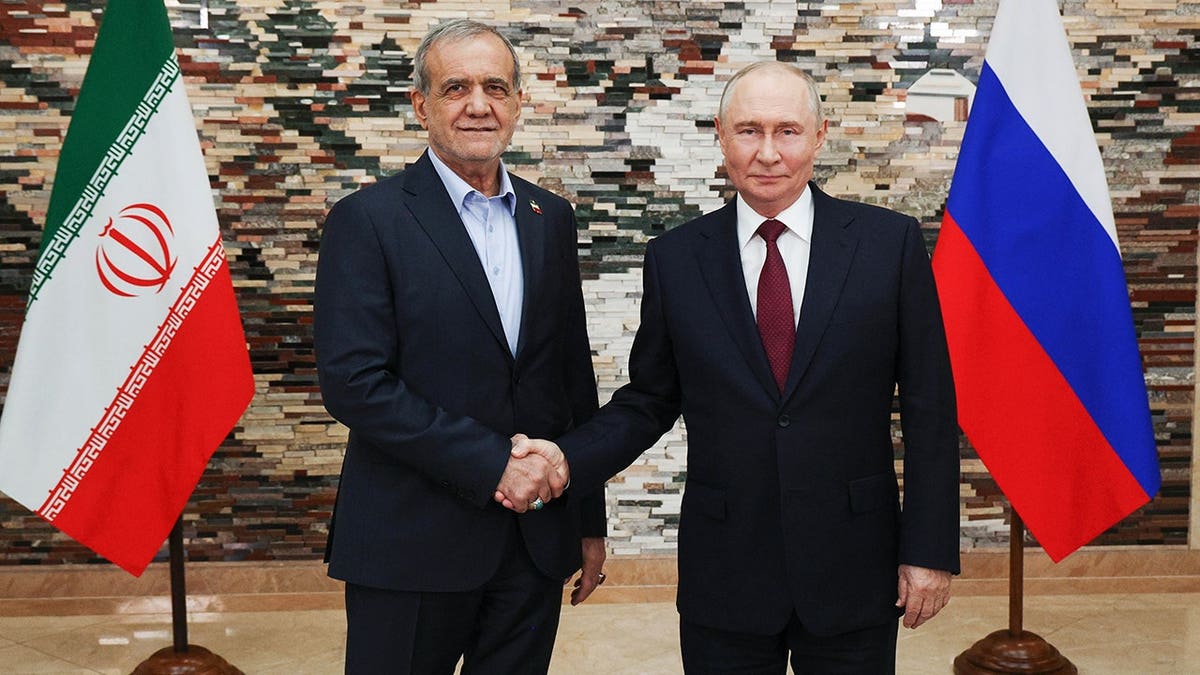
Russia Iran Plan Exposes New Axis
The Russia Iran cooperation plan reportedly revealed in a Russian document is not just another diplomatic memo. It is a blueprint for how two sanctioned powers may try to hardwire their economies, defense-adjacent industries, and strategic ambitions together while the West is distracted by multiple crises. For policymakers, investors, airlines, banks, and security analysts, the signal is blunt: Moscow and Tehran are not merely coordinating tactically. They appear to be building systems designed to survive pressure, route around sanctions, and convert isolation into leverage. That raises the stakes far beyond bilateral trade. If the plan advances, it could reshape nuclear cooperation, financial infrastructure, aviation, and regional security at the same time.
- The reported document suggests a wider Moscow-Tehran agenda that reaches beyond weapons or diplomacy.
Nuclear,finance, andaviationare the most sensitive pillars because they touch security, sanctions, and global supply chains.- The plan reflects a larger shift: sanctioned states are increasingly building parallel systems instead of seeking reintegration.
- Western governments face a verification problem, not just a policy problem, because dual-use cooperation can hide inside civilian programs.
Why the Russia Iran cooperation plan matters now
The timing is the story. Russia has been forced to rewire its commercial and military supply chains after its invasion of Ukraine triggered sweeping Western restrictions. Iran has spent decades mastering the art of operating under pressure, from oil exports to banking workarounds to procurement networks. Put those two experiences together and the result is not simply a partnership of convenience. It is a potential operating model for a post-sanctions ecosystem.
The reported Russian document appears to describe a broad approach to Iran that includes nuclear energy, banking, transport, aviation services, and wider commercial coordination. Each category has a civilian face. Each also carries strategic implications. That ambiguity is exactly what makes the plan consequential.
Key insight: The most important alliances today are not always formal treaties. Increasingly, they are technical corridors: payments, aircraft maintenance, energy projects, shipping routes, and procurement channels.
For years, analysts treated Russia and Iran as partners with limits. Their interests overlapped, but their histories were complicated. Moscow did not always want Tehran too strong. Tehran did not always trust Moscow. But strategic necessity changes calculations. Russia needs alternative suppliers, political support, and markets. Iran needs advanced technology, diplomatic cover, and access to a major power willing to challenge the Western order.
The Russia Iran cooperation plan and the nuclear question
The most sensitive part of any Moscow-Tehran framework is nuclear cooperation. Russia has a long history in Iran’s civilian nuclear sector, including work tied to power generation. On paper, civilian nuclear energy can be legal, monitored, and commercially defensible. In practice, the line between energy cooperation and strategic advantage is often where geopolitics gets dangerous.
If the reported plan includes deeper coordination in nuclear technology, the key questions are not rhetorical. What specific equipment is involved? Are there new training programs? Are there fuel-cycle implications? Are Russian entities providing expertise that could indirectly improve Iranian capabilities? Are safeguards robust enough to detect misuse?
The dual-use dilemma
Dual-use technology is the nightmare category for sanctions officials because it can serve civilian and military purposes. A component, software tool, testing system, or materials process may look harmless in isolation. Combined with other pieces, it can become strategically significant.
That is why the nuclear pillar cannot be evaluated only by public statements. It needs granular scrutiny: contracts, subsidiaries, shipping records, end users, training exchanges, and technical specifications. Governments often announce broad cooperation in clean terms. The operational details reveal the real risk.
Pro tip for readers tracking this story: watch for language around research reactors, isotope production, fuel supply, technical training, and safety modernization. These phrases may be legitimate, but they are also the vocabulary through which sensitive cooperation can expand quietly.
Finance is the hidden engine of the partnership
Weapons and reactors draw headlines. Financial infrastructure is what makes everything else scalable. If Russia and Iran can create more reliable mechanisms for payments, trade settlement, insurance, and credit, then cooperation in aviation, energy, agriculture, machinery, and defense-adjacent sectors becomes easier to sustain.
Both countries have strong incentives to reduce exposure to the U.S. dollar, Western banks, and traditional clearing systems. That does not mean they can simply flip a switch and build a seamless alternative. Parallel finance is hard. It requires trusted banks, convertible value, compliance evasion, liquidity, messaging systems, and counterparties willing to accept risk.
Still, even imperfect systems matter. A limited payment channel can keep aircraft parts moving. A barter-style arrangement can preserve energy trade. A shared banking workaround can help companies survive long enough for political conditions to change.
Why sanctions pressure may accelerate innovation
Sanctions are designed to isolate. They can also push targeted states to innovate around the edges. Iran has built networks for shipping oil, masking ownership, relabeling cargo, and using intermediaries. Russia brings scale, cyber capacity, commodities, and a larger industrial base. The combination could produce more resilient sanctions evasion architecture.
This does not mean sanctions are ineffective. It means enforcement has to evolve. Static blacklists are not enough when the target is building adaptive systems. Regulators need faster corporate mapping, tighter export controls, better maritime monitoring, and closer coordination with private-sector compliance teams.
The uncomfortable reality: the next phase of sanctions competition will look less like a wall and more like a software patch cycle. Every loophole closed will create pressure to find another.
Aviation reveals the practical stakes
The aviation section of the reported plan may be the most tangible for ordinary people. Aircraft require constant maintenance, certified parts, software updates, safety checks, and specialized engineering. When sanctions restrict access to Western-made aircraft and components, airlines face a brutal choice: ground planes, cannibalize fleets, or search for alternative supply chains.
Iran knows this problem intimately. Its aviation sector has operated for years under constraints that affect safety, reliability, and modernization. Russia is now facing similar pressure at much greater scale. Cooperation could include maintenance support, component sourcing, training, leasing structures, or technical documentation.
But aviation is not just commercial. Transport networks move officials, cargo, drones, electronics, and industrial inputs. Civil aviation infrastructure can create strategic mobility. That is why any Russia-Iran aviation channel deserves scrutiny beyond airline balance sheets.
The safety risk no one should ignore
When airlines rely on unofficial parts channels or aging fleets, the risk is not abstract. Maintenance gaps can become safety incidents. Certification uncertainty can undermine insurance. Supply chain opacity can make it harder to know whether an aircraft is airworthy by global standards.
For Western regulators, the challenge is to prevent restricted parts from flowing into sanctioned fleets without creating wider chaos in global aviation markets. For passengers in affected regions, the concern is more immediate: whether planes are being maintained with full transparency and proper oversight.
The strategic logic behind the new axis
The reported document fits a larger pattern: Russia, Iran, China, North Korea, and other states are exploring ways to reduce Western leverage. These relationships are not identical, and they are not frictionless. But they share a common goal: make pressure less painful and deterrence less predictable.
For Moscow, Tehran offers battle-tested sanction survival, regional reach, and a willingness to challenge U.S. influence. For Tehran, Moscow offers diplomatic weight, advanced industrial capacity, and a permanent seat at the center of global power politics. The result is a relationship that may be transactional, but still dangerous.
This is where Western analysis often goes wrong. It looks for perfect alignment and dismisses partnerships when disagreements appear. That is outdated. Modern strategic cooperation does not require trust. It requires overlapping needs, compatible enemies, and enough practical benefit to keep the machinery moving.
What to watch next
The most important developments will not necessarily come from podiums. They will show up in procurement patterns, obscure company registrations, insurance anomalies, cargo routes, and technical delegations. A serious monitoring strategy should focus on signals that reveal implementation.
- New joint ventures involving
energy,aviation maintenance,banking technology, orindustrial equipment. - Unusual cargo movements through regional transit hubs, especially where ownership structures are opaque.
- Banking announcements that mention local-currency settlement, payment messaging, or correspondent relationships.
- Technical exchanges framed as civilian cooperation but involving sensitive expertise.
- Aircraft servicing patterns that suggest alternative supply chains for restricted components.
Why this matters for the West
The reported Russia Iran cooperation plan is a warning that sanctions policy cannot be judged only by immediate economic pain. The deeper question is whether pressure is pushing adversaries into durable infrastructure that will be harder to dismantle later. If Russia and Iran can institutionalize cooperation across finance, nuclear energy, and aviation, they will be better positioned to withstand future crises.
That does not mean the West is powerless. It means the response has to be more strategic than another round of symbolic designations. Enforcement must become faster, more technical, and more coordinated. Export controls need to account for intermediaries and dual-use pathways. Diplomacy with transit states becomes essential. Private firms need clearer guidance on red flags. Intelligence sharing with allies has to move at the speed of modern procurement.
The bigger story is not simply that Moscow and Tehran may be drawing closer. It is that they are trying to make their closeness operational. That is the difference between a photo-op partnership and a resilient axis. If the reported document reflects real policy direction, the world is looking at a more integrated challenge: one built not only on ideology or military hardware, but on the plumbing of the global economy itself.
The information provided in this article is for general informational purposes only. While we strive for accuracy, we make no guarantees about the completeness or reliability of the content. Always verify important information through official or multiple sources before making decisions.