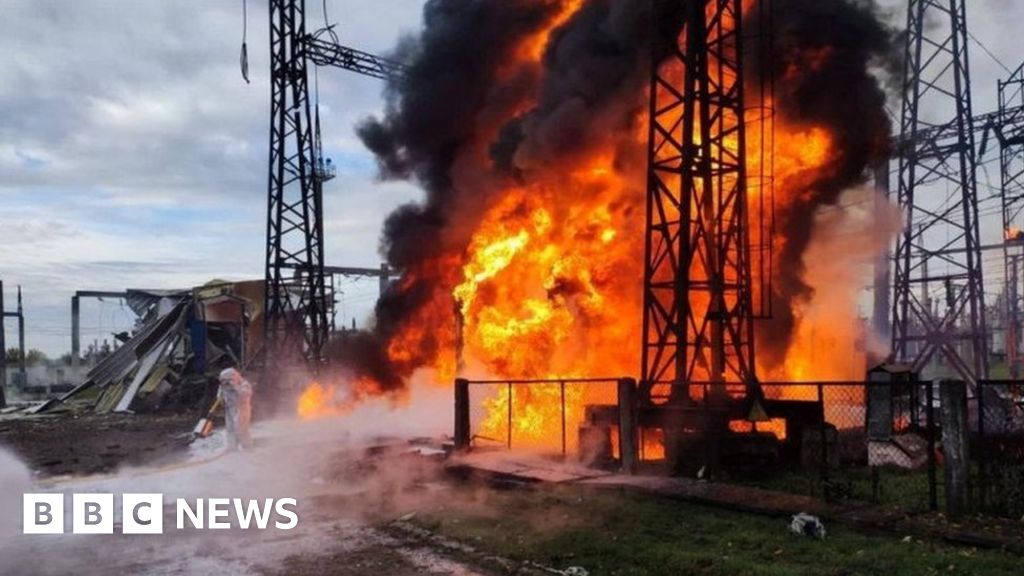
Russia Ukraine Battlefield Shifts Hard

The Russia Ukraine battlefield is no longer defined by sweeping maneuvers or dramatic front-line breakthroughs. It is being rewritten by attrition, drones, electronic warfare, and a brutal race to adapt faster than the other side. That matters far beyond the trenches. The conflict has become a live test of how modern militaries survive when satellites, cheap weapons, and factory-scale production matter as much as tanks. For Ukraine, every shift in tactics is a matter of survival. For Russia, every adjustment is a bid to convert scale into pressure. The result is a battlefield that looks less like the wars of the last century and more like a relentless systems contest, where logistics, software, and industrial capacity decide who can keep fighting.
- The
Russia Ukraine battlefieldis increasingly shaped by drones, jamming, and artillery attrition. - Industrial output and supply chains are now as important as battlefield maneuvers.
- Small tactical changes can have strategic consequences across the front.
- The war is serving as a global preview of future high-tech conflict.
- Adaptation speed may matter more than sheer troop numbers in the next phase.
The Russia Ukraine battlefield has become a war of adaptation
The biggest misconception about the conflict is that it is static because the front lines move slowly. That reading misses the real action. The contest has become intensely dynamic at the tactical level, even when maps barely change. Units are constantly adjusting to enemy sensors, drone swarms, precision strikes, and electronic interference. A position that is secure one week can become exposed the next because a new jammer appears, a drone route changes, or ammunition supply falters.
This is what makes the current phase so consequential. The side that identifies a weakness first can exploit it immediately. The side that lags is forced to absorb losses, then improvise under pressure. In that sense, the battlefield is less about individual battles and more about whether each army can continuously update its operating model.
“Modern war rewards the side that can learn faster than it can lose.”
Why drones changed the Russia Ukraine battlefield
Drones have turned nearly every sector into a surveillance zone. Cheap quadcopters and longer-range strike systems now make it harder to hide vehicles, fortifications, and supply routes. What used to require aircraft or specialized reconnaissance can now be done by a small team with off-the-shelf hardware and improvised software. That has compressed the decision cycle for both militaries.
The practical effect is severe. Troop concentrations are easier to detect. Ammunition depots are easier to hit. Reinforcement routes are easier to harass. Even short movements can trigger lethal consequences. The war has become a contest of visibility: if you can see first, you can shoot first. If you can jam first, you can survive longer.
Electronic warfare is the hidden front
Behind the drone footage is a quieter but equally important struggle: electronic warfare. Both sides have invested heavily in jamming, spoofing, and signal denial. That means navigation fails, drone feeds cut out, and guided weapons become less reliable. Every piece of equipment now depends on a contested electromagnetic environment.
This creates a grim engineering problem. A drone that worked last month may fail today because the enemy updated its jamming package. A route that was safe last week may now be a trap. In practice, battlefield success depends on how quickly forces can patch vulnerabilities and redeploy systems before the other side adapts again.
Industrial power now defines battlefield endurance
Wars of attrition expose a simple truth: strategy is bounded by production. A military can plan brilliantly, but if it cannot replace shells, drones, vehicles, and trained personnel at scale, it will eventually lose momentum. The Russia Ukraine battlefield has made that reality impossible to ignore.
Russia has leaned on its larger industrial base and deeper stockpiles, while Ukraine has depended on allied support, agile procurement, and rapid innovation from its domestic defense ecosystem. That combination has created a strange balance: one side has scale, the other has speed. The question is which advantage holds up longer under pressure.
For defense planners worldwide, this is the warning label. Advanced fighters and tanks still matter, but the war is showing that mass production of inexpensive systems may shape outcomes more than prestige platforms alone. The ability to build, repair, and move equipment quickly is now a core combat capability, not a back-office detail.
Logistics is the real battlefield
Supply lines are now targets in their own right. Ammunition has to move under constant threat. Spare parts must arrive before systems fail. Fuel convoys need protection. Medical evacuation has to work in environments where drones can strike ambulances as easily as armored vehicles. That means logistics is no longer an invisible support function. It is the front line that keeps every other front line alive.
Pro tip: When assessing any modern conflict, follow the logistics before you follow the headlines. If supply routes are secure, armies can absorb losses. If they are not, even a well-defended position can collapse over time.
What this war says about future conflict
The Russia Ukraine battlefield is shaping military doctrine far beyond Eastern Europe. Armies from the United States to Taiwan to NATO states are studying the same lessons: disperse forces, harden communications, integrate drones, and assume the enemy can see more than you expect. The age of concentrating expensive hardware in neat formations is fading fast.
Future wars are likely to be more transparent, more electronic, and more industrial than many planners assumed. They will also be faster in one sense and slower in another. Faster because systems can detect and strike in seconds. Slower because attrition still grinds down gains over weeks and months. That tension is what makes the current conflict so important. It is a preview of a hybrid battlefield where software updates, battlefield repairs, and factory output can matter as much as combat heroics.
“The battlefield is becoming a competition between innovation cycles, not just weapon systems.”
Why small tactical changes matter so much
On paper, some changes look minor: a new drone mount, a different jamming frequency, a revised trench layout. On the ground, those changes can alter casualty rates, extend survivability, or open a narrow window for attack. That is because the battlefield has become highly networked. A small adjustment can ripple across detection, targeting, and movement.
This is why both sides are constantly testing, iterating, and replacing. The war punishes predictability. A tactic that works today becomes a liability tomorrow if the enemy learns its signature. Adaptation is not optional. It is the operating system of the conflict.
What readers should watch next
The next phase of the war will likely hinge on three variables: ammunition supply, drone production, and electronic warfare effectiveness. If one side can outproduce the other in low-cost strike systems, it can create local dominance even without dramatic territorial gains. If one side can better protect its command networks, it can preserve cohesion under fire. And if outside military aid changes pace, the balance could shift quickly.
That makes the Russia Ukraine battlefield more than a regional crisis. It is a stress test for modern state power. Can a country defend itself when the cost of every visible movement rises? Can an industrial system sustain a war where cheap machines destroy expensive ones? Can alliances adapt fast enough to keep pace with a conflict that evolves by the week?
Why this matters: the answer will influence how militaries buy equipment, train troops, and plan deterrence for years to come. The war is not just reshaping Ukraine’s defense. It is reshaping the global blueprint for how wars are fought, supplied, and survived.
For now, the key lesson is blunt: the battlefield belongs to the side that can sense, jam, produce, and adapt faster than the other. In this war, that is not a theory. It is the difference between holding a line and watching it disappear.
The information provided in this article is for general informational purposes only. While we strive for accuracy, we make no guarantees about the completeness or reliability of the content. Always verify important information through official or multiple sources before making decisions.