Secure US AI Supremacy Now
Secure US AI Supremacy Now
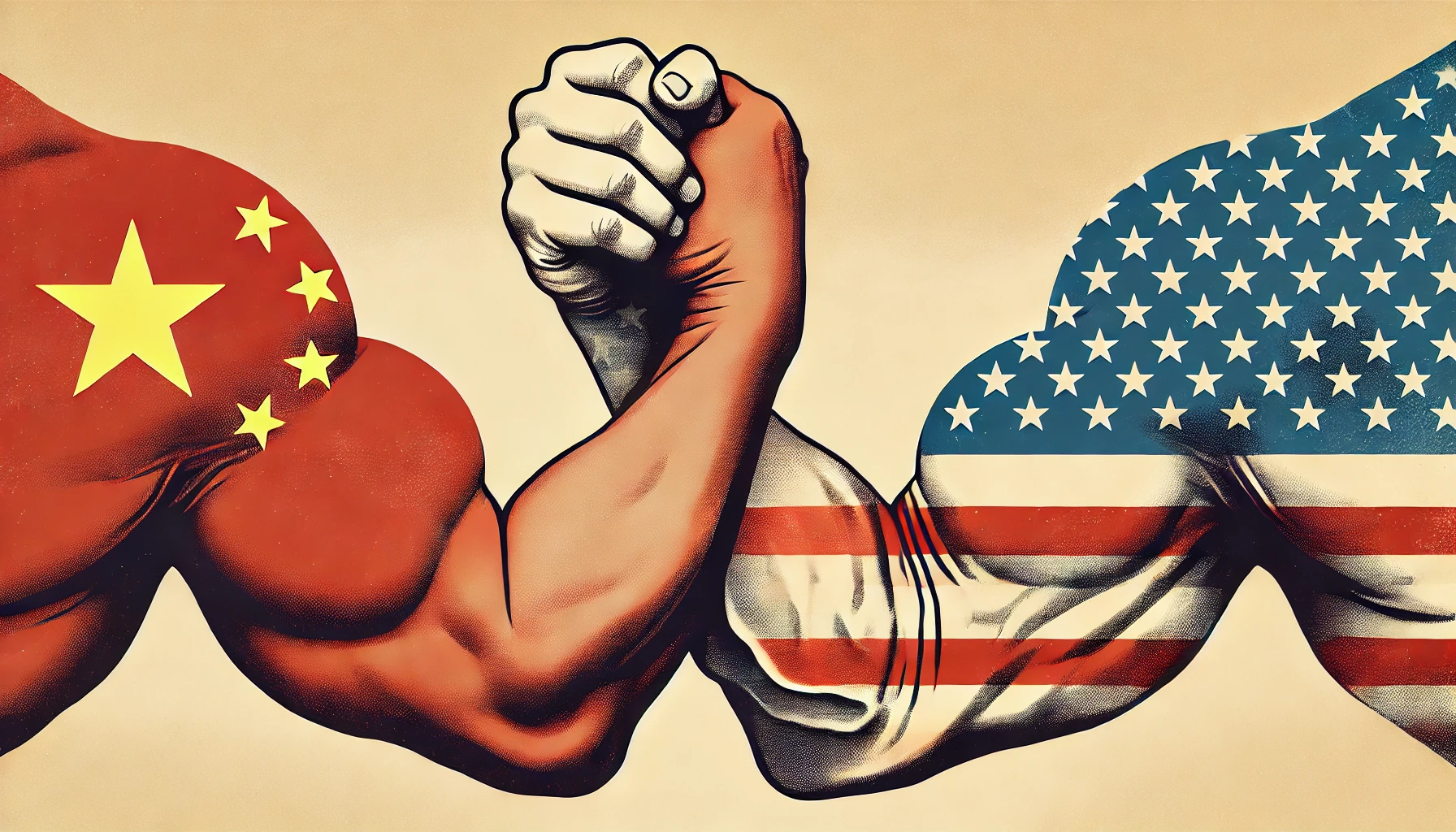
US AI supremacy is no longer a slogan for campaign speeches or venture capital decks. It is rapidly becoming a hard test of national capacity: Can America build enough power, manufacture enough advanced chips, train enough talent, and set enough coherent policy to stay ahead while rivals move fast? That question matters far beyond Silicon Valley. It touches defense, healthcare, education, productivity, and the shape of global influence for the next decade. The danger is not that the United States lacks breakthrough models or ambitious companies. The danger is complacency: assuming software magic alone can outrun bottlenecks in energy, infrastructure, supply chains, and governance. If policymakers want AI leadership, they need to think less like app reviewers and more like system builders.
- US AI supremacy depends on physical infrastructure as much as software innovation.
- Advanced chips, reliable energy, and skilled workers are becoming the real choke points.
- Winning the AI race requires faster permitting, smarter industrial policy, and research investment.
- Overregulation could slow innovation, but under-governance could erode trust and security.
- The next phase of AI competition will be decided by execution, not hype.
Why US AI supremacy suddenly looks like an infrastructure problem
For years, AI was framed as a battle of algorithms. That era is over. Today, the frontier is constrained by access to GPUs, data center construction, transmission capacity, cooling systems, and the specialized labor needed to operate all of it. The companies building leading models are effectively becoming industrial operators. They need land, power purchase agreements, networking equipment, and semiconductor supply contracts at staggering scale.
That changes the policy conversation. If Washington wants to preserve US AI supremacy, it cannot rely only on research grants or export controls. It has to reduce friction across the entire stack. That means speeding up permits for energy and data center projects, strengthening domestic semiconductor capacity, and modernizing the grid. None of that sounds glamorous. All of it is decisive.
The clearest lesson from the current AI boom is simple: compute is strategy. And compute is built on steel, concrete, electricity, and logistics.
The energy bottleneck is real
Training and serving frontier AI systems requires immense electricity. Data centers are already reshaping utility forecasts, regional planning, and corporate site selection. If the grid cannot keep pace, even the best-funded firms will hit limits. The result is a quiet but consequential truth: power policy is now AI policy.
There is also a timing mismatch. AI demand is expanding on software timelines, while power generation and transmission are built on infrastructure timelines. New natural gas capacity, next-generation nuclear, renewables, storage, and upgraded transmission all matter. The right answer is not ideological purity. It is pragmatic abundance.
The AI race may be branded in code, but it will be won with electricity, permits, and supply chains.
Chips remain the most obvious leverage point
No serious discussion of US AI supremacy can avoid semiconductors. Advanced AI systems depend on a narrow band of high-performance chips and the sophisticated manufacturing ecosystem behind them. The United States still holds major advantages in chip design, capital markets, cloud platforms, and top-tier research. But the supply chain remains globally entangled and strategically fragile.
This is why domestic fabrication efforts matter, even if they are expensive and slow. It is also why allied coordination matters. Leadership in AI cannot rest on a single company or one breakthrough architecture. It requires redundancy, resilience, and long-term capacity building.
Export controls buy time, not victory
Restricting access to advanced chips can slow strategic competitors. That may be necessary. But it is not a complete strategy. Export controls are a defensive tool. They do not automatically create more fabs, more packaging capacity, or more engineering talent at home.
Policymakers should be careful not to confuse friction imposed on rivals with momentum created for the United States. Sustainable leadership comes from accelerating domestic capability while preserving trusted international partnerships.
Manufacturing scale still matters
There is a tendency in software circles to treat hardware as a solved procurement issue. It is not. Leading-edge chip production involves years of investment, a tiny number of elite suppliers, and painful exposure to geopolitical risk. If demand for AI compute keeps rising, hardware scarcity could become a brake on innovation across startups, universities, and public-interest research labs, not just at the largest companies.
That concentration risk is worth watching. A healthy AI ecosystem should not depend entirely on whether a handful of firms can secure enough top-end accelerators in a given quarter.
Talent is the quiet determinant of AI leadership
Even with abundant capital and compute, AI progress stalls without people who can build, evaluate, deploy, and govern these systems. That includes elite researchers, yes, but also electrical engineers, data center operators, cybersecurity specialists, technicians, and public-sector experts who understand procurement and regulation.
For all the talk about automation, this remains a labor story. The United States benefits enormously from its universities, startup culture, and ability to attract global talent. Preserving that edge means making it easier for highly skilled workers to study, stay, and contribute. It also means investing in domestic pipelines so AI opportunity is not restricted to a tiny technical elite.
Immigration is an AI policy lever
This point makes some political camps uncomfortable, but the economics are hard to ignore. Many breakthrough companies and research teams are powered by immigrants. If the US wants to outbuild and out-innovate, it cannot make it harder for top engineers and scientists to remain in the country.
A serious AI strategy would pair advanced research support with practical visa reforms and workforce training. Those are not side issues. They are core competitiveness issues.
Education needs an update
There is also a broader workforce challenge. Schools, universities, and training programs need to teach not just abstract machine learning theory but operational AI literacy: how to use models responsibly, evaluate outputs, protect systems, and integrate tools into real workflows. The AI economy will reward people who can do applied work across disciplines, not just pure model research.
Policy cannot be reduced to fear or boosterism
The worst possible AI politics would split into two camps: one that sees AI only as an existential threat and another that treats every safety concern as anti-innovation theater. Both positions are too thin for the moment. The real task is harder: move quickly on strategic capacity while building trust through accountability.
That means rules for procurement, testing, privacy, cybersecurity, and national security use cases. It also means avoiding a fragmented maze of contradictory requirements that only the biggest companies can navigate. Bad regulation can entrench incumbents. No regulation can invite misuse and backlash. The middle path is not flashy, but it is usually where durable advantage is built.
Innovation scales faster when institutions can trust the systems being deployed.
What smart governance looks like
- Risk-based oversight for the highest-impact AI deployments.
- Clear federal standards to reduce compliance confusion.
- Security requirements for critical infrastructure and government use.
- Transparency expectations for model evaluation and failure modes.
- Support for open research so innovation does not narrow into a closed corporate club.
There is room for skepticism here. Governments are rarely fast, and AI is moving quickly. But a slow state is not the same thing as a useless state. Strategic sectors often need coordination, especially when national security, industrial capacity, and public trust intersect.
How to strengthen US AI supremacy without choking innovation
If the national goal is durable leadership, the playbook is not mysterious. It is just politically difficult because it spans agencies, industries, and timelines.
1. Build more compute capacity
Expand the ability to construct and power data centers. Streamline permitting where possible. Encourage grid upgrades and new generation. Treat compute access as an economic multiplier, not merely a corporate convenience.
2. Protect and deepen the chip stack
Support domestic semiconductor manufacturing, packaging, and related tooling. Align with allies on supply chain resilience. Recognize that hardware leadership underwrites software leadership.
3. Invest in talent at every layer
Make room for global talent while scaling domestic education and apprenticeships. AI competitiveness is not only about PhDs. It is also about technicians, operators, and security teams.
4. Fund public-interest AI research
If only the largest firms can afford frontier experimentation, the ecosystem narrows and policy becomes reactive. Universities and national labs need meaningful access to compute and funding so they can contribute to evaluation, safety, and breakthrough research.
5. Create predictable rules
Develop standards that reduce uncertainty without criminalizing iteration. Businesses can adapt to tough rules more easily than to incoherent ones.
Why this matters beyond geopolitics
Too much commentary treats AI leadership as a scoreboard issue between superpowers. That framing is incomplete. Yes, geopolitical competition matters. But so does domestic productivity. The country that best deploys AI across medicine, logistics, education, manufacturing, and government services will capture enormous economic benefits.
That is where the conversation should become less abstract. Better AI can accelerate drug discovery, improve fraud detection, optimize energy use, and augment public-sector workflows. Poorly implemented AI can also amplify errors, centralize power, and widen inequality. National strategy therefore has to ask not just who builds the biggest models, but who diffuses the gains most effectively.
US AI supremacy is meaningful only if it translates into broad capability, not just a higher market cap for a few firms.
The next phase is execution
The easy phase of the AI boom was storytelling. The hard phase is delivery. Can the United States align policy with industrial reality? Can it expand compute without years of self-inflicted delays? Can it attract talent while training more workers at home? Can it build trust without freezing progress?
Those are not theoretical questions anymore. They are the operational checklist for the decade ahead. The US still has enormous advantages: world-class companies, deep capital, strong universities, military relevance, and cultural appeal for top talent. But advantages decay when they are assumed rather than reinforced.
The bottom line is refreshingly unromantic. Winning in AI will require more than brilliant models. It will require abundant energy, advanced chips, smart immigration, serious research funding, and policy that knows the difference between supervising a strategic technology and smothering it. If America gets those basics right, its lead can endure. If it does not, the market will not wait, and neither will its rivals.
The information provided in this article is for general informational purposes only. While we strive for accuracy, we make no guarantees about the completeness or reliability of the content. Always verify important information through official or multiple sources before making decisions.