Snuffleupagus Fish Rewrites Evolution
Snuffleupagus Fish Rewrites Evolution
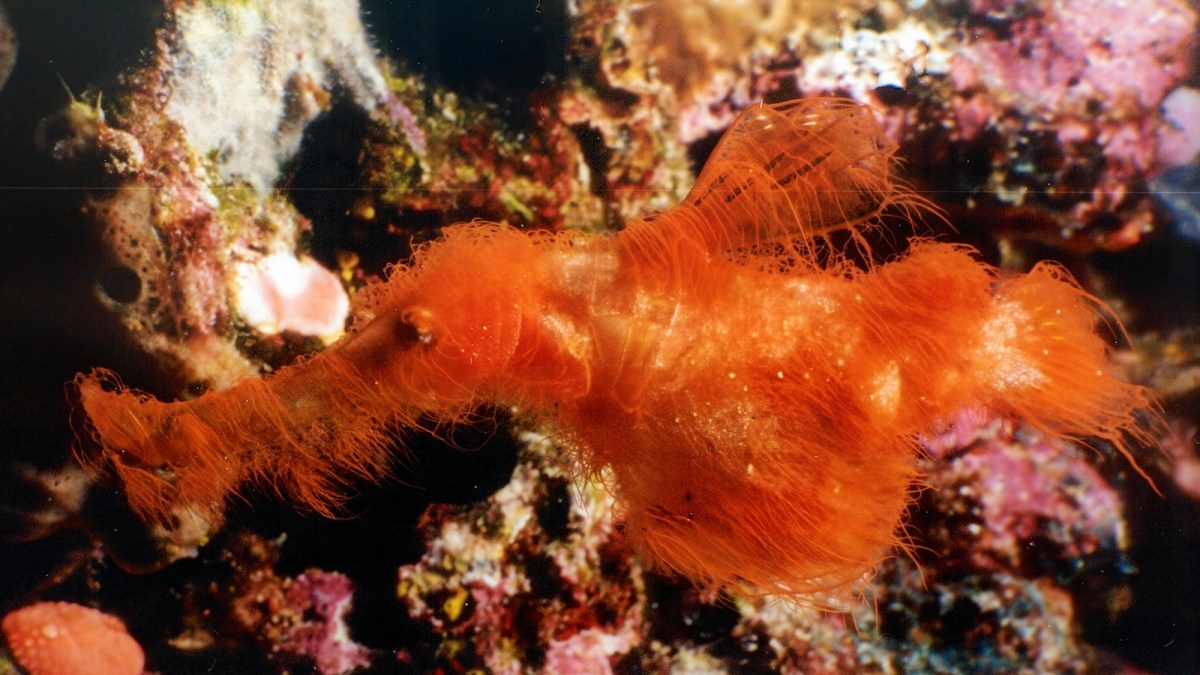
The deep sea keeps making one thing painfully clear: just when science thinks it has a handle on life’s design rules, nature produces something wildly off-script. A newly described fish with an outsized, trunk-like facial feature – one that invites instant comparisons to Snuffleupagus from Sesame Street – is not just internet-bait weird. It is a serious reminder that evolution still has plenty of surprises hidden in the dark.
For researchers, discoveries like this matter because unusual anatomy often signals a bigger story about survival, sensing, feeding, or reproduction. For everyone else, it is a useful correction to the idea that biology is tidy, efficient, and fully mapped. The ocean, especially at depth, remains one of Earth’s least intuitive laboratories. And when a fish turns up looking like a children’s TV puppet, the right response is not just amusement. It is to ask what problem that bizarre body part solves – and what it reveals about the pressures shaping life below the surface.
- A newly identified fish with a Snuffleupagus-like snout is more than a visual oddity – it may reflect a specialized evolutionary adaptation.
- The discovery highlights how little scientists still know about deep-sea biodiversity and anatomical diversity.
- Extreme environments often produce features that look absurd to humans but make perfect sense in ecological context.
- This kind of find matters beyond taxonomy because odd body plans can reshape ideas about sensory systems, feeding, and niche survival.
Why the Snuffleupagus fish matters
It is easy to flatten discoveries like this into a novelty headline: strange fish, funny face, viral comparison. But the strongest science stories start where the joke ends. A fish with a dramatically elongated or unusual snout is a data point in a much larger conversation about how morphology evolves under pressure.
In biology, extreme structures rarely exist without tradeoffs. If an animal develops a large facial appendage, that feature likely carries an energetic cost, changes hydrodynamics, affects predation risk, or shapes how the animal interacts with prey and habitat. That means it probably does something useful. The central scientific question is not whether the fish looks weird. It is why weird worked.
That is where this Snuffleupagus fish becomes compelling. In marine systems, snout modifications can support everything from prey detection to sediment probing to courtship signaling. A feature that seems cartoonish to us may actually be a precision instrument tuned to a narrow ecological role.
The deep sea does not optimize for human expectations. It optimizes for survival in darkness, pressure, scarcity, and competition.
The deep-sea adaptation puzzle behind the Snuffleupagus fish
The most useful way to think about the Snuffleupagus fish is through adaptation rather than appearance. Deep-sea organisms often evolve body parts that look exaggerated because their environment rewards specialization. Food can be sparse. Light is minimal or absent. Mates may be difficult to find. Sensory advantages become incredibly valuable.
Possible function 1: Enhanced sensory detection
One of the most plausible explanations for an unusual snout is sensory expansion. In low-light or no-light habitats, fish cannot rely heavily on vision alone. An elongated rostrum or soft-tissue extension could support mechanosensory structures, electroreception, or chemical sensing. Even subtle gains in detecting water movement or dissolved signals might help an animal find prey or avoid threats.
If that is the case here, the fish’s face is not decorative. It is infrastructure.
Possible function 2: Specialized feeding strategy
Another possibility is feeding. Marine animals frequently evolve narrow, elongated, or highly modified mouthparts to exploit specific prey sources. Think about species that probe crevices, disturb soft sediment, or target prey that hide in microhabitats. A strange snout can be the difference between competing broadly and feeding efficiently in a niche few others can access.
That kind of specialization is one of evolution’s most powerful moves. It reduces direct competition and lets a species occupy ecological territory that might otherwise go unused.
Possible function 3: Sexual selection or species recognition
Not every odd structure is about feeding or sensing. Some are about visibility to other members of the same species. In environments where encounters are rare, body shape can help with recognition or reproduction. If the structure differs by sex, age, or maturity, that would open a different line of inquiry entirely.
This is the challenge with early-stage reporting on unusual species: anatomy is the first clue, not the final answer.
What this discovery says about the state of marine science
Finds like the Snuffleupagus fish are also a reality check for anyone who assumes cataloging life is mostly done. It is not. Scientists are still describing new species, revising family trees, and identifying traits that force a second look at established assumptions.
The ocean remains especially underexplored. That is partly a technology problem and partly a logistics problem. Deep-sea sampling is expensive, difficult, and unevenly distributed across regions. Some habitats are rarely visited. Others are visited but poorly sampled. As imaging, submersible access, and genetic tools improve, researchers keep finding organisms that challenge textbook categories.
This matters because biodiversity is not just a count of species. It is a map of possible solutions to life under pressure. Every newly described anatomical outlier expands that map.
When scientists discover a fish that seems to break the visual rules, they are often uncovering a survival strategy that biology had not yet documented clearly.
How unusual anatomy changes evolutionary thinking
The broader significance of the Snuffleupagus fish is that strange forms can expose hidden pathways in evolution. Popular culture often frames evolution as a march toward streamlining and efficiency. Real evolution is messier. It is local, opportunistic, and constrained by history.
An odd appendage may emerge because a lineage inherited one baseline structure and modified it gradually under specific environmental pressure. The final result can look overbuilt or absurd if you ignore the context. But evolution does not design from scratch. It tinkers. It repurposes. It exaggerates what is already there.
Constraint matters as much as innovation
A fish does not simply invent a perfect new body plan overnight. It modifies available tissues, developmental pathways, and inherited anatomy. That is why some adaptations look elegant while others look improvised. The latter can still work extremely well.
Extreme habitats reward extremes
The deeper or more specialized the habitat, the more likely it is that selective pressures produce body plans outside human intuitions. Big mouths, glowing tissue, telescoping jaws, oversized fins, filament-like appendages: all of these have evolved because conventional designs are not always enough.
The Snuffleupagus fish fits into that pattern. What appears whimsical may actually be a hard-earned answer to a hard environment.
Why this resonates beyond marine biology
There is a bigger editorial point here. Science communication often struggles with balance: should a discovery be framed as delightful, serious, or transformative? In cases like this, the answer is all three. The visual hook pulls people in. The evolutionary implications justify sustained attention.
That has value beyond one fish. Public interest in biodiversity frequently begins with awe. A peculiar animal can become a gateway to discussions about habitat mapping, conservation priorities, taxonomy, developmental biology, and the limits of our current datasets.
And those limits matter. Species are being documented while ecosystems are simultaneously under pressure from warming waters, acidification, deoxygenation, and industrial disturbance. The timeline for understanding marine life is colliding with the timeline of environmental change.
The conservation angle scientists cannot ignore
Even when a discovery is primarily anatomical or taxonomic, conservation is close behind. You cannot protect what you do not know exists. New species descriptions help establish baseline knowledge: where an organism lives, how rare it may be, and what ecological relationships it participates in.
That does not mean every unusual fish instantly becomes a conservation mascot. But it does mean discoveries like the Snuffleupagus fish strengthen the case for continued ocean exploration and habitat protection. If deep ecosystems contain highly specialized species, they may also contain highly fragile ecological dynamics.
Specialization is a strength until conditions change too fast. A body plan tuned for one niche may be less resilient when temperature, chemistry, prey distribution, or habitat structure shifts rapidly.
What to watch next with the Snuffleupagus fish
The first wave of attention focuses on appearance. The next wave should focus on evidence. Several questions will determine whether this fish becomes a minor curiosity or a meaningful evolutionary case study.
- Functional analysis: What does the snout actually do in live behavior?
- Comparative anatomy: Do close relatives show intermediate forms or related structures?
- Habitat context: What environmental pressures in its ecosystem might favor this trait?
- Genetic insight: Which developmental pathways produced the structure?
- Population data: Is this species rare, localized, or more widespread than current records suggest?
These are not minor follow-ups. They are the difference between saying a fish is strange and understanding what that strangeness means.
The real lesson from the Snuffleupagus fish
The most important takeaway is not that the ocean contains bizarre animals. We already knew that. It is that every bizarre animal is also a challenge to shallow thinking about evolution. The Snuffleupagus fish reminds us that adaptation can be visually dramatic, ecologically precise, and scientifically disruptive all at once.
There is also a media lesson here. Novelty should not be the endpoint. The best response to a creature like this is sustained curiosity. What looks funny may reveal a new sensory strategy. What looks clumsy may be exquisitely efficient. What looks like a one-off oddball may point to an underappreciated branch of biodiversity.
That is why this discovery lands. It is charming enough to go viral, but serious enough to matter. And in an era when much of science coverage is fighting for attention, that combination is rare.
Nature’s strangest designs are often the ones that expose how incomplete our understanding still is.
The deep sea is not running out of surprises. If anything, it is just getting started.
The information provided in this article is for general informational purposes only. While we strive for accuracy, we make no guarantees about the completeness or reliability of the content. Always verify important information through official or multiple sources before making decisions.