South Africa Township Shooting Exposes Crisis
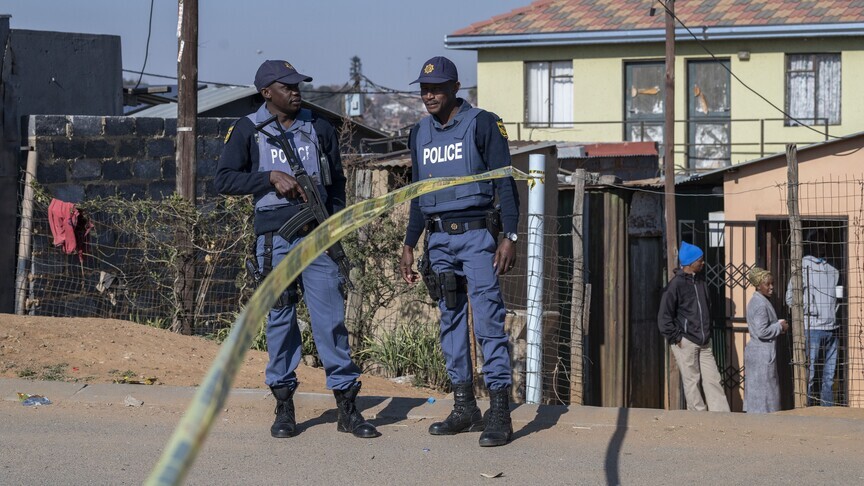
South Africa Township Shooting Exposes Crisis
A deadly South Africa township shooting has again forced a painful question into the open: how many communities must absorb mass violence before public safety becomes more than a political promise? At least 11 people were killed in a township attack, according to early reports, adding another grim entry to a national pattern of shootings that have shaken homes, taverns, streets, and informal settlements. For residents, the fear is immediate and physical: the sound of gunfire, the scramble for cover, the uncertainty of whether police will arrive in time. For South Africa’s leaders, the challenge is larger and more corrosive. Gun violence is not only a policing issue. It is a test of state capacity, social trust, and whether township residents can expect the same protection as wealthier districts.
- At least 11 people were killed in a South African township shooting, intensifying concern over mass gun violence.
- The attack highlights long-running problems around illegal firearms, slow investigations, and uneven policing capacity.
- Township communities often face layered risks: poverty, gang activity, informal economies, and limited emergency response.
- The bigger question is whether authorities can move from reactive policing to prevention, intelligence, and accountability.
South Africa Township Shooting Signals a Broader Security Failure
The immediate facts are devastating, but the wider context is what makes this shooting so alarming. South Africa has struggled for years with high rates of violent crime, including armed robbery, gang-related killings, and mass shootings. Townships are frequently at the center of that violence, not because residents are inherently more vulnerable, but because historical inequality has concentrated risk in places where public services are often stretched thin.
When multiple people are killed in one attack, the public conversation tends to focus on the spectacle of the shooting: how many gunmen, what weapons, what motive, what location. Those details matter. But they can also obscure the deeper system failure. Mass shootings rarely emerge from nowhere. They often sit on top of networks: illegal gun supply, local disputes, extortion markets, taxi industry tensions, gang rivalries, or revenge cycles that police may already know about but struggle to disrupt.
Key insight: A mass shooting is not just a crime scene. It is usually the visible rupture of a security ecosystem that has been failing quietly for months or years.
That is why the latest South Africa township shooting should not be treated as an isolated tragedy. It is a warning signal. If investigators identify suspects but the pipeline of weapons, money, and intimidation remains intact, the next attack becomes a matter of time rather than possibility.
Why the South Africa Township Shooting Hits So Hard
Townships carry a particular political and emotional weight in South Africa. They are not simply neighborhoods. Many were shaped by apartheid-era spatial planning, where Black South Africans were pushed to the margins of economic life. Decades later, the physical legacy remains: long commutes, overcrowded housing, under-resourced infrastructure, and fewer formal opportunities.
Violence in these communities compounds that inherited disadvantage. A shooting does not end when the last ambulance leaves. Families lose breadwinners. Children absorb trauma. Local businesses close early or shut down completely. Witnesses become afraid to speak. Residents retreat indoors. Public space, already contested, becomes smaller.
The fear economy after a mass shooting
After a deadly attack, fear becomes its own economy. People change routes, cancel work, avoid community gatherings, and spend money they do not have on transport, private security, or relocation. Informal traders lose foot traffic. Taverns and small shops may become targets of suspicion or retaliation. In areas where livelihoods depend on daily movement, fear is not abstract. It is a direct financial shock.
This is where policy often falls short. Officials may promise arrests, increase patrols, and issue condolences. Those steps are necessary, but they do not repair the local social fabric. A serious response needs victim support, witness protection, trauma counseling, and a visible investigative process that residents can trust.
Policing cannot work without trust
Investigations into township shootings often depend on community cooperation. But cooperation is not automatic. Residents may fear retaliation, doubt the police, or believe information will leak. If witnesses think the justice system cannot protect them, silence becomes a survival strategy.
That creates a brutal loop. Police need testimony to solve cases. Residents need solved cases to trust police. When neither side can bridge the gap, armed groups benefit. They learn that intimidation works, and the cost of killing remains low.
The Guns Behind South Africa Township Shooting Violence
Every mass shooting raises an uncomfortable practical question: where did the guns come from? South Africa has legal firearm ownership, but many violent crimes involve illegal or diverted weapons. Some firearms are stolen from private owners. Others leak from security companies, criminal networks, or even state stockpiles. Once a weapon enters the illegal market, it can circulate through multiple crimes before being recovered.
This is where forensic work matters. Investigators may rely on ballistic analysis to link cartridges, bullets, and firearms to previous attacks. A strong chain of custody is essential so evidence survives court scrutiny. But forensic capacity alone is not enough. If labs are backlogged, detectives are overloaded, or crime scenes are contaminated, the technical tools lose impact.
Pro Tip for readers following the case: Pay attention not only to whether arrests are made, but whether authorities explain the weapon trail. The origin of the firearms can reveal whether the shooting was random, organized, retaliatory, or connected to a broader criminal market.
Illegal firearms are a force multiplier
One gun can terrorize a street. Several guns can destabilize a community. Illegal firearms magnify every dispute, especially in places where unemployment, gang recruitment, and local power struggles already create pressure. What might once have been a fight becomes an execution. What might have been intimidation becomes a massacre.
Reducing gun violence therefore requires more than confiscating weapons after crimes occur. Authorities need targeted intelligence, better firearm tracing, stronger audits of legal gun storage, and prosecutions that focus on networks rather than only trigger-pullers.
What Investigators Must Establish Next
In the aftermath of the South Africa township shooting, investigators face a high-pressure task: deliver answers without rushing into weak conclusions. The public wants motive. Families want justice. Politicians want reassurance. But a durable case depends on methodical work.
- Who were the victims? Their identities, relationships, and locations can help determine whether the attack targeted specific people or a wider gathering.
- How many attackers were involved? Multiple shooters may suggest planning, coordination, and access to weapons.
- What was the motive? Investigators will likely examine gang conflict, extortion, personal disputes, organized crime, or retaliatory violence.
- Were there prior warnings? Previous threats, earlier shootings, or community complaints could show whether prevention opportunities were missed.
- Can witnesses be protected? Without credible protection, the case may weaken before reaching court.
The danger in high-profile shootings is that public pressure can reward quick arrests over strong prosecutions. South Africa does not only need suspects in custody. It needs convictions that withstand scrutiny, expose networks, and deter future violence.
Why This Matters Beyond One Township
The consequences of this shooting extend beyond the community where it happened. Public safety is a foundation for everything else: schooling, investment, small business growth, public transport, nightlife, and democratic participation. When people believe the state cannot protect them, they begin to seek protection elsewhere. That can mean private security for those who can afford it, vigilantism for those who cannot, or quiet accommodation with local power brokers.
That fragmentation is dangerous. It creates a two-tier safety system where wealthy communities buy distance from violence while poorer areas absorb the cost. It also weakens faith in democratic institutions. If residents only encounter the state after tragedy, trust becomes nearly impossible to rebuild.
The hard truth: A country cannot police its way out of inequality, but it also cannot develop while entire communities live under the threat of armed violence.
The prevention agenda
A credible prevention strategy needs to combine enforcement with social infrastructure. That means intelligence-led policing, faster emergency response, firearm tracing, and specialized units capable of dismantling violent networks. But it also means youth programs, safer public transport, street lighting, mental health support, and economic pathways that reduce recruitment into armed groups.
None of those interventions is dramatic enough for a press conference. But they are the difference between responding to violence and reducing it.
South Africa Township Shooting Demands More Than Condolences
Condolences matter. They acknowledge grief. But they cannot become the full performance of governance. After a shooting that kills at least 11 people, the public should expect a clear timeline of investigative updates, transparent communication with families, and measurable steps to prevent retaliation.
Local leaders also need to avoid stigmatizing the community. Too often, township violence is discussed as if it reflects a failure of residents rather than a failure to provide equal safety. The people living closest to violence are usually its first victims and its most important partners in stopping it.
The latest South Africa township shooting is a test. Not just of detectives, ministers, or police commanders, but of whether the country can confront the infrastructure of violence with the same urgency it brings to the crime scene. The victims deserve justice. The surviving community deserves protection. And South Africa deserves a public safety strategy that does not wait for the next mass shooting to prove the system is still broken.
The information provided in this article is for general informational purposes only. While we strive for accuracy, we make no guarantees about the completeness or reliability of the content. Always verify important information through official or multiple sources before making decisions.