Spain Confronts Ceuta Breach
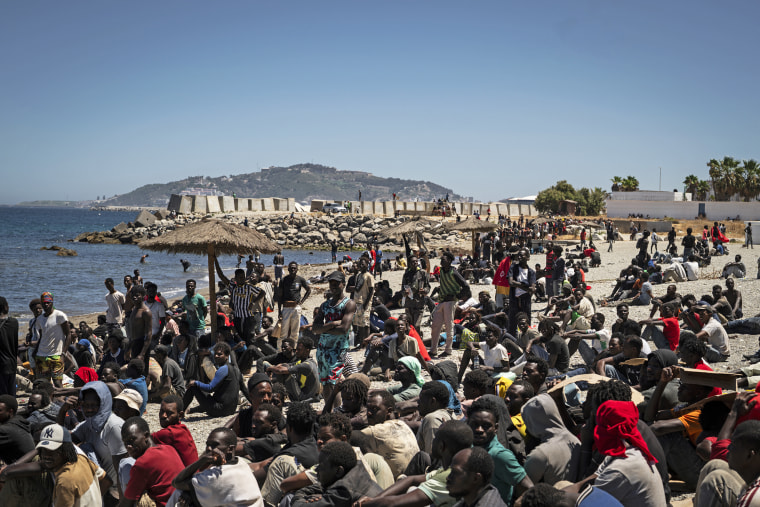
Spain Confronts Ceuta Breach
A border breach in Ceuta is never just a local security incident. It is a stress test for Spain, Morocco, and the European Union’s entire migration bargain. The latest dispute around the Spain Ceuta border breach puts Madrid in a familiar but dangerous position: it must show resolve at the fence without blowing up one of its most strategically important relationships. For Spain’s prime minister, the challenge is not only whether there is evidence of Moroccan involvement or negligence. It is whether that evidence can be used without turning migration into a diplomatic weapon. For Europe, the question is even bigger: how much of its border policy now depends on fragile deals with neighboring states that can change the pressure at the frontier overnight?
- Spain’s handling of the Spain Ceuta border breach will shape relations with Morocco and the EU’s migration posture.
Ceutaremains one of Europe’s most politically sensitive land borders because it sits on African soil.- Evidence matters, but diplomacy will determine whether the incident escalates or is contained.
- The breach exposes Europe’s reliance on external border cooperation and informal security bargains.
- Any response must balance deterrence, human rights obligations, and regional stability.
Why the Spain Ceuta border breach is bigger than one fence
Ceuta is not an ordinary border town. It is a Spanish enclave in North Africa, claimed by Spain, contested politically by Morocco, and treated by the European Union as part of its external frontier. That makes every attempted crossing, mass movement, or security lapse instantly geopolitical.
When a breach occurs, Madrid is forced to operate on several tracks at once. Police and border units need to secure the perimeter. The central government must brief the public without inflaming panic. Diplomats need to speak to Rabat before accusations harden into policy. Brussels watches because a failure in Ceuta is also perceived as a failure at the EU’s edge.
The hard truth is that
Ceutahas become a dashboard for Europe’s migration anxiety: when the pressure rises there, leaders in Madrid, Rabat, and Brussels all start watching the same warning light.
The prime minister’s position on evidence is therefore critical. If Spain claims there is proof of coordination, facilitation, or deliberate inaction by Moroccan actors, the issue becomes a diplomatic confrontation. If Spain says evidence is still being assessed, it buys time. If it downplays the matter, it risks looking weak at home. None of those options is clean.
The evidence question is political by design
Border incidents create a familiar fog. Video clips circulate before official timelines are finished. Opposition parties demand immediate blame. Local authorities talk about operational strain. National governments reach for phrases like ongoing investigation, security coordination, and bilateral dialogue because they leave room to maneuver.
That may sound evasive, but it is also how states prevent a border event from becoming a bilateral crisis. Evidence in this context is not just a file on a minister’s desk. It may include surveillance footage, police reports, intercepted communications, crowd movement analysis, Moroccan deployment patterns, and records of coordination between security services.
The uncomfortable part is that even convincing evidence may not be publicly released. Governments often keep sensitive material classified to protect intelligence methods or avoid humiliating a partner state. That creates a trust problem: citizens are asked to accept that leaders know more than they can disclose.
What credible evidence would need to show
For Madrid, the strongest case would not simply prove that people crossed the border. That is obvious. It would need to clarify whether the breach happened because of spontaneous movement, organized smuggling networks, a breakdown in Moroccan enforcement, or a deliberate decision by authorities to reduce pressure on the Moroccan side.
- Operational timelines: when the movement began, how quickly Spanish and Moroccan units responded, and whether normal protocols were followed.
- Deployment gaps: whether border posts, patrol routes, or crowd-control units were unusually absent or delayed.
- Communications: whether officials received warnings, ignored alerts, or coordinated in a way that suggests intent.
- Pattern evidence: whether the incident resembles previous moments when migration pressure rose during diplomatic tensions.
That last point matters. Spain and Morocco have a long history of cooperation, but also of using leverage. Migration management, fisheries, trade, counterterrorism, energy routes, and Western Sahara policy all sit inside the same strategic basket. When one piece moves, the others feel it.
Spain Ceuta border breach diplomacy now runs through Rabat and Brussels
Spain cannot treat this as a purely domestic policing issue. Morocco is essential to controlling irregular migration flows across the western Mediterranean and around Spain’s enclaves. It is also a key partner on counterterrorism and regional security. A public clash could weaken that cooperation at exactly the wrong moment.
At the same time, Spain cannot appear dependent on Moroccan goodwill. That is the sovereignty trap. If Madrid is too cautious, critics will say Morocco can pressure Spain whenever it wants. If Madrid is too aggressive, it may provoke the very instability it is trying to prevent.
Brussels has its own incentive to keep the temperature down. The EU has spent years building migration policy around external partnerships: funding, training, surveillance tools, and diplomatic incentives designed to stop movement before people reach EU territory. Ceuta exposes the vulnerability of that model. If a partner state changes enforcement posture, Europe’s border can become suddenly porous.
The EU likes to talk about border management as a technical system.
Ceutakeeps proving it is also a political relationship, and political relationships can fracture.
The domestic politics are brutal for Madrid
For Spain’s prime minister, the politics are unforgiving. Conservative and far-right opponents are likely to frame any breach as a failure of border control. Human rights groups will warn against collective expulsions, excessive force, or violations of asylum rights. Local officials in Ceuta will demand resources. National ministries will insist the situation is under control.
This creates a policy squeeze. A security-first response may satisfy voters worried about border disorder, but it can trigger legal and moral scrutiny. A rights-first response may comply with Spain’s obligations, but opponents may cast it as weakness. A diplomatic response may be the smartest strategic move, but it can look vague in a news cycle built for outrage.
The government’s best path is disciplined transparency: release enough information to establish credibility, avoid inflammatory claims unless the evidence is strong, and make clear that Spain will defend its borders without abandoning legal commitments.
Pro tip for reading the politics
Watch the verbs officials use. If they say investigating, they are preserving flexibility. If they say coordinating, they are signaling diplomacy. If they say provocation, escalation is already underway. In border politics, vocabulary is policy.
Human rights cannot be treated as a footnote
The people at the center of a breach are often discussed as pressure, flows, or numbers. That language is convenient for states, but it can erase the reality that many are migrants, asylum seekers, minors, or people pushed by poverty, conflict, and organized exploitation.
Spain still has legal obligations at its border. The presence of a fence does not suspend rules on non-refoulement, access to asylum procedures, or humane treatment. Security measures can be firm, but they cannot become a legal vacuum.
This is where Europe’s border debate often collapses into false choices. It is possible to oppose chaotic crossings and still demand lawful processing. It is possible to criticize Moroccan leverage and still recognize that migrants should not be used as instruments in statecraft. It is possible to support border security and still insist that children and vulnerable people receive protection.
Technology will not solve the Ceuta problem
Expect calls for more cameras, sensors, drones, biometric controls, and AI-enabled monitoring. Some of that may help. Tools like thermal imaging, motion sensors, and integrated command systems can improve response times and reduce confusion during fast-moving incidents.
But technology cannot fix the central problem: Ceuta is a political border. A smarter fence may detect movement earlier, but it cannot decide how Spain should balance diplomacy with deterrence. Better analytics may identify unusual patterns, but they cannot answer whether Morocco is acting out of policy, incapacity, or pressure from its own domestic realities.
The future of border management will likely combine physical barriers, surveillance networks, and cross-border intelligence sharing. Yet the more Europe depends on external partners, the more it must admit that resilience is not only about hardware. It is about trust, accountability, and contingency planning.
What happens next
The most likely short-term outcome is containment. Spain and Morocco have too much at stake to let one breach define the relationship. Officials will probably emphasize cooperation, security coordination, and restored calm. Behind closed doors, however, Madrid will demand explanations, assurances, and operational adjustments.
Several signals will show whether the issue is cooling or escalating. Joint statements suggest containment. Public accusations suggest breakdown. EU involvement can either stabilize the situation or internationalize the dispute. Increased deployments around Ceuta may reassure residents, but they can also create images that intensify the politics.
The deeper question is whether Spain and the EU learn anything durable. If every breach is treated as an isolated emergency, the cycle will continue. If leaders treat it as evidence of structural fragility, they may invest in better legal pathways, faster asylum capacity, stronger anti-smuggling enforcement, and more predictable diplomacy with Morocco.
The lesson from
Ceutais not that borders are irrelevant. It is that borders are only as stable as the politics on both sides of them.
Why this matters
The Spain Ceuta border breach matters because it shows the limits of Europe’s current migration model. Spain can reinforce fences and deploy more officers, but it cannot outsource stability. Morocco can cooperate closely with Madrid, but it can also remind Europe how much it depends on that cooperation. The EU can fund border systems, but it cannot pretend that migration pressure disappears when it is pushed beyond the map of the union.
For readers watching from outside Spain, the story is a preview of the next decade of border politics. Climate stress, conflict, inequality, and regional rivalries will keep testing frontier zones like Ceuta. Governments will face pressure to be tougher, faster, and more technologically sophisticated. But the winning strategy will be the one that pairs credible enforcement with credible law and credible diplomacy.
Spain’s immediate task is to establish what happened and prevent a repeat. Its larger task is harder: prove that a democracy can protect its border without turning vulnerable people into bargaining chips or letting a strategic partner dictate the terms of sovereignty.
The information provided in this article is for general informational purposes only. While we strive for accuracy, we make no guarantees about the completeness or reliability of the content. Always verify important information through official or multiple sources before making decisions.