Species Are Outsmarting Survival but Failing to Beat Humans
Species Are Outsmarting Survival but Failing to Beat Humans
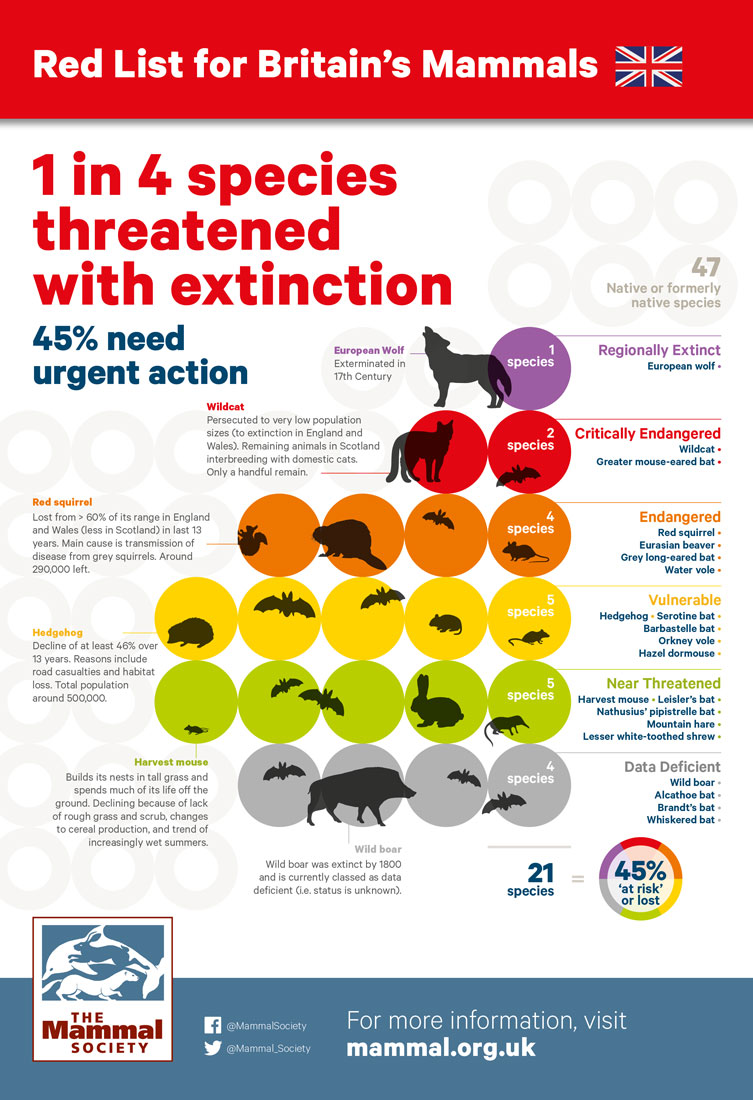
Nature keeps producing miracles. Birds that navigate with eerie precision, reptiles that can vanish into sand, plants that wait years for the right rain, and insects that adapt faster than many technologies evolve. But the latest Red List reality check is brutal: ingenious survival strategies are no match for human destruction. The central problem is not that species lack resilience. It is that resilience now has to compete with bulldozers, warming oceans, deforestation, pollution, overfishing, and land use change happening at industrial speed. That is the story behind the newest conservation alarm bell, and it should land hard. When ecosystems are pushed past their limits, survival tricks stop being evolutionary advantages and start becoming temporary delays.
- Species are adapting, but adaptation cannot outpace habitat destruction at scale.
- The Red List remains the clearest global signal of biodiversity stress.
- Human pressure is now hitting land, oceans, and climate systems at once.
- Conservation success depends on protecting habitats before species are forced into last-ditch survival modes.
- The real risk is losing ecological functions long before a species goes extinct.
The Red List Is Not a Scoreboard, It Is an Alarm
The Red List is often treated like a grim spreadsheet of endangered animals and plants. That undersells it. It is a global diagnostic tool, and its message is increasingly consistent: the planet is not just losing individual species, it is losing the conditions that let species persist. A creature can evolve camouflage, nocturnal behavior, drought tolerance, or strange reproductive strategies, but none of those adaptations matter if the forest is gone, the river is poisoned, or the temperature swing is too extreme to survive a breeding season.
This is where the latest findings matter beyond the usual conservation headlines. The danger is not only extinction. It is collapse by attrition. Species may linger in fragmented habitats, reproduce less often, or shrink into smaller ranges until they become biologically present but ecologically irrelevant. That creates a false sense of security. A population may technically survive while losing the ecological roles that keep ecosystems stable.
“The hardest truth in conservation is that a species can be alive and still be on the edge of functional disappearance.”
Why Clever Survival Strategies Are Running Out of Room
Evolution is not magic. It is a slow, expensive process, and it works best when environmental pressures shift gradually. Human-driven change rarely gives species that luxury. Instead, they are facing several threats at the same time: habitat loss, invasive species, direct exploitation, heat stress, disease spread, and chemical contamination. That multi-front assault is what makes the current biodiversity crisis so severe.
Adaptation Has Limits
Some species can move uphill, migrate, burrow deeper, breed earlier, or alter feeding patterns. Others can tolerate heat bursts or survive on narrower diets. But these changes often come with trade-offs. A bird that shifts nesting timing may miss food peaks. A plant that becomes drought-tolerant may grow slower. A marine species that moves into cooler waters may find no suitable habitat waiting there.
Pro tip: when reading biodiversity reports, look for whether a species is listed as threatened because of a single pressure or because of multiple overlapping pressures. The second case is far more dangerous because it leaves little room for natural recovery.
Fragmented Landscapes Break the Survival Chain
Even the most adaptable species need connected habitats. Migration corridors, seasonal breeding grounds, pollinator networks, and predator-prey relationships all depend on geography that has not been carved into isolated patches. Roads, agriculture, urban expansion, and industrial development create barriers that stop recovery even when the species itself is capable of adaptation.
This is one of the least glamorous parts of conservation, but also one of the most important. Protecting a species is not just about protecting the species. It is about protecting the map it needs to live on.
What the Red List Tells Us About Human Destruction
The phrase human destruction is blunt because the problem is blunt. Species decline is often framed as a mysterious natural tragedy, but the drivers are painfully familiar. We clear forests, drain wetlands, overdraw water supplies, acidify oceans, and warm the atmosphere. Then we act surprised when species that evolved under stable conditions begin to fail.
The key insight from the Red List is that biodiversity loss is not evenly distributed. It concentrates in places where human pressure is intense and cumulative. Tropical forests, coral reefs, freshwater systems, and islands are especially vulnerable because they host highly specialized species with narrow environmental tolerances. Once those systems are disrupted, recovery is slow and sometimes impossible on human timescales.
That matters because biodiversity is not just about beauty or moral obligation. It underpins food security, climate resilience, soil health, disease regulation, and water stability. Lose enough species and you do not just lose icons like big cats or sea turtles. You lose the silent infrastructure of living systems.
“Conservation is often treated as a luxury. It is actually the maintenance budget for civilization.”
Red List Species Are Signaling the Future
One of the sharpest ways to read biodiversity data is as a preview of broader environmental instability. Species under pressure today are often the ones least able to absorb tomorrow’s shocks. That makes them early warning systems for what is coming next: more disrupted food webs, less resilient forests, weaker fisheries, and more fragile freshwater networks.
When species collapse, ecosystems do not always fail in a clean, dramatic way. More often they unravel slowly. Pollination becomes less reliable. Seed dispersal weakens. Pest control declines. Coral systems lose structure. Wetlands lose buffering capacity against floods. These changes are easy to miss until they hit human communities directly.
Why This Matters for Business and Policy
Businesses depend on ecosystem stability whether they acknowledge it or not. Agriculture depends on pollinators and water cycles. Insurance depends on climate predictability. Supply chains depend on fisheries, forests, and raw materials. Governments depend on functioning land and water systems to avoid escalating disaster costs.
That is why biodiversity loss should be treated like a strategic risk, not a side issue. A factory can be rebuilt. A collapsed ecosystem is much harder to restore. The economic argument for conservation is not abstract; it is about avoiding the long tail of environmental degradation that turns into supply shocks, price volatility, and public health strain.
What Needs to Change Now
There is no single fix, which is part of why the situation keeps getting worse. Species decline is a systems problem, so the response has to be systems-level too. That means habitat protection, climate action, invasive species control, sustainable land use, and better enforcement against illegal exploitation.
- Protect intact habitats first: the cheapest and most effective conservation action is preventing damage before it starts.
- Restore ecological corridors: species need connected landscapes, not isolated reserves.
- Reduce cumulative stress: local conservation fails when climate, pollution, and extraction pressures keep rising together.
- Support long-term monitoring: without data, species can disappear before anyone notices the decline.
- Fund community-led stewardship: local knowledge often identifies risks and solutions faster than distant institutions.
There is also a communication problem. Conservation messaging often swings between catastrophe and hope, but the public needs something more useful: specificity. Which habitats are collapsing? Which species are resilient under pressure? Which interventions actually work? That is where trust is built, and where policy becomes actionable.
The Real Lesson of Ingenious Survival
Species are astonishingly inventive. Some can survive freezing temperatures, others can hibernate through drought, and many can reconfigure behavior in response to pressure. But ingenuity is not invincibility. The latest Red List warning makes the central contradiction clear: evolution can produce extraordinary survival strategies, yet those strategies were not designed to withstand a planet being rapidly reshaped by human activity.
The uncomfortable truth is that conservation is now a race against cumulative damage. Every year of delay narrows the options. Every lost habitat makes future recovery more expensive. Every species pushed into a corner makes the ecosystem around it less stable. That is why this matters now, not later.
If there is a silver lining, it is this: the causes are human, which means solutions are human too. We know how to protect land, regulate destructive activity, restore habitats, and invest in resilience. What is missing is not knowledge. It is urgency.
The Red List is not merely documenting decline. It is asking a harder question: how much ingenuity do species need before we finally decide to stop forcing them to prove it?
The information provided in this article is for general informational purposes only. While we strive for accuracy, we make no guarantees about the completeness or reliability of the content. Always verify important information through official or multiple sources before making decisions.