Strait of Hormuz Mine Crisis Raises the Stakes
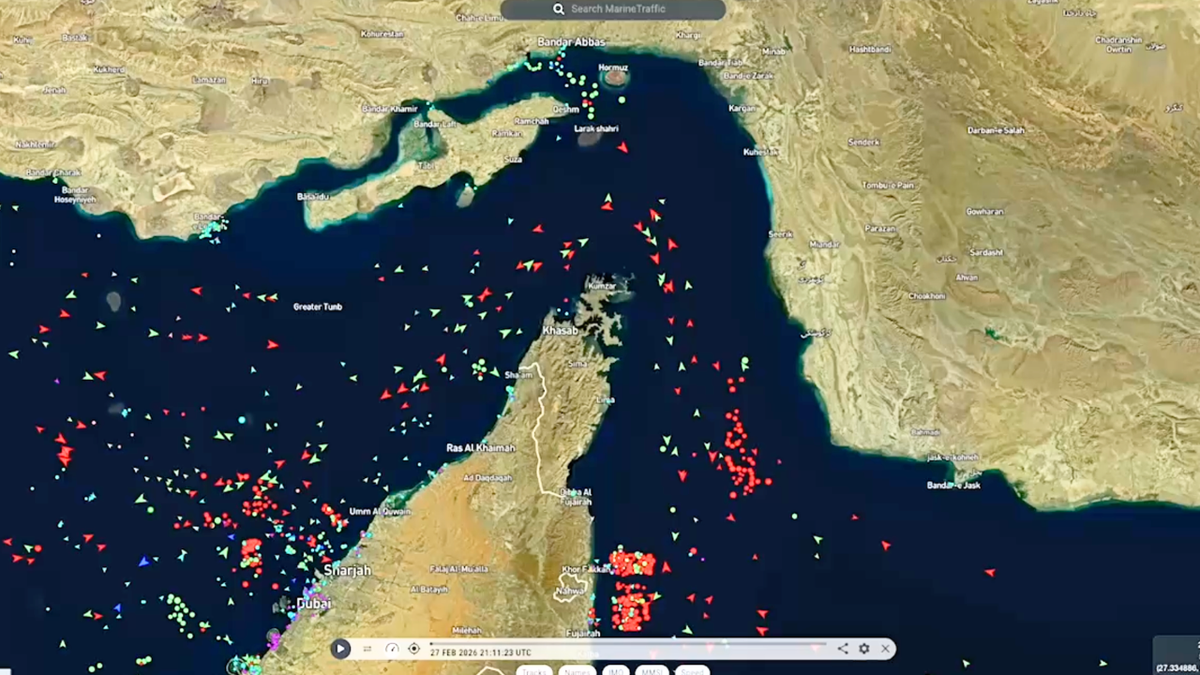
The Strait of Hormuz mine crisis is the kind of geopolitical shock that instantly turns spreadsheets into panic. A narrow waterway that carries a huge share of the world’s oil flows can become a pressure point for shipping, energy prices, and military planning in a matter of hours. When mines enter the conversation, the problem is not just the threat of explosions. It is the threat of uncertainty: insurers raise rates, ship captains slow down, governments scramble, and markets begin pricing in chaos before any attack is confirmed. That is why this story matters far beyond the Persian Gulf. A mine-clearing operation in this corridor is not a routine naval task. It is a test of deterrence, coordination, and how much leverage a small piece of sea can still hold over the modern economy.
- The
Strait of Hormuz mine crisiscan disrupt global energy flows fast. - Mine-clearing is as much about deterrence and signaling as it is about explosives.
- Shipping markets react immediately to perceived risk, not just confirmed damage.
- Any escalation in the strait has direct implications for oil prices, insurers, and naval posture.
- The real threat is uncertainty: one mine can change behavior across the entire supply chain.
Why the Strait of Hormuz Mine Crisis Matters Now
The Strait of Hormuz mine crisis sits at the intersection of war risk and economic fragility. The strait is one of the world’s most important chokepoints, and its importance is not theoretical. Tankers, liquefied natural gas carriers, and commercial shipping lanes depend on predictable access through a corridor that is easy to threaten and hard to secure. Mines are especially destabilizing because they are cheap to deploy, difficult to detect, and politically ambiguous in the moment they are discovered. A damaged vessel can be catastrophic, but even the suspicion of mines can be enough to reroute fleets and trigger emergency naval deployments.
That asymmetry is what makes the current situation so dangerous. A mine campaign does not need to sink a supertanker to be effective. It only needs to make crossing the strait feel unsafe. From there, the pressure spreads outward: energy traders hedge, governments issue advisories, and shipping companies weigh the cost of delay against the risk of exposure. In practice, the first casualty is confidence.
The Hidden Logic Behind Mine Warfare
Mine warfare survives because it is brutally efficient. Compared with missiles, drones, or aircraft, mines are relatively low-cost and hard to attribute quickly. That makes them attractive to any actor trying to raise the price of maritime commerce without engaging in a full-scale naval battle. The object is rarely pure destruction. The object is leverage.
In a constrained waterway like the Strait of Hormuz, mines introduce a form of economic coercion that can outlast the initial placement. Clearing operations take time, specialized equipment, and coordination among navies that may not share the same political goals. The result is a layered crisis: tactical danger at sea, diplomatic tension on land, and market volatility everywhere else.
Key insight: Mines are powerful not because they are sophisticated, but because they force everyone else to behave as if the worst case is already underway.
Why detection is so difficult
Mine detection is slow, methodical work. Naval teams rely on sonar, remotely operated vehicles, and specialized sweep tactics to identify and neutralize threats. But the ocean is cluttered, the visibility is poor, and the enemy may have mixed different mine types or placed them in ways designed to complicate search patterns. In other words, mine clearing is not a clean technological fix. It is a labor-intensive race against time and uncertainty.
The challenge is amplified in a region where every signal is politically loaded. If a navy deploys too aggressively, it may escalate tensions. If it moves too cautiously, commercial shippers may interpret that restraint as weakness. That balancing act is one reason the Strait of Hormuz mine crisis is so destabilizing. There is no perfect operational response, only better or worse ones.
How Mine Clearing Works in Practice
Mine clearing in a strategic chokepoint combines surveillance, patrols, engineering, and diplomacy. The process usually starts with intelligence: reports, sensor data, aerial observation, and maritime traffic monitoring. Once a threat is suspected, navies establish exclusion zones, warn vessels, and deploy mine countermeasure assets. These assets may include sonar-equipped ships, diver teams, and uncrewed systems designed to locate and disable mines without putting crews directly in the danger zone.
That is the visible part. The less visible part is coordination. Multiple states may need to share data, deconflict routes, and communicate with commercial operators in real time. For shipping firms, the practical question is simple: can a vessel transit safely, or is it wiser to wait? The answer depends not just on the map, but on the credibility of the naval response.
The operational checklist
- Establish a secure perimeter around suspected mine locations.
- Use sonar and reconnaissance to map potential hazards.
- Deploy specialized mine countermeasure teams and uncrewed systems.
- Issue routing guidance to commercial vessels and insurers.
- Maintain communication between naval forces, port operators, and shipping companies.
None of that is fast. And that is exactly why the threat works. A single mine can trigger days of disruption even if it never explodes. The value is in freezing behavior before the first casualty occurs.
The Economic Shock Is Bigger Than the Sea Lane
The Strait of Hormuz mine crisis is not only a military problem. It is a supply-chain problem, a pricing problem, and a confidence problem. Oil markets do not wait for definitive proof of disruption. They trade on likelihood, and likelihood can change with a rumor, a satellite image, or a statement from a defense ministry. That means futures markets may move faster than tankers can even turn around.
Energy importing nations are especially exposed. Higher insurance premiums, longer transit times, and potential rerouting all feed into broader inflationary pressure. The most immediate effects may show up in freight rates, refinery margins, and emergency stockpile calculations. But the larger effect is strategic: if the strait becomes unreliable, governments will revisit energy diversification, reserve policy, and naval commitments.
For businesses, the lesson is blunt. Maritime risk is not abstract. It is a balance-sheet item. Companies that rely on just-in-time logistics, global fuel inputs, or Gulf transit routes cannot treat this as a distant defense issue. It is a direct operational exposure.
Pro tip for operators: when a chokepoint enters a security crisis, the first move is not to wait for certainty. It is to update contingency plans before premiums, delays, and contract penalties do the work for you.
Why This Matters for Naval Strategy
The mine threat exposes a hard truth about modern naval power: dominance at sea is not the same as control of a chokepoint. Large fleets can project force, but they cannot instantly make a narrow, contested waterway safe for commerce. That requires specialized mine countermeasure capabilities, patience, and sustained presence. It also requires political endurance, because operations that look decisive on television can take far longer in real life.
This is where the Strait of Hormuz mine crisis becomes strategically revealing. It forces militaries to prove they can protect commerce without broadening the conflict. It also tests coalition credibility. If allies disagree on how to respond, adversaries learn that the cost of disruption may be lower than expected.
That dynamic could shape future force planning. Expect more investment in autonomous mine hunting, maritime surveillance, and distributed operations. Expect more emphasis on redundancy in shipping routes and energy imports. And expect chokepoints like Hormuz to remain a focus of crisis planning long after the current tension fades.
The Likely Next Moves
If mine threats persist, the next phase will probably unfold in three layers. First, naval forces will tighten surveillance and attempt to clear transit corridors. Second, governments will push public messaging to reassure markets and commercial carriers. Third, insurers and shipping firms will price the risk aggressively, even if no further incidents occur. That is how modern maritime crises escalate: not always through explosions, but through compounding caution.
There is also the possibility of miscalculation. A routine patrol could be interpreted as provocation. A warning shot, a false alarm, or a collision during clearing operations could widen the crisis. In a highly compressed theater like Hormuz, accidents travel fast. Once the narrative shifts from containment to confrontation, the cost of returning to normal rises sharply.
What to watch next
- Changes in transit advisories for commercial shipping.
- Insurance and freight-rate spikes across Gulf routes.
- Deployment of mine countermeasure vessels and uncrewed systems.
- Public statements from regional and allied naval commands.
- Signs that energy markets are pricing in longer-term disruption.
The Bottom Line
The Strait of Hormuz mine crisis is a reminder that some of the world’s biggest economic systems can be rattled by some of the smallest weapons. Mines are old technology, but they remain dangerously effective because they weaponize hesitation. Clearing them is an act of engineering, but also of signaling: to adversaries, to allies, and to the market that confidence has not collapsed yet.
If the strait stays open, the immediate crisis may fade from headlines. But the underlying lesson will remain. Global trade still depends on a handful of narrow routes, and those routes are only as secure as the political order that protects them. That is a fragile bargain. And in moments like this, everyone from tankers to traders gets reminded just how fragile it really is.
The information provided in this article is for general informational purposes only. While we strive for accuracy, we make no guarantees about the completeness or reliability of the content. Always verify important information through official or multiple sources before making decisions.