Sudan War Deepens as Hope Fades
Sudan War Deepens as Hope Fades
Sudan’s war has moved beyond crisis into something far uglier: a protracted collapse that keeps expanding while the outside world runs out of patience. Three years on, the conflict is not just a battlefield story anymore. It is a test of whether the international system can still stop mass suffering when the politics are messy, the facts on the ground are fluid, and the costs of inaction are immediate. For civilians, the stakes are brutally simple – food, safety, access to medicine, and a chance to survive another month. For policymakers, the question is whether the world can still force attention onto a war that has become inconvenient, distant, and dangerously normalised. The Sudan war now matters well beyond the region because it exposes how quickly state failure, displacement, and regional spillover can become a long-term global security problem.
- Three years into the conflict, Sudan remains locked in a devastating stalemate.
- Civilians continue to face displacement, hunger, and collapsing public services.
- Regional spillover and aid access are now central strategic risks.
- Any durable solution will require political pressure, not just humanitarian response.
Why the Sudan war still commands attention
The core problem is that the war has resisted easy narratives. It is not a clean front line, not a short-lived coup, and not a conflict the world can safely ignore. Instead, it has become a grinding struggle that fragments territory, weakens institutions, and deepens humanitarian need with every passing month. That matters because wars like this rarely stay contained. They create displacement flows, cross-border insecurity, economic shock, and a permanent drain on public health and food systems.
Sudan is now a warning about the cost of delayed intervention. When a conflict reaches this stage, the damage is no longer measured only in military gains or losses. It is measured in schools closed, hospitals emptied, supply chains broken, and families forced to move again and again. The longer a war like this drags on, the more it starts to rewire society around survival instead of recovery.
The humanitarian crisis is the real front line
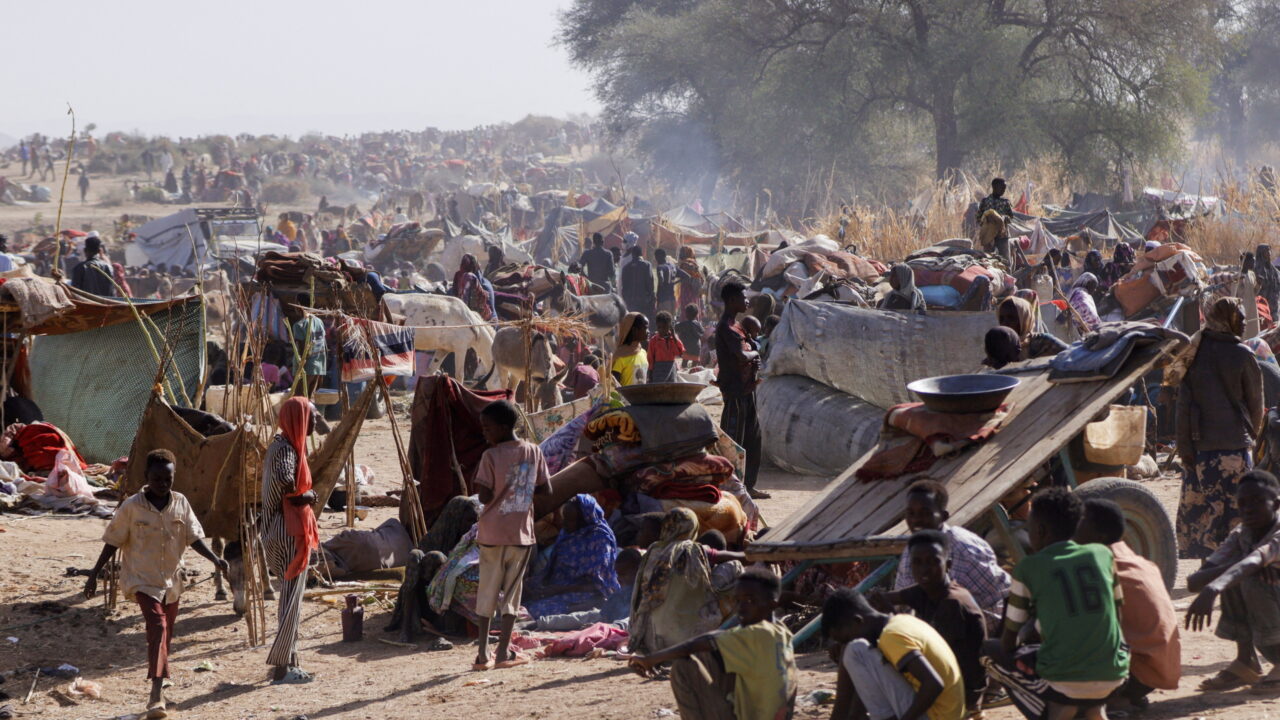
The most urgent story is not who controls which road or city block. It is what happens when people are trapped between armed factions, blocked from aid, and pushed into an economy where everything essential becomes harder to obtain. Food insecurity, malnutrition, disease risk, and lack of safe shelter are not side effects of the war – they are now defining features of daily life.
Humanitarian responders face a familiar but infuriating pattern: rising need, restricted access, and inadequate international leverage. Aid cannot function well when convoys are delayed, checkpoints multiply, and local infrastructure is damaged or abandoned. Even when supplies arrive, the scale of need can overwhelm the response. This is where the gap between headlines and reality becomes most obvious. The conflict is sustained by guns, but the suffering is carried by logistics.
“When a war outlasts the news cycle, the civilian toll does not shrink – it compounds.”
That compounding effect is what makes Sudan so dangerous. Every interruption to healthcare, education, water, or commerce creates second-order damage that is harder to reverse than immediate battlefield loss.
Sudan war and the regional spillover risk
Conflict in Sudan does not remain inside Sudan. Neighbouring states absorb refugees, border pressure, trade disruption, and security spillovers that can destabilise already fragile systems. The broader region pays through strained public services, higher humanitarian spending, and the constant risk that armed actors, weapons, and criminal networks move more freely across borders.
This is why the conflict has strategic importance far beyond the moral imperative to stop civilian harm. A prolonged war in Sudan affects food corridors, migration routes, and regional diplomacy. It also increases the likelihood that outside powers pursue competing interests instead of a coordinated peace effort. Once that happens, the conflict becomes harder to end because every actor sees a reason to keep its own leverage intact.
What this means for policymakers
- Pressure must target access, accountability, and ceasefire enforcement together.
- Humanitarian aid needs protection, not just funding commitments.
- Regional diplomacy has to be coordinated, not fragmented.
- Short-term ceasefires without monitoring rarely produce durable relief.
Why the Sudan war has become so hard to solve
One reason the war persists is that battlefield dynamics and political incentives are badly misaligned. Armed leaders can often keep fighting even when the civilian cost becomes catastrophic. Meanwhile, mediation efforts struggle when no side believes compromise will improve its long-term position. That creates a stalemate in which violence becomes self-sustaining.
The harder truth is that wars do not end simply because they are awful. They end when the balance of pressure changes – through internal exhaustion, external leverage, or a negotiated framework that both sides fear enough to accept. In Sudan, those conditions have been weak, inconsistent, or undermined by competing interests. That is why the conflict keeps returning to the same brutal baseline: instability, fragmentation, and mass suffering.
There is also a media problem. As crises stretch on, coverage often shrinks, which reduces public pressure and makes diplomatic inertia easier. That does not mean the war is less severe. It means the world is worse at sustaining attention when there is no neat turning point.
What a credible path forward would require
A serious response would need more than another statement of concern. It would require sustained diplomatic pressure, protection for humanitarian operations, and consequences for actors obstructing relief or prolonging violence. It would also require recognizing that a political settlement cannot be built on denial. Any roadmap has to account for the scale of displacement, the collapse of services, and the trust deficit created by years of violence.
There is no quick fix here, but there are practical priorities. First, keep civilians alive by widening aid access and protecting medical and food deliveries. Second, reduce incentives for continued escalation by aligning regional and international pressure. Third, prepare for a long recovery that treats governance, accountability, and reconstruction as inseparable from peace.
“A ceasefire is only the beginning. Without access, monitoring, and political follow-through, it becomes a pause button on the same catastrophe.”
That is the central lesson of the third anniversary: ending the headline is not the same as ending the war. If the international response stops at expressions of concern, Sudan will remain trapped in a cycle where violence is easier to sustain than peace is to build.
Why this matters now
Sudan is not just another tragic conflict. It is a live test of whether the global order can still respond to a war that is complex, ugly, and prolonged. If the answer is no, then the implications extend far beyond one country. Future conflicts will be harder to deter, humanitarian norms will weaken further, and civilians elsewhere will face the same slow abandonment.
The world has seen this pattern before. The danger is not only that it repeats, but that it becomes accepted as normal. That is why the Sudan war demands attention even when it is inconvenient. The cost of ignoring it is already visible, and it will keep rising until the political math changes.
The information provided in this article is for general informational purposes only. While we strive for accuracy, we make no guarantees about the completeness or reliability of the content. Always verify important information through official or multiple sources before making decisions.