Taliban Public Flogging Exposes Afghanistan’s Fear Machine
Taliban Public Flogging Exposes Afghanistan’s Fear Machine
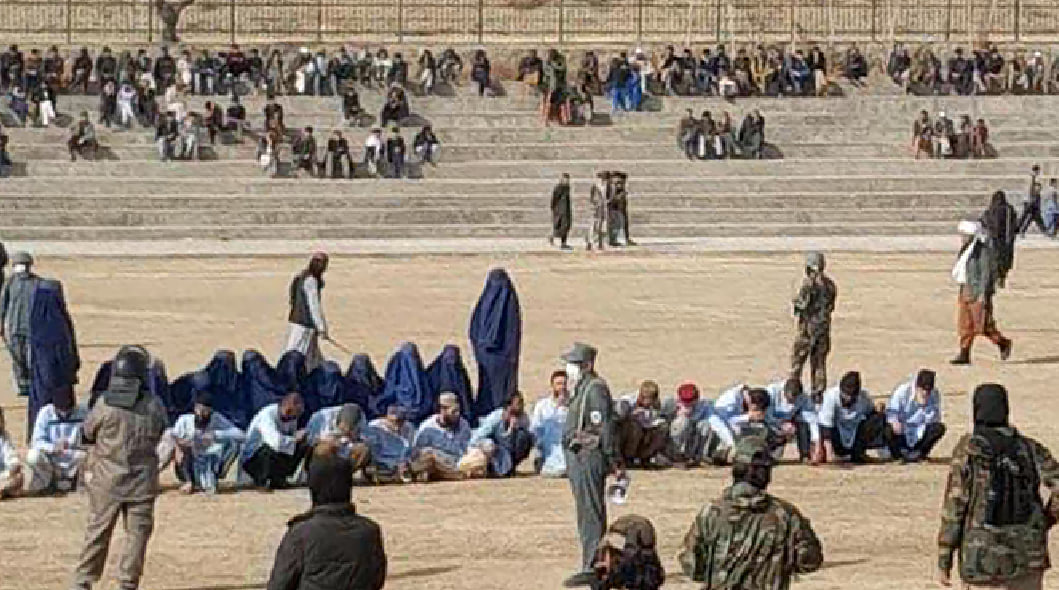
A Taliban public flogging is not just a punishment. It is a broadcast. It tells Afghans that the state can turn a body into a warning, that private accusation can become public humiliation, and that fear remains one of the regime’s most efficient governing tools. The latest reported flogging in Afghanistan lands in a country already battered by economic collapse, vanishing civic space, and a justice system remade around the Taliban’s hard-line interpretation of Sharia. For the outside world, the pain point is brutally familiar: how do you confront abuse without abandoning ordinary Afghans or granting the Taliban the legitimacy it craves? The answer starts with seeing these spectacles for what they are – not isolated acts of discipline, but a deliberate political system.
- Public floggings are political theater, designed to enforce obedience beyond the individual being punished.
- Afghanistan’s legal order has shifted toward opaque religious courts, limited appeals, and weak protections for defendants.
- Women, dissidents, minorities, and the poor face heightened risk when punishment is public, discretionary, and socially stigmatizing.
- International pressure still matters, but it must be targeted, consistent, and tied to civilian protection.
Why Taliban Public Flogging Is More Than A Court Sentence
The Taliban has long framed corporal punishment as a matter of religious duty and social order. But the public staging changes the message. A prison sentence confines one person. A public lashing instructs everyone watching – including those who hear about it later – that authority is physical, immediate, and humiliating.
That distinction matters because Afghanistan’s justice system is not operating like a conventional, transparent judiciary. Under Taliban rule, many legal processes are shaped by religious decrees, local power dynamics, and limited access to defense. When punishments tied to hudud, qisas, or ta'zir are administered in public, the line between law, spectacle, and coercion becomes dangerously thin.
Key insight: A Taliban public flogging is not only about punishing alleged wrongdoing. It is about training a population to anticipate punishment before it speaks, protests, travels, loves, dresses, or resists.
The regime benefits from ambiguity. If citizens do not know which behavior will trigger arrest, which court will hear a case, or whether a confession was coerced, fear fills the legal vacuum. That is the architecture of authoritarian control.
The Taliban Public Flogging Strategy Depends On Visibility
Public punishment has always depended on audience design. The Taliban does not need every Afghan to attend a flogging. It only needs enough witnesses for the story to move through families, mosques, markets, messaging apps, and diaspora networks. The violence becomes portable.
This is especially potent in a country where traditional social honor and communal reputation can carry severe consequences. A public flogging may end after minutes, but the stigma can outlast the wounds. For women, the reputational damage can be devastating. For men, it can mean exclusion from work, marriage prospects, and local standing. For families, it can become collective shame.
The chilling effect is the point
Authoritarian systems rarely rely on force alone. They rely on self-censorship. Public floggings create a psychological operating system in which people restrict themselves before the state has to intervene. Journalists avoid sensitive topics. Activists go quiet. Families pull daughters from public life. Local officials learn that harshness is rewarded.
That chilling effect is difficult to measure, which makes it easier for the Taliban to deny its full scale. There is no single database that captures how many girls stay home because a neighbor was punished, how many women avoid travel because enforcement is unpredictable, or how many men comply because they fear being accused without meaningful due process.
What Changed In Afghanistan’s Justice System
Before the Taliban returned to power, Afghanistan’s legal system was deeply flawed. Corruption, delays, political pressure, and uneven access to courts were real problems. But there were also constitutional structures, formal statutes, legal professionals, civil society monitors, and women working inside the justice sector. Those guardrails did not always hold, but they existed.
The Taliban’s return dismantled much of that framework. Many judges, prosecutors, defense lawyers, and rights advocates fled, went into hiding, or were pushed out. Women in the legal profession were particularly targeted by exclusion. In their place, Taliban-appointed religious authorities gained influence over courts and punishments.
Opacity is now a feature, not a bug
When a justice system is opaque, power moves faster. Defendants may not know the evidence against them. Families may struggle to access case information. Appeals may be unclear. Legal representation can be limited or symbolic. In such conditions, corporal punishment carries a double injury: the physical violence itself and the uncertainty over whether the process was fair.
Pro Tip for readers tracking Afghanistan news: Pay attention to process, not only punishment. The most important questions are often: Who brought the accusation? Was there a lawyer? Was the hearing public or secret? Was there an appeal? Were women able to testify safely? Were confessions involved?
Why This Matters Beyond Afghanistan
It is tempting for outside audiences to treat a Taliban public flogging as a grim but distant story. That is a mistake. Afghanistan has become a test case for what happens when a rights-abusing government seeks international engagement while stripping protections at home.
The Taliban wants access to diplomatic channels, aid flows, financial systems, and regional legitimacy. At the same time, it continues to enforce policies that restrict women, punish dissent, and centralize moral authority. The global response will send a signal far beyond Kabul: Can a regime normalize relations while public punishments return as governance?
The hard truth: If public flogging becomes routine and the world responds with fatigue, the Taliban learns that spectacle has a low diplomatic cost.
This does not mean isolation is simple or always effective. Afghanistan’s civilians are already living with poverty, food insecurity, climate stress, and a collapsed job market. Broad punishment of the country can deepen suffering. But engagement without conditions risks becoming quiet acceptance.
The Gendered Reality Of Public Punishment
Every Afghan is vulnerable under arbitrary enforcement, but women and girls face a uniquely compressed future. Restrictions on education, work, movement, dress, and public participation already narrow daily life. Public corporal punishment adds another layer: the threat that alleged moral transgression can become public degradation.
That threat reshapes behavior even when no punishment occurs. Families may impose stricter controls to avoid attention. Employers may avoid hiring women. Teachers may step back. Young women may internalize the message that visibility equals danger.
Fear travels through families
Taliban rule often operates through social delegation. The state does not need to police every home if families, neighbors, and local authorities preemptively enforce its expectations. A public flogging strengthens that delegation. It tells communities that the cost of defiance may be paid not in private, but in front of everyone.
This is why rights groups consistently focus on public punishments as a broader indicator. They are not simply acts of criminal justice. They are signals about whose bodies the state can control and whose dignity it can suspend.
What International Pressure Can Still Do
The Taliban is not immune to pressure. Its leaders care about recognition, access to money, regional relationships, and internal cohesion. The challenge is to design pressure that targets decision-makers while protecting civilians.
- Condition diplomatic upgrades on measurable rights benchmarks, including an end to public corporal punishment.
- Protect humanitarian channels so food, health care, and basic aid do not become bargaining chips.
- Support Afghan civil society, especially women-led networks, legal advocates, journalists, and documentation groups.
- Use targeted restrictions against officials tied to abuses rather than broad measures that deepen civilian hardship.
- Preserve evidence through secure documentation so future accountability remains possible.
None of these steps will transform Afghanistan overnight. But they can raise the cost of abuse, keep victims visible, and prevent normalization from happening by default.
The Future Risk Is Normalization
The most dangerous outcome is not only that public floggings continue. It is that they become background noise. Authoritarian practices often win by repetition. The first incident shocks. The fifth feels familiar. The fiftieth becomes a line in a diplomatic briefing.
That is why language matters. Calling a Taliban public flogging a legal event without describing its coercive context misses the point. Treating it as cultural difference is worse. Human dignity is not a regional preference. The right to fair process, bodily integrity, and protection from cruel punishment is not optional.
The Taliban is testing attention spans
Every public punishment tests whether Afghans will be too afraid to object and whether the world will be too distracted to respond. The regime is betting on exhaustion. It is betting that crises elsewhere will crowd out Afghanistan, that humanitarian necessity will soften diplomatic language, and that time will convert outrage into procedure.
The response must be steadier than the news cycle. That means consistent documentation, principled engagement, and refusal to separate women’s rights, legal rights, and political legitimacy into different boxes. They are connected.
Taliban Public Flogging Demands A Clearer Global Line
A public flogging is a message written on the body. In Afghanistan today, that message is directed at defendants, families, women, journalists, aid workers, local officials, and foreign governments all at once. It says the Taliban can punish in public and still demand a seat at the table.
The world does not have a clean lever to pull. But it does have choices. It can treat each flogging as an isolated outrage, or it can recognize the pattern: a justice system designed to intimidate, a political order built on gender control, and a regime probing how much brutality diplomacy will tolerate.
The stakes are not abstract. They live in the decisions Afghans make every morning: whether to speak, study, report, work, travel, complain, or simply be seen. That is why the latest Taliban public flogging should not fade as another dark headline. It should sharpen the question governments keep trying to avoid: what does engagement mean if it cannot defend the basic dignity of the people it claims to help?
The information provided in this article is for general informational purposes only. While we strive for accuracy, we make no guarantees about the completeness or reliability of the content. Always verify important information through official or multiple sources before making decisions.