Trump Cuts Drills to Chase Kim Talks
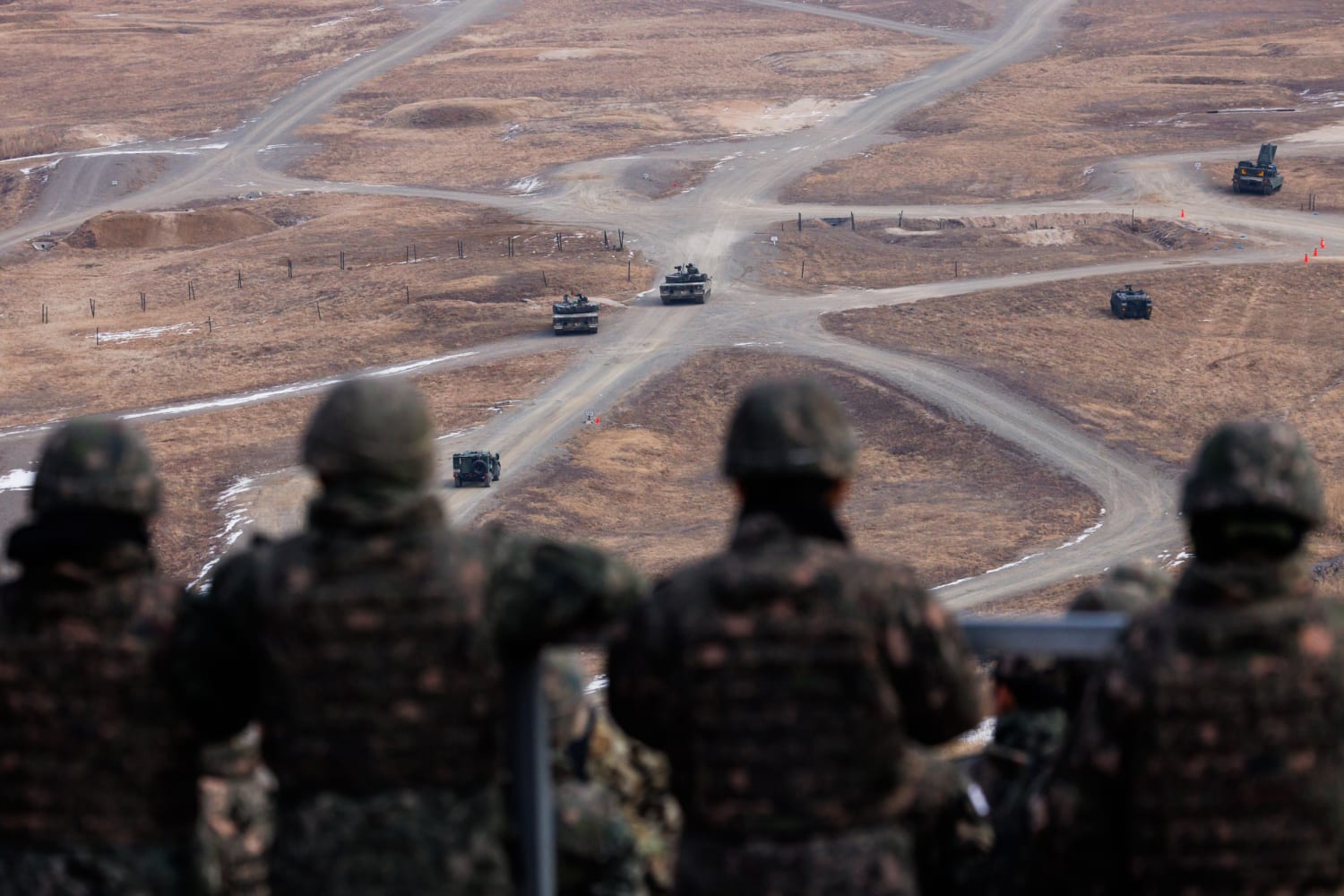
Trump Cuts Drills to Chase Kim Talks
Washington is once again betting that less pressure might unlock more diplomacy. The latest move to scale back U.S.-South Korea army drills is more than a scheduling adjustment – it is a strategic signal aimed at dragging Kim Jong-un back to the table. For South Korea, Japan, and U.S. commanders, that creates an immediate tension: any reduction in military readiness can look like progress in talks, but it can also look like a crack in deterrence. The U.S.-South Korea military drills debate sits right at that fault line, where diplomacy, domestic politics, and regional security collide. If the gamble works, it could reopen a channel that has been frozen for years. If it fails, allies may be left with fewer exercises, fewer assurances, and the same nuclear threat.
- Trump is using reduced drills as leverage to try to restart talks with Kim Jong-un.
- South Korea faces a delicate trade-off between diplomacy and military preparedness.
- The move could reshape deterrence calculations across the Korean peninsula and beyond.
- Any breakthrough would likely be fragile, built on optics as much as policy.
Why the U.S.-South Korea military drills matter now
The decision lands in a region that measures stability in seconds, not speeches. U.S.-South Korea exercises are not ceremonial. They are the practical machinery of alliance readiness: command coordination, logistics, interoperability, and the signal that both militaries can respond quickly if North Korea escalates. Cutting them, even partially, may sound like a diplomatic olive branch, but it also changes the tone of deterrence.
That is why this move matters well beyond the Pentagon. North Korea has long treated joint drills as evidence of hostile intent. At the same time, allies have treated them as a visible reminder that the U.S. security umbrella is real. Reduce that visibility and you may reduce friction with Pyongyang. You may also reduce confidence in Seoul, Tokyo, and among military planners who prefer clarity over improvisation.
“When drills become a bargaining chip, readiness stops being just a defense issue and becomes a diplomatic risk.”
This is the defining tension: can the U.S. lower the temperature without lowering the guardrails?
Trump’s bargaining strategy is classic, but the stakes are higher
Trump has repeatedly leaned on a familiar formula in his foreign policy playbook: personal diplomacy, headline-driven leverage, and a willingness to treat long-standing security arrangements as negotiable. With Kim Jong-un, that strategy once produced summit theater and a temporary thaw. It did not produce denuclearization. That history should make everyone cautious about declaring the latest concession a breakthrough.
The administration appears to be betting that Kim values recognition and sanctions relief enough to respond to symbolic de-escalation. On paper, that logic is not absurd. North Korea has always sought to reshape the relationship from confrontation to bargaining. But the hard part is that Pyongyang tends to pocket concessions first and make substantive moves later, if at all.
That creates a familiar asymmetry. The U.S. gives up something immediate and measurable, such as visible military activity. North Korea offers the possibility of talks, which is useful diplomatically but much harder to verify. The result is a strategy that may generate headlines faster than it generates security.
What the drill cut actually signals
Reduced military exercises can mean different things depending on timing and scope. If the changes are narrow, the move may simply be a tactical adjustment intended to reopen diplomatic space. If the cuts are broad, they could suggest a deeper willingness to trade readiness for process. Either way, the signal is unmistakable: Washington is trying to separate military pressure from political provocation.
For South Korea, the message is complicated
Seoul has to live with the consequences whether or not it authored the idea. South Korean leaders usually prefer a mix of deterrence and engagement, but they also know that any weakening of joint drills can trigger domestic debate. Critics will ask whether the alliance is being used to chase an outcome that may never come. Supporters will argue that diplomacy requires risk and that the peninsula cannot stay locked in permanent escalation.
The problem is that South Korea cannot treat this as an abstract experiment. Its capital sits within range of North Korean artillery and missiles. That reality makes every reduction in military signaling feel more serious than it might look from Washington.
For North Korea, the opening is obvious
Pyongyang has an incentive to present the drill reduction as proof that pressure works. That can strengthen its domestic narrative and reinforce the claim that the U.S. is eventually forced to compromise. If Kim Jong-un does return to talks, he will likely do so from a position of confidence, not concession.
That is where the danger lies. A revived dialogue is not the same thing as a changed strategy. North Korea has mastered the art of using diplomacy to buy time, ease pressure, and preserve its nuclear capability. Any U.S. offer that does not address verification, sequencing, and enforcement risks repeating that pattern.
How the U.S.-South Korea military drills debate could reshape deterrence
Deterrence is partly hardware and partly perception. Missiles, aircraft, command centers, and troop deployments matter. So do credibility, alliance cohesion, and the belief that commitments will be honored under stress. Scaling back drills chips away at the visible side of that equation. The question is whether the diplomatic upside outweighs the uncertainty it creates.
There are three possible outcomes.
- Best case: North Korea enters talks, tensions ease, and the reduced exercises are paired with a structured process that preserves alliance readiness.
- Middle case: Talks resume briefly, but Pyongyang uses them to stall while the drills remain weakened and trust erodes.
- Worst case: North Korea interprets the move as weakness, escalates provocations, and the alliance must rebuild deterrence from a softer starting point.
The best case is attractive because it offers a political win without a military crisis. The worst case is plausible because North Korea has consistently rewarded hesitation with pressure. The middle case is the one policymakers should fear most, because it produces all the costs of compromise and none of the clarity of success.
Why this matters far beyond the peninsula
East Asia is watching closely. Japan, in particular, has every reason to read the drill cut as part of a broader test of U.S. resolve. If Washington can pare back military cooperation with Seoul to entice Kim Jong-un, what does that say about alliance consistency elsewhere? Even if the answer is “not much,” perception matters. Regional partners tend to infer future behavior from present flexibility.
There is also a wider geopolitical lesson here. U.S. policy toward North Korea often swings between maximum pressure and negotiated restraint, but the transition between those modes is messy. If the administration is not explicit about what the reduced drills are buying, the move risks looking improvised. And in security policy, improvisation invites miscalculation.
“Diplomacy works best when the other side knows exactly what is being traded and what is not.”
That is the standard this decision has to meet. If the goal is a durable process, the U.S. needs more than a dramatic gesture. It needs a clear sequence: what concessions follow, what North Korea must do first, and how readiness will be restored if the talks go nowhere.
The strategic test for the White House
The White House is not just trying to start conversations. It is trying to prove that personal leverage can accomplish what years of sanctions and warnings could not. That is a bold claim, and maybe too bold. The risk is that symbolism gets mistaken for strategy.
If this approach is going to work, it needs guardrails. Those include maintaining core interoperability with South Korea, preserving rapid-response capabilities, and making sure any diplomatic opening is tied to concrete North Korean action. Without those safeguards, a drill cut becomes less a negotiating tactic and more a unilateral concession.
For now, the administration is asking allies to trust the process. That is a hard sell when the process itself depends on the goodwill of one of the world’s most opaque regimes. South Korea may go along, but that does not mean it is convinced. It means the alliance understands the stakes and is unwilling to shut the door on diplomacy entirely.
That is the best reading of the moment: not as a peace breakthrough, but as a calculated risk. The U.S. is trading some military signaling for a chance to reset the board. Whether that reset leads to talks or to another round of strategic theater will depend on what Kim Jong-un does next. History suggests caution. The region would be wise to keep its eyes on readiness even as the diplomats reach for the microphone.
The information provided in this article is for general informational purposes only. While we strive for accuracy, we make no guarantees about the completeness or reliability of the content. Always verify important information through official or multiple sources before making decisions.