Trump Runs Out of Iran Options
Trump Runs Out of Iran Options
The Iran war options menu is shrinking fast, and that is the real story. When a president keeps threatening maximum pressure, military force, or a breakthrough deal, the problem is not just diplomacy – it is credibility. The more the White House talks up leverage, the more any failure looks deliberate. That is the trap Stephen Walt is pointing at: a strategy that has burned through its easy moves and now faces consequences on every side. For Trump, the question is no longer whether he can sound tougher. It is whether he can avoid a regional blowup, contain domestic backlash, and still claim victory if the crisis with Iran keeps hardening.
- Iran war options are narrowing as diplomacy, deterrence, and military threats collide.
- Stephen Walt’s warning is less about ideology and more about strategic exhaustion.
- The biggest risk now is escalation without a credible endgame.
- Any U.S. move against Iran would ripple through markets, alliances, and regional security.
The strategic trap behind the Iran war options
The phrase Iran war options sounds like flexibility. In practice, it often means the opposite: a shrinking set of choices that each carry bigger costs than the last. That is what makes this moment so volatile. A president can authorize strikes, tighten sanctions, or try to revive talks, but each path now comes with diminishing returns. Strikes may damage facilities without solving the underlying problem. Sanctions can squeeze, but they can also harden resistance and deepen anti-U.S. coordination. Negotiations can slow the clock, but they require political patience that Washington rarely sustains.
Stephen Walt’s criticism lands because it reflects a broader pattern in U.S. foreign policy: leaders frequently overestimate coercion and underestimate how much adversaries can absorb. Iran has spent years learning how to survive pressure, retaliate indirectly, and make escalation costly without inviting total war. That is why this is not a clean showdown. It is a pressure test of whether American power can still shape outcomes when the adversary knows how to wait it out.
Why this matters now
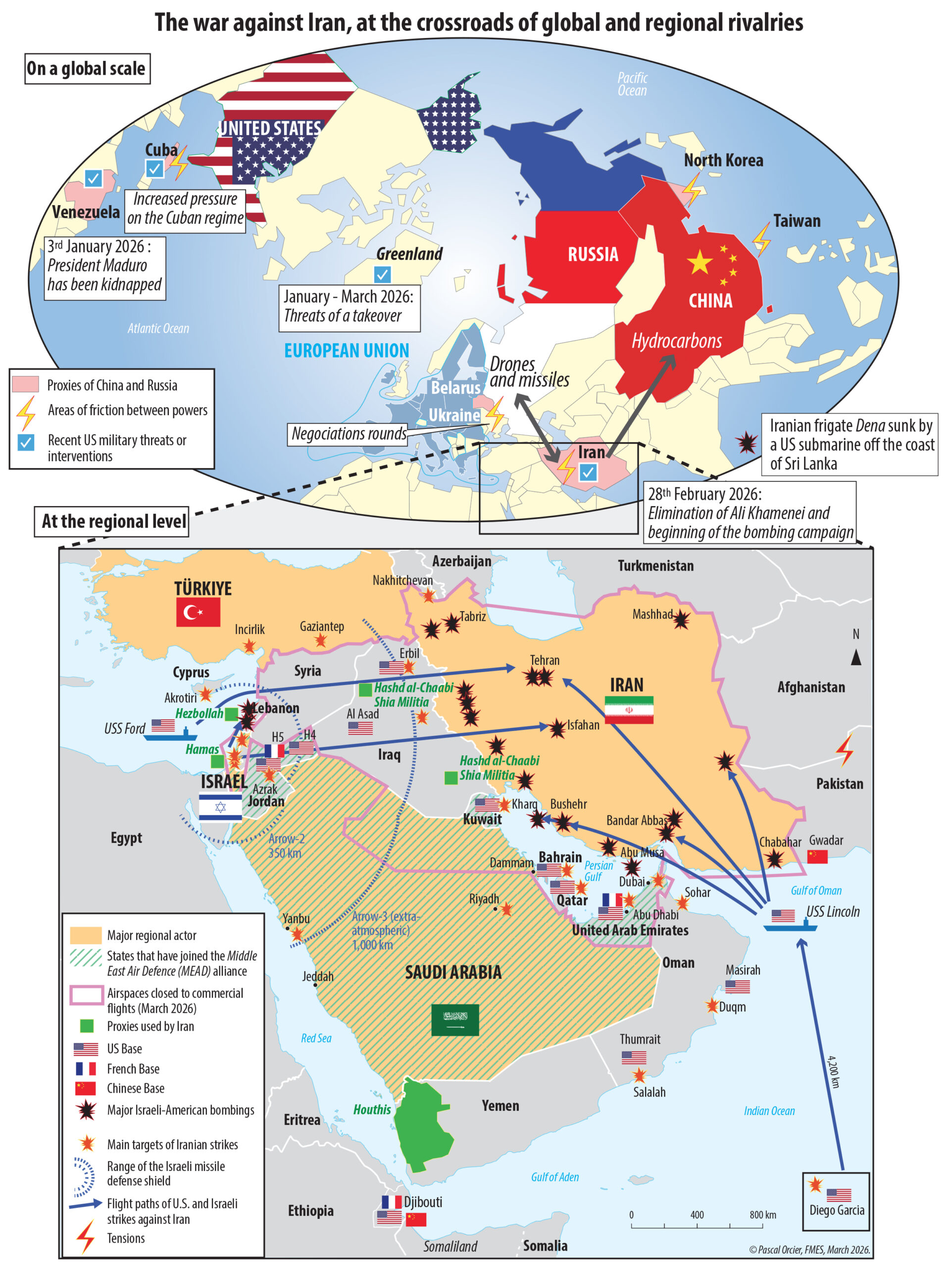
This is not just a Middle East headline. The consequences of the Iran war options debate extend into energy prices, shipping routes, alliance politics, and presidential credibility. A single military exchange can rattle oil markets. A wider conflict could force the U.S. to defend partners across the Gulf while trying to avoid a ground war nobody publicly wants. And if Washington looks indecisive, it weakens deterrence far beyond Iran.
When a superpower narrows its choices to threats it may not want to use, strategy starts to look like improvisation.
That is why analysts keep returning to the same uncomfortable point: escalation can be easy to start and brutally hard to control. The U.S. may be able to impose pain. It may even be able to delay Iran’s next move. But without a realistic political objective, force becomes theater. And theater is expensive.
Stephen Walt’s warning is about limits, not weakness
Walt’s argument is often misunderstood as caution for its own sake. It is not. The deeper point is that great powers fail when they confuse motion with strategy. If every option is framed as a show of strength, the administration ends up choosing among bad headlines instead of durable outcomes. That is especially true in the Iran war options debate, where each step risks triggering the very outcome policymakers say they want to prevent.
Option one: More pressure
Sanctions and diplomatic isolation remain the most familiar tools. They can raise costs and constrain Iran’s resources, but they are rarely decisive on their own. They also have a ceiling. After a certain point, more pressure does not produce compliance – it produces adaptation.
Option two: Limited force
Targeted strikes may be sold as controlled and surgical, but control is often an illusion. Retaliation can come through proxies, cyberattacks, shipping disruptions, or attacks on U.S. assets and partners. In this kind of conflict, the first strike is often the easiest part.
Option three: Talks under duress
Negotiations remain the least dramatic path and often the most effective. But talks require mutual belief that compromise is better than escalation. If both sides think time is on their side, the table gets empty fast.
The real problem with the Iran war options menu
The core issue is not whether the U.S. has tools. It does. The issue is whether any of them can produce a better end state than the one currently on offer. That is where strategy breaks down. A lot of foreign policy debate treats options as if they are interchangeable. They are not. The best option is the one that aligns military, diplomatic, and political objectives. Without that alignment, the U.S. ends up mixing coercion with ambiguity and calling it leverage.
That is especially dangerous with Iran because the country has built a resilience model around surviving pressure. It can escalate gradually, retaliate indirectly, and frame itself as resisting aggression. That gives Tehran room to shape the narrative while Washington debates whether it has already gone too far. In other words, the Iran war options problem is not just military. It is psychological and political.
Pro tip for reading crisis politics
Watch for the gap between rhetoric and implementation. When leaders sound most certain, they are often least prepared for the second-order consequences. If the administration keeps promising decisive action, ask what victory actually looks like after the headlines fade.
What a smarter strategy would require
A more realistic approach would start by defining the actual goal. Is the objective to prevent a nuclear breakout, deter proxy attacks, reassure allies, or produce regime-level change? Those are different missions, and each requires different tools. One of the reasons the Iran war options conversation keeps going in circles is that policymakers often refuse to choose among those goals publicly. That vagueness creates room for political flexibility, but it also makes operational success harder to measure.
A serious strategy would likely include three things:
- Clear priorities so military and diplomatic moves reinforce one another.
- Escalation planning that anticipates retaliation beyond direct battlefield contact.
- Alliance coordination so partners are not surprised by U.S. moves and forced into reactive defense.
Without those pieces, every move is reactive. And reactive policy is how states stumble into conflicts they never formally chose.
The domestic politics problem is getting louder
Foreign policy does not exist in a vacuum, especially in an election-driven environment. Tough talk on Iran can play well with audiences that want strength and clarity. But the same rhetoric becomes a liability if the situation worsens and the promised quick fix turns into a prolonged crisis. That is where the Iran war options debate becomes politically toxic. The administration must satisfy hawks without triggering a war that could dominate the agenda for months.
That is a brutal balancing act. The more leaders box themselves in with maximalist language, the less room they have to pivot. And pivots are exactly what crises require. If you cannot change course without looking weak, you are not governing the crisis – the crisis is governing you.
Strategy fails when leaders treat every retreat as defeat and every escalation as control.
What happens next
The next phase is likely to be defined by testing, not resolution. Iran will probe for weaknesses. The U.S. will signal red lines. Allies will look for reassurance. Markets will scan for escalation risk. None of that guarantees a full-scale war, but it does mean the situation can deteriorate quickly if either side misreads the other.
The largest mistake would be assuming that the absence of war so far means the danger has passed. In reality, the conflict may just be moving into a more dangerous phase, where each actor believes restraint is temporary and pressure will eventually force a better deal. That is exactly when miscalculation becomes most likely.
Why the Iran war options debate is bigger than Trump
Even if Trump is the central actor in this moment, the underlying issue is structural. U.S. policymakers repeatedly discover that the most intimidating tools on the shelf are not always the most useful. Military power can destroy targets, but it cannot easily manufacture political outcomes. Sanctions can isolate, but not necessarily compel. Diplomacy can de-escalate, but only if both sides believe time is not on their side.
That is why the Iran war options discussion matters far beyond one presidency. It is a case study in the limits of American statecraft. The real test of power is not whether a country can threaten force. It is whether it can use force, or the threat of it, to create a stable political outcome. On Iran, that test keeps getting harder.
For now, the uncomfortable takeaway is simple: the more Washington talks about options, the more obvious it becomes that the best ones have already been spent. What remains is a narrow corridor between deterrence and escalation. Walking it will require discipline, not bravado.
The information provided in this article is for general informational purposes only. While we strive for accuracy, we make no guarantees about the completeness or reliability of the content. Always verify important information through official or multiple sources before making decisions.